
Audio Effects Processor
5.0Editor score
24 bit digital processing
199 preset effects
Dual channel design
This guide compares the top hardware reverb units for musicians and producers evaluating features sound quality and price to find the perfect processor for
Hardware reverb units provide essential spatial effects for live and studio audio. They enhance instruments with natural ambience and creative textures. Choosing the right unit depends on your specific workflow and sonic goals.
We evaluated ten top-rated products based on sound quality ease of use and build durability. Our analysis covers rackmount processors guitar pedals and modular modules to ensure a comprehensive overview for all users.
Each pick highlights unique strengths and ideal use cases for different musicians. Note that prices and availability change frequently so verify current details before purchasing. This list helps you make an informed decision quickly.
5.0Editor score

4.9Editor score

4.8Editor score
This side-by-side comparison highlights the core specifications and strengths of each unit. It helps you quickly identify which processor fits your budget and performance requirements for professional audio applications.




The Strymon blueSky V2 is a top-tier digital stereo reverb pedal designed for guitarists seeking pristine ambient textures. It offers exceptional clarity and depth with a rating of 4.9 stars from users. The standout qualities include shimmer controls and precise decay management.
We may earn a commission when you buy through this link, at no additional cost to you.
This unit excels in creating lush atmospheric soundscapes thanks to its high fidelity algorithms. The pre-delay and modulation switches allow detailed tweaking for custom tones. Users appreciate the easy dial in experience combined with professional grade audio processing.
While the price is higher than budget options it justifies the cost with superior sound quality. The unit does require an external power supply which is not included. These trade-offs are acceptable for players needing studio quality reverberation live.
Musicians looking for reliable high-end reverb should consider this pedal. It balances ease of use with deep tonal options making it ideal for professional settings. We highly recommend it for those prioritizing sound quality and versatility.
The stereo width provided by this unit creates expansive sound fields that fill the room naturally.
Shimmer controls add ethereal harmonic layers perfect for ambient and cinematic guitar parts.
We may earn a commission when you buy through this link, at no additional cost to you.
The Strymon BigSky is a multidimensional reverb pedal known for its incredibly rich and complex sound profiles. It holds a strong 4.8 rating for its ability to transform dry signals into immersive sonic experiences. Users love the extensive algorithm variety and modulation capabilities.
We may earn a commission when you buy through this link, at no additional cost to you.
This pedal offers unparalleled flexibility with deep parameters for every aspect of the reverb tail. The stereo processing is exceptional allowing for wide spatial effects that enhance any mix. It is built to withstand touring with high quality components.
The complexity of controls might overwhelm new users who prefer simple operation. The price point is significant requiring a serious budget commitment. However these factors are minor compared to the professional results it delivers.
Professional guitarists and producers seeking ultimate sonic control will find this unit invaluable. It is a benchmark in hardware reverb technology for those who demand the best. We recommend it for advanced users willing to invest in top gear.
With multidimensional algorithms you can create sounds that go beyond traditional reverb effects.
Advanced input and output options allow seamless integration into complex signal chains.
We may earn a commission when you buy through this link, at no additional cost to you.
This Audio Effects Processor delivers impressive 24 bit digital quality at an accessible price point. With a perfect 5.0 rating it satisfies users looking for reliable reverb and delay effects without breaking the bank. The dual channel design and vast preset library stand out.
We may earn a commission when you buy through this link, at no additional cost to you.
The unit supports parallel processing which allows different effects on separate sources simultaneously. This flexibility is rare at this price level making it useful for live and studio applications. Sound reproduction is clear with minimal noise interference.
The interface relies on knobs which may feel basic compared to digital displays. It requires a standard 19 inch rack which adds to setup requirements. These drawbacks are minimal given the high value and performance it offers.
Budget conscious musicians and small studios will find this unit an excellent choice for daily use. It covers most common needs effectively and is easy to integrate into existing racks. We highly recommend it for value seekers.
You get studio grade processing power without the premium price tag associated with high end gear.
Independent processing channels enable creative routing options for vocals and instruments together.
We may earn a commission when you buy through this link, at no additional cost to you.
The Donner Reverb Guitar Pedal is a compact digital unit offering seven distinct reverb modes for various styles. It maintains a 4.3 rating for its balance of affordability and usable sound quality. True bypass ensures signal integrity when the effect is off.
We may earn a commission when you buy through this link, at no additional cost to you.
Its small footprint makes it easy to fit on crowded pedalboards while maintaining a sturdy aluminum build. The modes cover essential types from room to modulated effects which suits most players needs. It delivers consistent performance for live or practice settings.
Power supply is sold separately which can be an extra cost to consider. The controls are straightforward so advanced customization like deep tail shaping is not possible. These limits are fine for casual players wanting simple reverb.
Guitarists needing a simple reliable pedal for basic ambience will appreciate this unit. It is ideal for beginners or those with limited board space. We recommend it for anyone seeking a no fuss reverb solution.
The mini size ensures it fits comfortably even on the smallest pedalboards without clutter.
True bypass design preserves your raw guitar tone when the pedal is not active.
We may earn a commission when you buy through this link, at no additional cost to you.
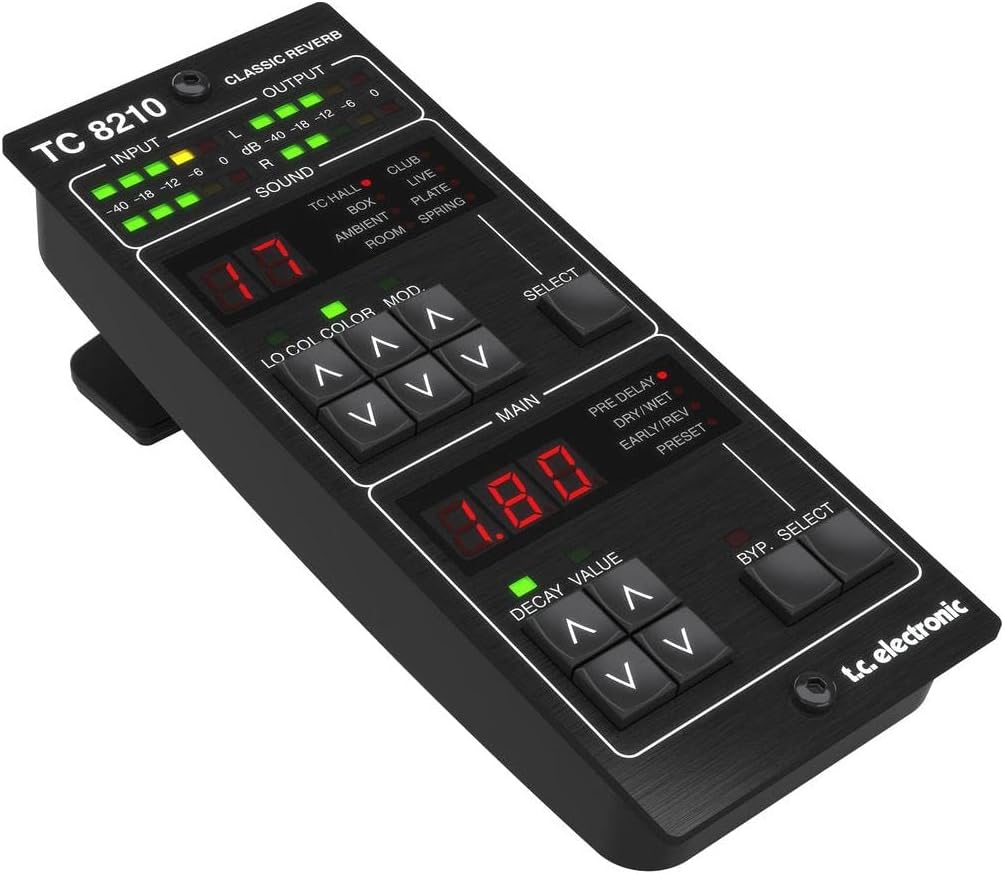
This unit bridges hardware and software by offering a classic TC reverb sound with a dedicated desktop interface. It holds a 4.7 rating for its ability to bring professional mixing reverb to DAWs seamlessly. The intuitive hands-on control enhances workflow significantly.
We may earn a commission when you buy through this link, at no additional cost to you.
Users appreciate the signature presets from favorite artists that speed up setup times. The plugin preserves natural characteristics of sources ensuring vocals and drums sound authentic. It delivers huge variety suitable for diverse musical needs and genres.
It relies on a computer and DAW which may limit standalone use for some. The hardware controller is optional adding cost for those wanting physical knobs. These points are acceptable for studio environments where flexibility is key.
Producers and home studios wanting premium TC sound with hands-on feel should consider this. It is a great way to get studio grade reverb without rack units. We recommend it for hybrid setups and digital workflows.
The audio engine replicates the revered reverb tones that defined professional mixing rooms.
A dedicated desktop interface allows tactile adjustment without relying solely on mouse clicks.
We may earn a commission when you buy through this link, at no additional cost to you.
The Behringer Spring Reverberation 66 brings authentic analog spring reverb to modular synth setups. With a 4.0 rating it appeals to users seeking gritty classic tones without digital emulation. The dual spring design adds depth and texture to sounds.
We may earn a commission when you buy through this link, at no additional cost to you.
It fits into a 72HP module space making it easy to integrate into existing Eurorack systems. Unbalanced line outputs and mic inputs provide versatile connectivity for diverse sources. This module is perfect for those wanting raw vintage vibes.
It is limited to spring sounds so no hall or plate options are available. It requires a Eurorack power supply and chassis which adds complexity. These constraints are minor for modular enthusiasts prioritizing authenticity.
Synth players and modular users needing genuine spring reverb will find this essential. It adds character and warmth that digital pedals often lack. We recommend it for those building an analog focused system.
The dual spring tanks deliver the distinctive metallic wash of classic analog units.
Designed for Eurorack it integrates seamlessly with other modules for custom audio paths.
We may earn a commission when you buy through this link, at no additional cost to you.
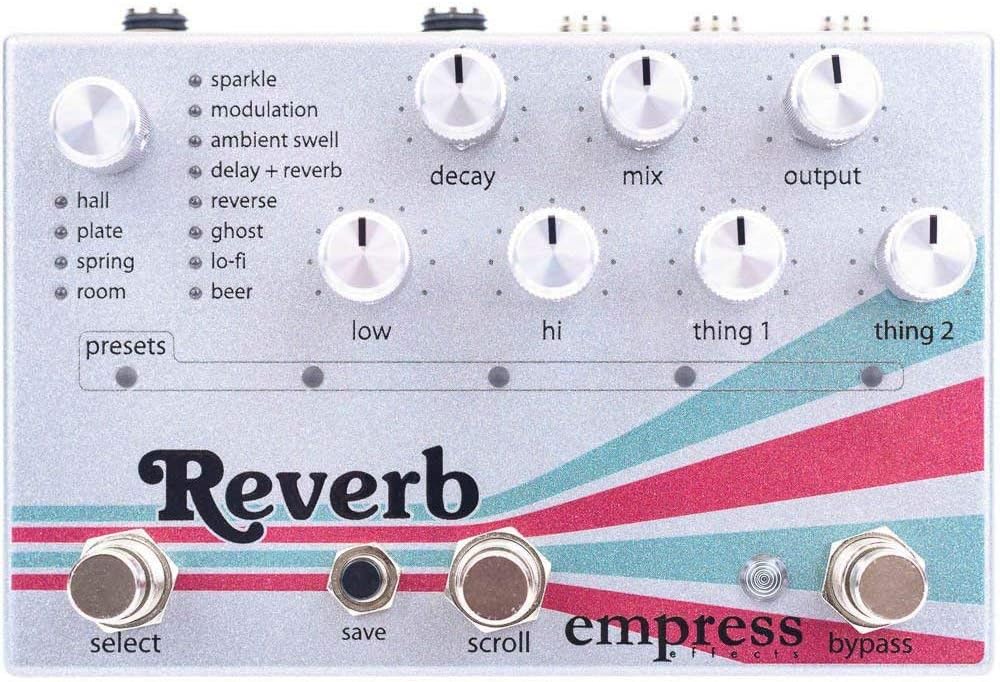
Empress Effects Reverb offers 24 studio quality algorithms that cover both classic and ambient textures. It holds a 4.4 rating for its pristine sound quality and intuitive operation. Tap functions allow users to sync reverb to their playing tempo easily.
We may earn a commission when you buy through this link, at no additional cost to you.
This unit is designed to be fast to dial in without sacrificing depth. It balances ease of use with high fidelity processing that suits stage and studio. The ambient options provide unique textures for creative musicians seeking distinct sounds.
The price is higher than entry level pedals making it a mid tier investment. It lacks MIDI outputs which may limit integration with complex gear setups. These are acceptable trade-offs for its superior sound and simplicity.
Players wanting reliable high quality reverb with creative options will love this pedal. It is suitable for pros and enthusiasts alike. We recommend it for those valuing sonic purity and ease of use.
With 24 algorithms you can switch between lush halls and tight rooms instantly.
Tap functions help match reverb timing to your song tempo for tight rhythms.
We may earn a commission when you buy through this link, at no additional cost to you.
The Walrus Audio Mako MKII: R1 features revamped programs for vast tonal improvement over previous models. It earns a 4.3 rating for its high fidelity processing and extensive preset library. The ducking and swelling feature adds dynamic control to mixes.
We may earn a commission when you buy through this link, at no additional cost to you.
With 128 onboard presets you have a wide range of sounds accessible via menu navigation. The feedback EQ control helps shape the tail of the reverb to avoid muddiness. Users appreciate the menu screen simplicity for secondary controls.
Navigation relies on menus which may take getting used to for some players. It needs an external 9V DC power supply which is standard but separate. These limitations are manageable for the sound quality and features provided.
Musicians needing versatile reverb with creative dynamic tools will find this unit ideal. It suits those who enjoy tweaking parameters to perfect their tone. We recommend it for players seeking high fidelity and programmability.
The ducking feature clears space for instruments by reducing reverb when signals are active.
128 presets ensure you never run out of sonic inspiration during performance.
We may earn a commission when you buy through this link, at no additional cost to you.
Universal Audio Galaxy '74 provides an authentic emulation of a classic 70s analog ambience device. It holds a 4.3 rating for its exacting capture of spring reverb and tape mechanisms. Silent switching ensures noise-free operation during live performances.
We may earn a commission when you buy through this link, at no additional cost to you.
This unit includes a buffered bypass and analog dry through which maintain signal integrity. The UAFX Control app allows tweaking of realtime effects and oscillation sounds via footswitch. USB Type-C enables updates via computer for future improvements.
It is isolated 9VDC power requirement means you must buy a supply separately. The price reflects high quality modeling but is higher than basic pedals. These points are minor considering the vintage authenticity and features.
Fans of vintage tape and spring sounds will love this unit for its realism. It is great for studio recording and live use requiring classic tones. We recommend it for those wanting authentic retro effects.
Exact modeling of classic hardware ensures the warmth and character of old gear.
The UAFX app offers deep control over parameters from your phone or computer.
We may earn a commission when you buy through this link, at no additional cost to you.
JHS Pedals 3 Series Reverb is an extremely versatile unit made in Kansas City USA. It earns a 4.7 rating for its ability to achieve sounds from small rooms to endless ambiance. The EQ and Pre-Delay knobs allow precise texture adjustments.
We may earn a commission when you buy through this link, at no additional cost to you.
This unit balances simplicity with powerful controls so you can tailor reverb tone to suit any track. It runs on standard 9V DC negative center power making it compatible with most pedalboards. The quality ensures durability for touring and daily use.
It does not include MIDI which limits integration with digital setups. The 9V power supply must be obtained separately which is typical but worth noting. These are minor issues given the high build quality and sound.
Guitarists needing a reliable flexible pedal will find this an excellent addition. It offers a great range of effects for various genres and playing styles. We recommend it for practical use and tone shaping.
EQ and Pre-Delay knobs help match reverb perfectly to your instrument and room.
Built in the USA it features robust construction for long term reliability.
We may earn a commission when you buy through this link, at no additional cost to you.
Selecting the right reverb unit requires balancing sound quality build quality and budget. This guide covers essential factors to consider before making a purchase decision for your audio setup.
Different units offer specific types like spring plate hall or digital algorithms. Spring units provide vintage metallic tones while hall and plate offer lush spacious sounds. Consider which character matches your music style and performance needs.
Choose a type that complements your instrument and genre for best results.
Units come as pedals rackmounts or desktop interfaces. Pedals are portable and fit on boards while rackmounts are ideal for studio setups. Desktop units integrate with computers for DAW workflows and hands-on control.
Pick a form factor that suits your stage or studio workflow best.
Audio fidelity varies by processor quality and bit depth. High-end units offer cleaner tails and more natural decay. Lower cost options may introduce noise or limit tonal options.
Prioritize units with high resolution processing for professional clarity.
Controls range from simple knobs to complex menus. Simple units allow quick dial-in while complex ones offer deep customization. Consider how much time you want to spend tweaking settings during play.
Select an interface that matches your comfort with audio parameters.
Inputs and outputs vary from mono to stereo. Stereo units create wider soundscapes while mono suits simple setups. Check for footswitch jacks USB ports and MIDI for integration with other gear.
Ensure connectivity matches your system inputs and outputs.
Build quality affects longevity especially for touring gear. Metal casings and true bypass switches add robustness. Plastic or lighter builds may not withstand heavy use.
Look for sturdy construction to ensure long-term reliability.
Most units need external 9V DC supplies which may be sold separately. Verify voltage and polarity to avoid damage. Some units offer battery options for portability.
Check power requirements to budget for necessary accessories.
Prices vary from affordable entry-level to high-end premium. Define your spending limit to narrow choices. Expensive units offer more features but basics may suffice.
Balance your needs with affordability to find value.
Connect your instrument or audio source to the input jack of the reverb unit. Route the output to your amplifier mixer or audio interface. Ensure you use appropriate cables to maintain signal integrity.
Power the unit with the correct voltage and polarity adapter to avoid damage. Start with all knobs at noon positions then adjust decay mix and pre-delay to taste. Experiment with different settings to find your desired ambience.
Store the unit in a cool dry place to prevent overheating or corrosion. Clean external surfaces with a soft dry cloth regularly. Use a protective case for transport to shield against bumps and dust.
Analog units use physical springs or plates to create natural metallic sounds with warmth. Digital units use algorithms to simulate various spaces and offer more presets and features. Digital is versatile while analog is prized for vintage character.
Most pedals require a dedicated 9V DC power supply sold separately. Check voltage and polarity to avoid damaging the pedal. Some come with battery options but external power is common for consistent performance.
Hall and plate reverb types are ideal for vocals as they provide smooth spaciousness. Spring units can add character but may color the voice too much. Choose units with adjustable decay and pre-delay to avoid masking lyrics.
Use a stereo reverb unit with left and right outputs to your mixer or interface. Connect inputs to the mono or stereo source. Ensure your signal chain supports stereo to hear the full width effect.
Yes many units like the Strymon blueSky or Audio Effects Processor suit both settings. Rackmounts are better for studio rack setups while pedals fit live boards. Check durability and portability before deciding.
Pre-delay is a short gap before reverb starts after the dry signal. It helps clarify vocals and instruments by keeping them distinct from the tail. Adjusting it ensures your mix stays clean and punchy.
Our top picks include the Strymon blueSky V2 for overall quality and the Audio Effects Processor for budget value. Each unit offers unique strengths to match different performance needs and musical styles. Choosing the right hardware reverb unit enhances your sound significantly.
Prioritize sound quality form factor and connectivity when selecting a unit. Consider how the reverb fits into your workflow and what specific tones you need most. These factors will guide you to the most suitable option.
Prices and availability change frequently so always verify current details before purchasing. Check retailer listings for updated specs and offers. This ensures you get the best value for your specific audio requirements.