
Radial Mix 2:1 2-channel Passive Mixer
4.8Editor score
2-channel passive design
Mono summing capability
Affordable entry point
This guide compares the top ten analog summing mixers for studio and live use, evaluating channel count, audio quality, and connectivity options.
Analog summing mixers combine digital stems into a unified analog signal, adding warmth and depth to modern productions. They are essential for engineers seeking the tonal character of hardware without fully abandoning the DAW workflow.
We evaluated ten distinct models ranging from compact passive units to high-end console-grade processors. Our analysis focused on signal path integrity, channel flexibility, build quality, and the specific sonic imprint each device imparts on mixed audio.
Each selection highlights unique strengths for different workflows, whether you need simple mono summing or complex stereo bussing with monitoring. Please note that product availability and pricing fluctuate regularly, so verify current details before purchasing.
4.8Editor score

5.0Editor score
The following table provides a quick overview of the technical specifications and core features for each of the ten selected analog summing mixers to help you narrow down your choices.




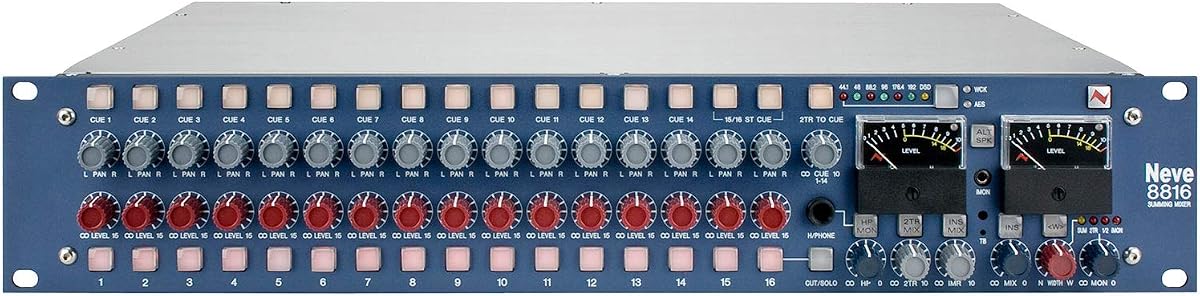
The Neve 8816 stands as a benchmark for analog summing, offering a 16-channel system that brings depth and coherence to mixes. Its transformer-balanced design ensures signal integrity while adding the harmonic saturation characteristic of vintage gear.
We may earn a commission when you buy through this link, at no additional cost to you.
This unit excels in providing a dedicated monitoring section with main and alternate speaker outputs. The dual headphone outputs allow engineers to cue different mixes easily, making it ideal for collaborative sessions where reference listening is critical.
While the price point is steep and the unit requires significant rack space, the sonic payoff justifies the investment for professional studios. The ability to sum multiple DAW stems through discrete analog paths delivers a glue that digital plugins often struggle to emulate.
Studio owners aiming for a high-end hybrid workflow should prioritize this mixer. It bridges the gap between digital flexibility and analog warmth, ensuring your final master retains the punch and clarity expected in modern commercial releases.
The transformer coupling reduces noise and provides a rich harmonic texture that enhances low-end definition in complex arrangements.
Multiple output options let you switch between main speakers and alternate systems to check translation across different playback environments.
We may earn a commission when you buy through this link, at no additional cost to you.
The Radial Mix 2:1 offers an affordable entry point into analog summing by allowing two inputs to combine into a single mono output. This passive design requires no external power, making it highly portable and reliable for various setups.
We may earn a commission when you buy through this link, at no additional cost to you.
Its simplicity is its greatest strength, removing the complexity of active electronics while preserving signal clarity. This makes it perfect for specific tasks like blending two vocal mics or combining stereo sub-mixes into a single mono feed.
The limitation to two channels and mono output means it is not suitable for full mix reduction. However, for those needing a straightforward summing tool without breaking the budget, it delivers the necessary performance without compromise.
Consider this unit for specific signal routing needs or as a backup mixer in your studio. It proves that effective analog processing does not always require complex features or expensive components to achieve professional results.
By eliminating active circuitry, this mixer minimizes potential noise sources and ensures a pure signal path for your audio sources.
While simple, it can be used to merge subgroups or combine instrument lines before hitting a recorder or processor.
We may earn a commission when you buy through this link, at no additional cost to you.
The Rupert Neve Designs 5059 brings the legendary Shelford sound to modern workflows with a 16 x 2+2 analog summing architecture. It provides the warmth and punch associated with Neve gear in a modular satellite format.
We may earn a commission when you buy through this link, at no additional cost to you.
This mixer allows for extensive routing options, letting users sum stereo pairs or larger groups through a unified analog bus. The Shelford Edition components ensure that the signal path retains the detailed high-frequency response and rich low-end typical of the brand.
The cost is significant and the setup requires careful planning to utilize the routing capabilities effectively. However, for those seeking a Neve sound without building a full console, this unit offers a compelling middle ground.
High-end project studios should consider this mixer to elevate their mix quality. It allows you to leverage the best of digital staging while capturing the analog summing characteristics that define classic records.
Using premium Shelford components guarantees a sound profile that matches high-end consoles, adding color without muddying the mix.
The 2+2 configuration allows for complex bussing strategies that support advanced mixing techniques and sub-group processing.
We may earn a commission when you buy through this link, at no additional cost to you.
The Headliner R4 is a rotary DJ mixer that offers four stereo channels with integrated analog filter controls. While designed for DJ sets, its summing capabilities provide a rich analog blend of four sources with precise control.
We may earn a commission when you buy through this link, at no additional cost to you.
Each channel features a 3-band isolator EQ and high pass or low pass filters with resonance controls. This allows for detailed shaping of the sound, making it versatile for live performances or experimental audio blending.
The unit uses genuine ALPS potentiometers and a robust metal enclosure for durability. While it is primarily a DJ tool, the high-quality summing section can be adapted for small group live mixing or signal merging.
DJs or performers needing a tactile rotary interface should choose this mixer. It brings a classic aesthetic and analog warmth to the signal chain, ensuring smooth transitions and consistent output levels.
Integrated high and low pass filters let you carve out frequency space dynamically during performance or mixing tasks.
Rotary knobs provide smooth volume control that is ideal for blending signals gently without abrupt jumps in level.
We may earn a commission when you buy through this link, at no additional cost to you.
The Mackie Onyx Series 16-Channel mixer combines traditional analog summing with modern USB recording capabilities. It supports up to 16 channels of audio, allowing you to record directly to a computer or SD card.
We may earn a commission when you buy through this link, at no additional cost to you.
Award-winning Onyx mic preamps provide up to 60dB of gain and low noise performance. The mixer also features a digital effect engine and Bluetooth streaming, adding flexibility for home studios and live bands.
While the USB integration is powerful, it may introduce latency if not configured correctly. The robust build ensures stability, but the physical size and weight require a dedicated desk space.
This mixer is ideal for bands wanting to capture live sessions with analog warmth. It bridges the gap between a simple mixer and a full interface, making it a versatile tool for creative workflows.
The Onyx preamps deliver British-style EQ and high gain with minimal noise, ensuring clear recordings even in demanding conditions.
Recording multiple channels separately gives you the flexibility to edit and mix stems later in your DAW software.
We may earn a commission when you buy through this link, at no additional cost to you.
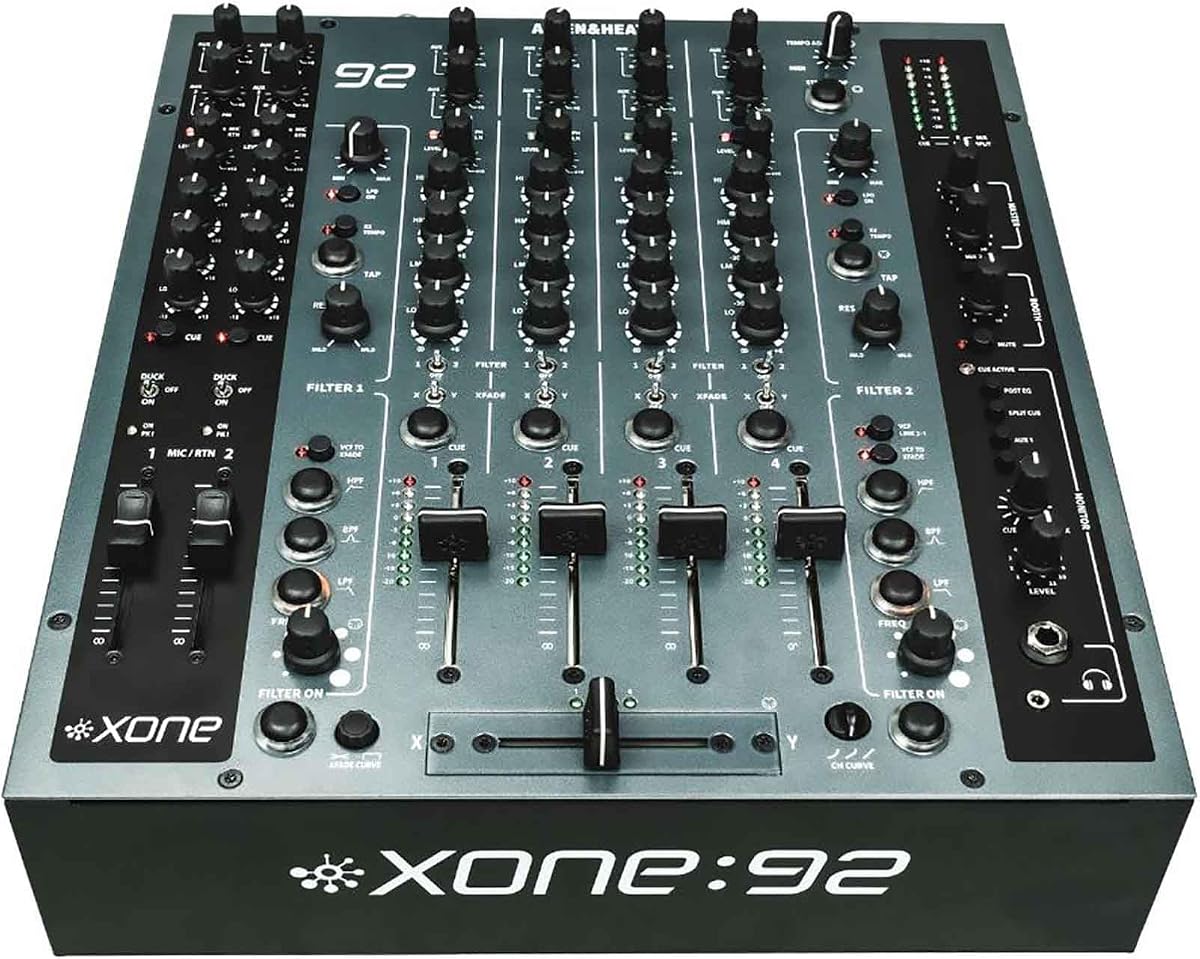
The Allen & Heath Xone:92 Mk2 is a premium 4-channel analog mixer known for its distinctive filter technology. It is designed for DJs but offers robust summing capabilities with advanced signal processing.
We may earn a commission when you buy through this link, at no additional cost to you.
Features include Xone:VCF switching and multimode filters that provide creative control over frequency bands. The mixer also includes stereo aux inputs and send/return connections for integrating external effects units.
The build quality is exceptional with a focus on durability and tactile feedback. While it is expensive and tailored to performance, the sound clarity makes it valuable for critical listening applications.
If you need a high-end analog summing tool for performance or studio blending, this unit stands out. Its filter system adds a unique character that sets it apart from standard passive summing boxes.
The Xone:VCF allows for sweeping frequency responses that can reshape the tonal balance of your mixed signals dynamically.
Flexible routing for external effects ensures you can enhance your mix without relying solely on built-in digital processing.
We may earn a commission when you buy through this link, at no additional cost to you.
The Allen & Heath Xone:43 is a high-performance analog DJ mixer with a 4+1-channel configuration. It offers clean summing with the added benefit of a voltage controlled filter system for tonal shaping.
We may earn a commission when you buy through this link, at no additional cost to you.
Each channel supports send and return connections with individual dry/wet control levels, making it easy to integrate external FX units. This feature is particularly useful for creative signal routing in small studios.
Its Innofader compatibility and robust construction ensure longevity in demanding environments. While it lacks USB connectivity, the analog purity is ideal for those who prefer a hardware-only workflow.
For users seeking a reliable analog path with flexible FX integration, this mixer is a strong choice. It delivers consistent performance and sound quality suitable for both live and studio applications.
Individual dry/wet controls on returns allow you to blend effects precisely without overwhelming the original signal source.
Constructed to withstand frequent use, this unit maintains signal integrity and control accuracy over long periods.
We may earn a commission when you buy through this link, at no additional cost to you.
The Mackie 1202VLZ4 is a compact 12-channel mixer that delivers exceptional sound quality in a small form factor. It features four Mackie Onyx mic preamps known for their low noise and wide gain range.
We may earn a commission when you buy through this link, at no additional cost to you.
With distortion below 0.0007% and enhanced RF rejection, this mixer is suitable for broadcast and live sound applications. The multi-bus routing options allow for flexible signal management and monitoring setups.
While it does not include USB, the analog signal path is designed for high fidelity and reliability. The three-band EQ and low-cut filters on each channel provide precise control over the input sounds.
This mixer is an excellent choice for home studios needing reliable summing. It combines portability with professional audio features, making it a versatile tool for various mixing tasks.
Exceptionally low distortion levels ensure that your signals remain clean and transparent even at higher volume levels.
Flexible bus options enable complex setups like subgroup processing and separate monitor mixes without external gear.
We may earn a commission when you buy through this link, at no additional cost to you.
The Solid State Logic BiG SiX combines a console-grade mixing desk with a 16-channel USB audio interface. It offers 18-input summing with SSL's SuperAnalogue technology for a high-fidelity analog experience.
We may earn a commission when you buy through this link, at no additional cost to you.
Features include 24-bit converters, a stereo master bus compressor, and comprehensive monitoring options. This unit allows you to route your DAW through a tactile analog console for better control and sonic quality.
The investment is significant and the unit requires substantial rack space. However, the ability to use SSL dynamics and EQ on hardware alongside digital recording is unmatched for hybrid producers.
If you need a professional console in a studio format, this is the ultimate choice. It bridges the gap between analog and digital perfectly, delivering a sound that rivals large-format desks.
SSL's SuperAnalogue circuitry provides wide dynamic range and pristine frequency response for transparent signal processing.
The built-in stereo bus compressor adds the glue and punch to your mix, mimicking classic console compression techniques.
We may earn a commission when you buy through this link, at no additional cost to you.
The Yamaha MG10 is a 10-input standalone mixer that focuses on simplicity and reliability. It features studio-grade discrete class-A D-PRE preamps that provide natural sounding bass and smooth highs.
We may earn a commission when you buy through this link, at no additional cost to you.
Each channel includes a 1-knob compressor and a 3-band EQ with high-pass filters. This setup allows for quick control over dynamics and tone without needing complex adjustments during mixing.
The chassis is rugged and impact-resistant, making it ideal for travel and mobile setups. While it lacks USB, the analog performance is solid for live sound or basic studio applications.
Beginners and small venues will appreciate its ease of use and durability. It offers a clean analog signal path that serves as a reliable foundation for any audio setup.
Simplified dynamic control allows you to level out vocals and instruments with a single turn of a knob.
The inverted Darlington circuit ensures low noise and high gain, delivering clear audio even with low-level inputs.
We may earn a commission when you buy through this link, at no additional cost to you.
Selecting the right analog summing mixer involves considering channel count, signal path design, and integration needs for your specific workflow.
The number of inputs determines how many stems or sources you can sum simultaneously. Ensure the mixer accommodates your typical track count to avoid running out of channels during mixing.
Choose a model with enough inputs for your current needs and potential future expansion.
Transformers add warmth and saturation, while solid-state designs offer transparency. The choice depends on whether you want color or pure summation.
Transformers are ideal for vintage tones while solid state suits modern clean mixes.
Effective mixing requires accurate monitoring. Look for multiple headphone outputs and speaker switching options to check your mix across different systems.
Multiple outputs help you ensure your mix translates well to various listening environments.
If you work in a DAW, consider units with USB connectivity or easy routing to your interface. This simplifies the workflow between digital stems and analog processing.
USB connectivity allows for hybrid recording while maintaining analog summing characteristics.
Physical build quality affects longevity and reliability. Check for robust enclosures and high-quality pots that can withstand frequent use.
Durable construction ensures the mixer remains a reliable asset for years of operation.
Some mixers include EQ, compression, or filters for further control. Decide if these features are necessary or if pure summing is your priority.
Additional processing features add value if you want to shape sound beyond basic level blending.
Prices range from passive units to expensive consoles. Balance your budget against the sonic quality and features you actually require for your work.
Invest in the best quality you can afford while avoiding unnecessary expensive features.
Ensure the inputs and outputs match your existing equipment. Balanced connections are preferred to maintain signal integrity and reduce noise.
Compatible connectors prevent the need for adapters and ensure stable signal transfer.
Connect your audio sources to the mixer inputs using balanced cables to maintain signal integrity and reduce noise interference.
Set your gain levels carefully to ensure signals are strong without clipping, which is critical for preserving dynamic range.
Regularly clean the knobs and chassis to maintain functionality, and store the unit in a dry environment to prevent damage.
An analog summing mixer combines multiple audio channels into a single stereo or mono output using analog circuitry. It adds warmth and depth to digital mixes by processing signals through hardware components like transformers.
They can enhance perceived sound quality by introducing harmonics and a sense of cohesion. However, they do not magically fix poor recordings; they add character to a good mix.
Beginners should start with a compact model like the Mackie 1202VLZ4 or Yamaha MG10. These units offer simple operation and solid performance without overwhelming complexity.
Yes, many modern mixers have USB interfaces to connect to computers. If not, you can route your DAW outputs through the mixer using an external audio interface.
Passive mixers are simpler and require no power but may lose signal strength. Active mixers require power but offer gain control and often better noise performance.
It depends on your workflow. If you mix stems, 8 to 16 channels are common. For simple routing, 2 to 4 channels might suffice for specific blending tasks.
DJ mixers focus on performance features like filters and phono inputs. Studio mixers prioritize signal fidelity and routing options for tracking and mixing workflows.
SSL mixers like the BiG SiX are premium tools offering console-quality sound. They are worth the investment for professionals needing high-end analog processing in a compact unit.
Choosing the best analog summing mixer depends on your specific workflow needs and budget. The Neve 8816 offers top-tier performance while the Radial Mix 2:1 provides a budget-friendly alternative for simple tasks.
Prioritize features that enhance your production workflow such as monitoring options and connectivity. A good mixer should complement your existing gear and simplify your mixing process.
Prices and availability change frequently so always verify current details before purchasing. Select the unit that best aligns with your goals for analog warmth and integration.