
Mcbazel 3 in 1 Handheld Digital Anemometer Wind Meter
4.5Editor score
Measures wind speed and temperature
Beaufort scale included
Compact and lightweight design
This comprehensive guide compares the top 10 marine anemometers for sailing, fishing, and HVAC, evaluating accuracy, durability, and features to help you
Marine anemometers are essential tools for sailors, fishermen, and outdoor enthusiasts who need accurate wind data. Whether you are navigating a small dinghy or managing HVAC systems, knowing wind speed and direction ensures safety and efficiency on the water or in industrial settings.
We have evaluated ten top-rated models based on accuracy, durability, ease of use, and value. Our analysis includes handheld units for portability and integrated systems for permanent installation. Each product was assessed for its ability to withstand marine conditions and provide reliable readings in diverse environments.
Each pick in this list highlights specific strengths, such as budget-friendliness or premium features. Please note that product availability and pricing change frequently, so verify current details before purchasing. This guide aims to simplify your decision-making process with clear comparisons and expert insights.
4.5Editor score

4.5Editor score

4.4Editor score
The following table provides a side-by-side comparison of all ten products, highlighting key specifications to help you quickly identify the model that best fits your specific requirements and budget constraints.


The BTMETER BT-100 stands out as a versatile tool for marine and industrial use. With a rating of 4.5 stars, it offers reliable wind speed and temperature measurements in a compact package suitable for various conditions.
We may earn a commission when you buy through this link, at no additional cost to you.
Its ability to switch between five wind speed units makes it ideal for sailors who need quick conversions. The tripod hole allows for stable continuous measurements, while the backlight ensures readability in low-light environments like dawn or dusk.
While the plastic body is lightweight, it may not feel as rugged as premium metal units. However, the inclusion of a case and accurate sensor placement compensates for this, providing good value for frequent users.
Sailors and drone pilots will appreciate the balance of features and cost. This model is highly recommended for those needing precise wind data without the high price tag of professional marine instrumentation.
The dual temperature sensors and eight vanes ensure sensitive detection even in low airflow, crucial for accurate CFM calculations and wind chill assessment.
Designed for on-the-go use, the pocket-sized form factor and included carrying case make it easy to store in a glove box or tackle bag.
We may earn a commission when you buy through this link, at no additional cost to you.
For budget-conscious buyers, the Mcbazel 3 in 1 offers exceptional value. It measures wind speed, temperature, and Beaufort scale simultaneously, making it a great entry-level option for casual sailors or hobbyists.
We may earn a commission when you buy through this link, at no additional cost to you.
Its user-friendly design includes a double-line LCD for clear data viewing. The backlight ensures you can read results in shaded areas or during evening outings without straining your eyes.
The device relies on AAA batteries which are not included, so factor that into your purchase. While it lacks advanced marine features like waterproofing, its portability and ease of use make it suitable for light tasks.
This anemometer is perfect for those who need basic wind data without complex setup. It is a reliable choice for fishing trips, kite flying, or quick weather checks on the deck.
At a fraction of the cost of professional gear, this unit delivers sufficient accuracy for recreational use and general household applications.
With straightforward buttons and simultaneous display of multiple metrics, users can switch modes effortlessly during active use.
We may earn a commission when you buy through this link, at no additional cost to you.
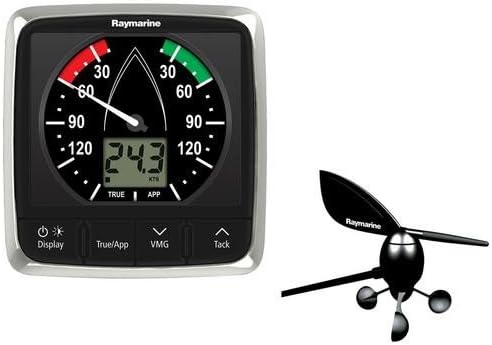
The Raymarine i60 Wind System represents the gold standard for serious mariners. It includes both the display and masthead transducer, ensuring seamless integration and reliable performance in challenging sea conditions.
We may earn a commission when you buy through this link, at no additional cost to you.
Its analog dial with red backlighting provides high contrast visibility, essential during night watches or bright sunlight. The system displays key metrics like VMG and Beaufort, aiding in strategic sailing decisions.
While the initial investment is higher, the build quality and comprehensive data output justify the cost. The 30-meter cable simplifies routing, though it may not suit all vessel sizes without extension.
This system is ideal for racers and offshore cruisers who depend on precise wind data for safety and performance. It is the best choice for those seeking a complete, turn-key solution.
Including both the display and transducer ensures compatibility and optimized performance, avoiding mismatched components from different manufacturers.
The red backlighting preserves night vision while ensuring critical wind data remains readable in low-light cockpit environments.
We may earn a commission when you buy through this link, at no additional cost to you.
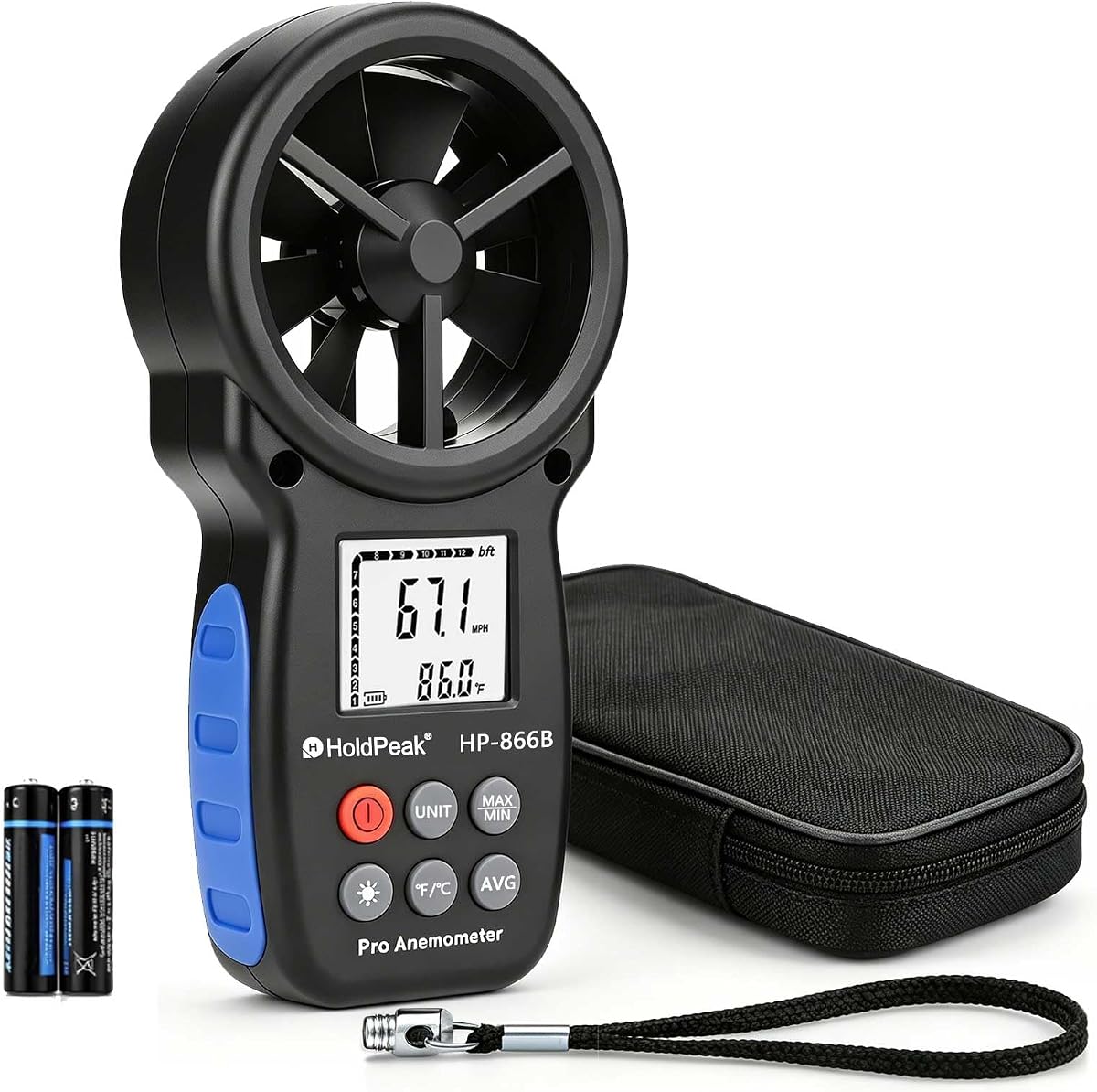
The HoldPeak 866B is a robust handheld unit designed for versatility. Its dual temperature sensors and eight vanes offer high accuracy, making it suitable for both marine environments and HVAC inspections.
We may earn a commission when you buy through this link, at no additional cost to you.
Features like Max/Min/Average modes allow for tracking wind fluctuations over time, which is valuable for analyzing gusts on open water. The included waterproof pouch protects the device during transit or sudden rain.
Although the body is slightly larger than some competitors, the added bulk contributes to a solid feel. The hand strap adds a layer of security, preventing drops while handling the device on uneven boat decks.
Sailors needing a reliable backup instrument will find this unit dependable. Its combination of features and durability makes it a strong contender in the mid-range category.
The Max/Min/Average functions help identify peak gusts and average speeds, providing a better understanding of wind behavior during navigation.
The waterproof carrying pouch ensures the device remains dry and safe when stored in a wet bag or exposed to sea spray.
We may earn a commission when you buy through this link, at no additional cost to you.
The TopTes TS-301 features a notably large 2.26-inch LCD screen, enhancing readability in bright sunlight or low light. This makes it an excellent choice for users who prioritize clear data display.
We may earn a commission when you buy through this link, at no additional cost to you.
Beyond wind speed, it measures humidity, adding value for sailors concerned with comfort and condensation. The six measuring units cover most global standards, ensuring compatibility with international charts and maps.
The auto shut-off function conserves battery life during intermittent use. While the build is primarily plastic, the ergonomic design makes it comfortable to hold for extended periods during fishing or sailing trips.
This model is well-suited for outdoor enthusiasts who want more than just wind speed. It balances functionality with affordability, making it a top pick for hobbyists.
The inclusion of humidity sensing provides a more complete weather picture, helpful for assessing fog risk or deck comfort.
The large backlight screen ensures numbers are legible even in harsh glare, reducing eye strain during long observation sessions.
We may earn a commission when you buy through this link, at no additional cost to you.
The Raymarine E28081 serves as a critical replacement part for existing systems. It includes the vane, counterweight, and cups needed to restore wind monitoring on older Raymarine ST50, ST60, and ST80 instruments.
We may earn a commission when you buy through this link, at no additional cost to you.
This kit is essential for boat owners who need to repair damaged sensors without replacing the entire display system. The included screws and allen key simplify the installation process significantly.
While it is not a standalone anemometer, its role in maintaining operational systems is vital. Ensuring your masthead sensors are intact is key to long-term navigation safety.
This part is best suited for owners of compatible Raymarine systems seeking a cost-effective repair. It ensures your onboard weather station continues to function without needing major upgrades.
For older boats with ST series instruments, this kit allows for easy repair without discarding legacy hardware that still works perfectly.
By including all necessary mounting hardware, Raymarine ensures a straightforward installation that gets you back on the water quickly.
We may earn a commission when you buy through this link, at no additional cost to you.
The Inspeed Magnetic Mount Anemometer simplifies installation with its magnetic base. This feature is ideal for users who want temporary or semi-permanent placement without drilling holes in the deck or railings.
We may earn a commission when you buy through this link, at no additional cost to you.
Its high rating of 4.7 suggests strong user satisfaction with accuracy and stability. The compact design ensures it does not obstruct movement on small vessels or in crowded workspaces.
While it requires a metal surface for attachment, this constraint ensures a secure hold even in windy conditions. The calibration ensures reliable readings right out of the box.
This model is perfect for quick wind checks or temporary setups. It offers a modern convenience that appeals to tech-savvy sailors and professionals alike.
Avoiding permanent modifications preserves the integrity of your vessel's surface while still providing secure data acquisition.
Its small footprint makes it easy to place in tight areas where traditional tripods or bulky units cannot fit.
We may earn a commission when you buy through this link, at no additional cost to you.
This display-only unit is a direct replacement for damaged i60 instruments. It offers a clean black and grey finish that fits standard mounting holes, ensuring a seamless look on your instrument panel.
We may earn a commission when you buy through this link, at no additional cost to you.
While it does not include the masthead, it is compatible with existing transducers, allowing for partial upgrades. The interface is intuitive, providing quick access to essential wind metrics.
It is best used when the display is broken but the sensor remains functional. This approach saves money compared to replacing the entire system while maintaining system integrity.
Owners of aging Raymarine fleets will appreciate this targeted solution. It extends the life of your current setup without significant infrastructure changes.
By replacing only the display, you save costs and reduce waste, provided your masthead and wiring remain in good condition.
The standard footprint ensures it fits perfectly into existing cutouts, maintaining the cockpit's original aesthetic and layout.
We may earn a commission when you buy through this link, at no additional cost to you.
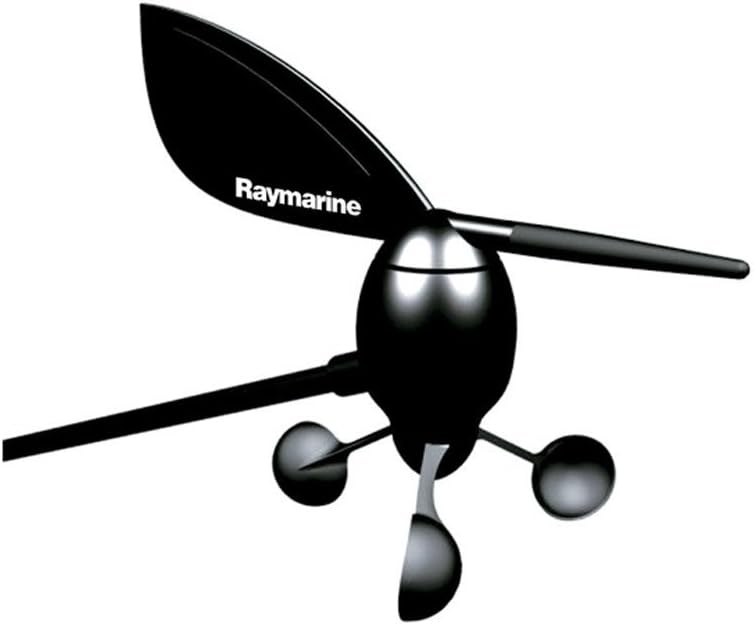
The latest version of the Raymarine Masthead offers updated reliability and sensor precision. It serves as a direct replacement for older models, ensuring your system captures accurate wind data without system upgrades.
We may earn a commission when you buy through this link, at no additional cost to you.
Its robust construction is designed to withstand saltwater corrosion and high winds. This is critical for offshore vessels where sensor failure could compromise navigation safety.
While installation may require climbing the mast or using a winch, the benefit of fresh sensors is worth the effort. It ensures your data reflects current conditions rather than degraded sensor output.
This part is essential for maintaining older i60 or ST systems. It provides the necessary components to keep your weather station operational for years to come.
Manufacturers often refine sensor algorithms and materials; using the latest version ensures you benefit from these incremental improvements.
The materials used are specifically engineered to resist corrosion, a vital feature for instruments exposed to constant sea spray and humidity.
We may earn a commission when you buy through this link, at no additional cost to you.
The i60 Wind Display System offers advanced features like true wind angle calculation. This level of data is essential for competitive sailing where understanding apparent versus true wind makes a difference in strategy.
We may earn a commission when you buy through this link, at no additional cost to you.
Its customizable display allows users to prioritize fields relevant to their current activity. The adjustable backlight ensures visibility from bright noon sun to dark night watches without glare.
The masthead transducer is built for long-term reliability in harsh conditions. While the price is higher, the depth of data and build quality justify it for serious users.
This system is best for advanced sailors who need detailed tactical data. It transforms basic wind monitoring into a strategic tool for performance and safety.
True wind angle helps determine optimal sail trim and heading, providing a distinct advantage in racing and long passages.
The ability to configure the screen ensures you see exactly what you need, reducing clutter and cognitive load while underway.
We may earn a commission when you buy through this link, at no additional cost to you.
Selecting the right marine anemometer involves considering several key factors to ensure the device meets your specific needs and environmental conditions.
Accuracy is paramount for navigation safety. Look for devices with certified calibration and low error margins. Professional marine units often undergo rigorous testing to ensure reliability.
Always verify that the anemometer is certified for marine use to avoid dangerous miscalculations during navigation.
Marine environments are harsh due to saltwater, UV exposure, and physical impact. Choose units with corrosion-resistant materials like stainless steel or marine-grade plastics.
Rugged construction ensures the device survives years of exposure to sea spray and unpredictable weather conditions.
Consider whether you need a handheld unit or a fixed system. Fixed masthead systems offer stability, while handheld units provide flexibility for different boats or temporary use.
Select a mounting method that aligns with your vessel's layout to minimize installation complexity and maximize data reliability.
The display should be readable in bright sunlight and low light. Backlit screens and high-contrast numbers are essential for safety during night watches.
Ensure the font size and backlight intensity are adequate for your typical operating hours and lighting conditions.
Modern systems may offer connectivity to chartplotters or onboard networks. This allows for centralized data logging and integration with other navigation systems.
Check for NMEA compatibility if you plan to integrate the device with existing electronic navigation hardware.
Battery life is crucial for handheld units. Fixed systems often draw power from the boat's electrical system, so check voltage requirements and consumption.
Prioritize energy-efficient models to ensure the device remains operational during long trips without frequent battery changes.
Prices vary from budget handhelds to expensive systems. Balance your budget against the features you truly need for safety and performance.
Avoid overspending on unnecessary features but invest enough in reliability to ensure safety on the water.
Features like humidity sensing or Beaufort scale can be helpful for weather analysis. Evaluate if these extras add value for your specific activities.
Extra functions should enhance usability rather than complicate the primary task of measuring wind speed accurately.
Begin by calibrating your device according to the manufacturer's instructions. Proper calibration ensures that the readings match standard wind speeds and temperature benchmarks.
For handheld units, hold the device steady in the wind stream without blocking the sensors. For masthead units, ensure the transducer is aligned with the bow of the vessel for accurate directional data.
Regular maintenance includes cleaning salt residue with fresh water and inspecting cables for wear. Store handheld units in a dry case to prevent corrosion and electronic damage.
True wind is the wind felt if the boat were stationary. Apparent wind combines true wind with the boat's speed and direction. Marine systems often calculate both to help sailors optimize sail trim and heading for maximum efficiency.
Yes, handheld anemometers are suitable for temporary checks or small boats. However, fixed systems are preferred for safety and continuous monitoring on larger vessels.
Calibration varies by model. Some units require specific software or tools, while others reset automatically upon startup. Always refer to the user manual for the correct procedure for your specific device.
Temperature, humidity, and physical obstructions can affect readings. Ensure the device is placed in an open area away from rigging or structures that may distort wind flow.
Most marine-grade anemometers are designed to be waterproof or at least water-resistant. Check the IP rating to confirm protection against splashes or submersion.
Wind data helps determine optimal sail angle and heading. Accurate readings prevent damage from unexpected gusts and improve fuel efficiency or racing performance.
A handheld unit is often sufficient for small dinghies due to simplicity and cost. Masthead units are more beneficial for larger cruisers where permanent monitoring is essential.
Replacement depends on usage and damage. If readings become inconsistent or the unit is physically damaged, replacement is recommended. Regular inspection extends the lifespan of the device.
Choosing the right marine anemometer depends on your specific needs, from budget-friendly handhelds to premium masthead systems. Our top picks provide reliable data for sailors and professionals alike.
Prioritize durability and accuracy to ensure safety on the water. Consider whether you need permanent installation or portable flexibility for your daily activities.
Verify current pricing and availability before making your purchase, as market conditions may change. We hope this guide has helped you find the perfect wind measurement tool for your vessel.