
1000X Handheld Digital Microscope for Kids
4.5Editor score
1000X optical magnification
2MP resolution camera
600mAh battery life
Exploring the microscopic world of insects offers endless fascination for hobbyists and students alike. A digital microscope for studying insects transforms tiny details into clear, viewable images on screens, making science accessible and engaging for all ages.
To compile this list, we evaluated ten leading models based on magnification range, display quality, portability, and ease of use. Each product was reviewed for its ability to capture fine insect features like wing veins and compound eyes effectively.
Our selections highlight diverse options ranging from budget-friendly handheld units to advanced professional kits. Prices and availability may vary, so verify current details before purchasing to ensure you get the best value for your specific needs.
4.5Editor score
4.6Editor score

4.3Editor score
As an Amazon Associate we earn from qualifying purchases.
This side-by-side comparison highlights key specifications across all ten selected digital microscopes to help you choose the right tool for insect observation and study.



The Skybasic Wireless Digital Microscope offers an affordable entry point for exploring insect anatomy. It features WiFi connectivity for seamless transmission to mobile devices and supports USB connections for computer use.
We may earn a commission when you buy through this link, at no additional cost to you.
Its 8 adjustable LED lights ensure clear visibility of specimens regardless of ambient lighting conditions. The 2MP CMOS sensor captures 1080P images on smartphones, making documentation easy for students or hobbyists.
While compact and portable, this model requires maintaining a specific focal length between 3 and 60 mm for sharp images. Users should note that advanced features like zoom buttons only function via WiFi, not USB.
Ideal for beginners and families, this microscope encourages exploration without a heavy investment. Ensure you download the latest software version for optimal performance and connectivity stability on your device.
Connects to smartphones and tablets via WiFi for hands-free viewing and easy photo sharing during outdoor expeditions.
Works across iOS, Android, Windows, and Mac platforms, making it versatile for various household devices.
We may earn a commission when you buy through this link, at no additional cost to you.
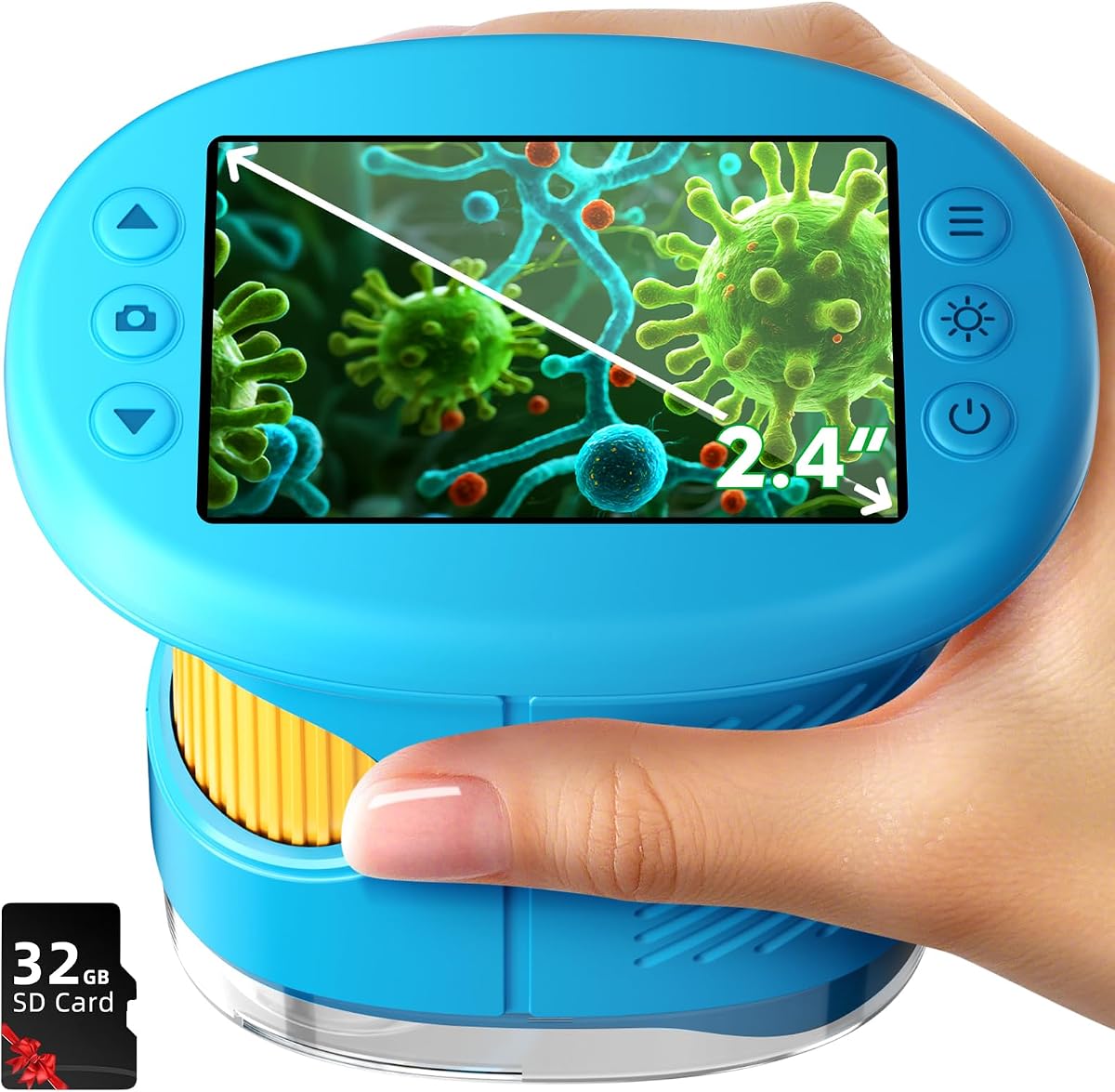
Designed specifically for children, the Odatay 4K Digital Microscope combines fun with education. Its built-in 2.4-inch screen and 4K camera allow kids to view specimens clearly without connecting to external devices.
We may earn a commission when you buy through this link, at no additional cost to you.
The package includes essential accessories like a 32GB card, prepared slides, and a protective case, creating a ready-to-use STEM kit. Adjustable LED lights help illuminate details of insects or plants during outdoor studies.
Weighing only 0.5 lbs, it fits easily in pockets or bags for field trips. The inclusion of a lanyard enables hands-free carrying, which is practical for active exploration.
This model is perfect for inspiring curiosity in ages 3 to 12. It simplifies the learning process with intuitive controls, ensuring young scientists can capture photos and videos independently.
Comes with slides and storage so children can start observing and documenting insects immediately.
Lightweight construction and neck strap make it easy for small hands to carry during adventures.
We may earn a commission when you buy through this link, at no additional cost to you.
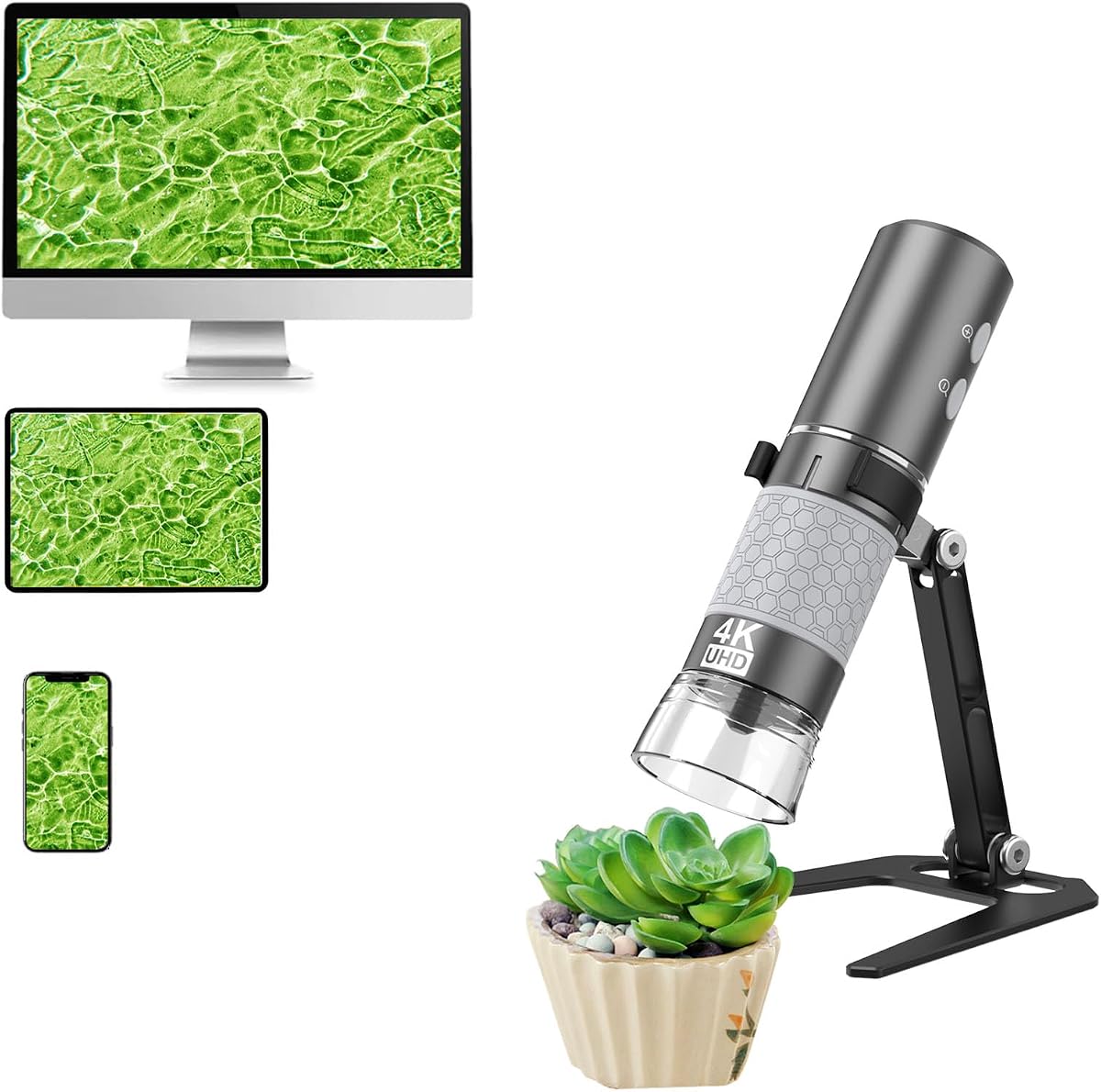
This WiFi Digital Microscope stands out with its four-hour battery life, making it ideal for extended fieldwork or classroom sessions without frequent recharging. It supports both wireless and wired connections for maximum flexibility.
We may earn a commission when you buy through this link, at no additional cost to you.
With 4K resolution capabilities, it captures detailed images of insect wings and textures. The adjustable bracket rotates 180 degrees, offering versatile angles for observation and documentation.
Software compatibility spans Windows, Mac, Linux, and Chrome OS, ensuring users can access it on almost any device. The handheld design allows for spontaneous stops during nature walks.
Recommended for users needing reliable power during travel, this microscope balances performance with portability. Ensure your smartphone supports 4K display for the full visual experience.
Four-hour battery life supports long outdoor trips without needing constant power sources.
Runs on almost all major operating systems, providing flexibility for different users.
We may earn a commission when you buy through this link, at no additional cost to you.
The Andonstar AD246S-M offers advanced capabilities with three interchangeable lenses for diverse observation tasks. It reaches up to 2000X magnification, suitable for detailed insect anatomy studies or electronics repair.
We may earn a commission when you buy through this link, at no additional cost to you.
UHD 2160P video recording and HDMI output allow for larger screen viewing, reducing eye strain during long sessions. A remote control facilitates operation without touching the device directly.
Professional measurement software enables precise length and area calculations on connected PCs. The metal stand ensures stability, crucial for high-magnification work.
Best suited for serious hobbyists or professionals, this model provides a comprehensive toolkit for detailed analysis. Ensure you have a compatible HDMI monitor to leverage the full video quality.
Downloadable software allows accurate sizing of insect features or objects directly on PC.
Output to larger screens for easier viewing and presentation of microscopic findings.
We may earn a commission when you buy through this link, at no additional cost to you.
Designed for kids ages 3 to 12, this model features real optical plus digital magnification up to 1000X. The anti-shake system keeps images steady even when handled by enthusiastic young explorers.
We may earn a commission when you buy through this link, at no additional cost to you.
Built from eco-friendly ABS plastic, it holds triple safety certifications ensuring no rough edges or harmful chemicals. The 600mAh battery provides around two hours of continuous use for typical sessions.
With 32MB internal storage, children can capture over 200 photos to document their findings. These files transfer easily via USB to computers for sharing with teachers or parents.
This microscope is perfect for early STEM education, combining safety with genuine scientific tools. Its intuitive manual focus dial helps develop fine motor skills alongside observation abilities.
Anti-shake technology ensures clear photos and videos even with active little hands.
Triple safety certified construction prevents injuries during hands-on learning experiences.
We may earn a commission when you buy through this link, at no additional cost to you.
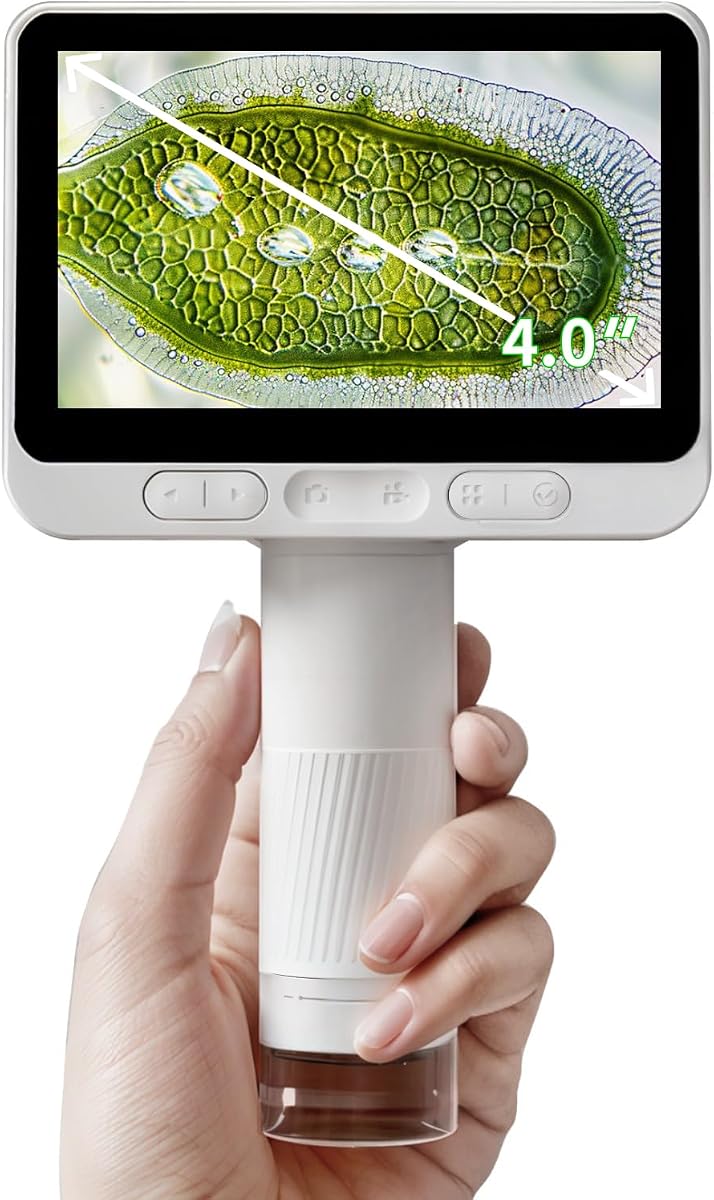
The BEAVERLAB Finder features a substantial 4.0-inch IPS screen that provides a vivid view of insect details without external connections. Its 1600X magnification allows for seeing fine structures clearly.
We may earn a commission when you buy through this link, at no additional cost to you.
A 2MP CMOS chip captures full HD videos and photos, stored internally or transferred via its built-in hotspot. This connectivity makes sharing discoveries with family or classmates simple.
Adjustable LED lights ensure specimens are well-lit in any environment. The compact design fits easily into pockets, encouraging spontaneous exploration during walks.
Best for users prioritizing screen size and connectivity, this model offers a premium viewing experience. It bridges the gap between educational toys and serious observation tools.
4-inch display offers comfortable viewing without straining eyes during long study sessions.
Built-in hotspot allows quick transfer of images to phones or social media platforms.
We may earn a commission when you buy through this link, at no additional cost to you.
Built for adventure, this microscope features a durable BPA-free ABS plastic body capable of surviving drops and rough handling. Its 2-inch HD display provides clear visuals even in bright sunlight due to anti-glare treatment.
We may earn a commission when you buy through this link, at no additional cost to you.
Eight adjustable LEDs with four brightness levels ensure specimens are visible in dark forest floors or shaded areas. The rechargeable 600mAh battery supports up to three hours of continuous field use.
The oversized textured focus wheel is designed for small fingers, allowing quick focus adjustments without frustration. It is lightweight enough to hang around the neck for hands-free hiking.
This is the ideal choice for families wanting a rugged outdoor tool. It balances practicality with enough optical power to reveal interesting details of local insect life.
Durable materials withstand the bumps and drops of outdoor exploration without damage.
High-intensity LEDs illuminate subjects even in low-light natural environments effectively.
We may earn a commission when you buy through this link, at no additional cost to you.
The Elikliv EM4K-AF introduces AI-driven auto-focus that constantly adjusts for sharpness, even with moving subjects like insects. A TOF sensor measures distance quickly to refine focus within seconds.
We may earn a commission when you buy through this link, at no additional cost to you.
Its 8-inch IPS screen offers a vibrant viewing experience with 1280×800 resolution, suitable for classrooms or presentations. UHD 4K video recording ensures high-detail documentation of biological specimens.
While designed for electronics, it excels in biological observation when mounted on a stable surface. The rechargeable battery offers mobility, though its weight makes it less ideal for hiking.
Recommended for stationary indoor use, this model provides professional-grade clarity and ease of focus. It is perfect for settings where visual presentation and detail are paramount.
Continuous autofocus ensures moving specimens remain sharp without manual intervention.
8-inch screen provides immersive viewing and easier analysis of minute details.
We may earn a commission when you buy through this link, at no additional cost to you.
This microscope boasts broad compatibility with iOS, Android, Windows, Mac, and Linux systems. Its 4K resolution ensures high-quality images when displayed on supported screens for detailed insect study.
We may earn a commission when you buy through this link, at no additional cost to you.
Features like wide-angle and long focal length lenses adapt to different observation needs, from capturing entire insects to examining specific features. The wireless connection facilitates easy movement.
Zoom buttons function only on mobile devices, which may limit PC-based control but simplifies usage for phone users. The manufacturer offers reliable support and replacement policies.
Best for users with diverse tech setups, this model ensures you can connect to almost any device. It balances high resolution with practical connectivity options for home and school.
Compatible with nearly all major operating systems and devices for maximum flexibility.
4K output delivers crisp images for capturing fine insect textures and patterns.
We may earn a commission when you buy through this link, at no additional cost to you.
The Andonstar AD266S offers extreme magnification up to 5000X, allowing for deep analysis of microscopic insect structures. It includes five lenses tailored for coins, biological slides, and electronics.
We may earn a commission when you buy through this link, at no additional cost to you.
An X-Y movable stage simplifies navigating specimens, while the 7-inch monitor and HDMI output enable clear viewing on larger screens. UHD 2160P video ensures detailed documentation.
Professional measurement software supports precise analysis of biological samples. The remote control allows adjustment without touching the microscope, enhancing stability.
Ideal for researchers or advanced hobbyists, this model provides lab-grade capabilities at home. Ensure you have space for the stand and monitor to utilize its full potential.
Up to 5000X zoom reveals cellular structures and minute details of insect anatomy.
X-Y stage allows precise movement across specimens without touching the sample directly.
We may earn a commission when you buy through this link, at no additional cost to you.
Selecting the right digital microscope requires understanding your needs for magnification, portability, and output quality.
Consider the range of magnification needed to see specific insect features like hairs or eyes.
Choose models offering at least 1000X for detailed anatomy, or lower for general viewing.
Decide between built-in screens and external device connections like phones or PCs.
Built-in screens offer independence, while external connections may provide higher resolution displays.
Assess weight and durability if you plan to use the microscope outdoors frequently.
Look for shock-resistant materials and rechargeable batteries for extended field trips.
Adjustable LED lights are crucial for illuminating specimens in various lighting conditions.
Ensure brightness levels can be controlled to prevent glare and improve contrast.
Check for internal memory or SD card slots to save photos and videos for later analysis.
Wi-Fi capabilities allow quick sharing of discoveries with classmates or family members.
Advanced models may offer interchangeable lenses for different types of observation tasks.
Select based on whether you need biological slides or macro object viewing.
Verify that the software supports your operating system for easy file transfers.
Ensure apps are updated regularly to avoid connectivity issues on newer devices.
User-friendly controls like oversized buttons help children operate the device independently.
Look for intuitive focus mechanisms that reduce frustration during initial use.
Start by charging the battery fully and installing any necessary software or apps on your device. Ensure the microscope is securely attached to its stand or held steadily to avoid blur.
Place your insect specimen close to the lens, adjusting the focus wheel slowly until the image sharpens on the screen. Utilize the LED lights to enhance visibility and contrast of the subject.
After use, clean the lens gently with a soft cloth and store the device in its protective case to prevent scratches. Regularly update the software to maintain performance and connectivity.
For detailed anatomy like eyes or wings, a magnification of 1000X or higher is recommended. Lower ranges like 400X are sufficient for general identification and casual exploration.
Yes, most models support both WiFi for mobile devices and USB for computers. Check specific connectivity options to ensure compatibility with your operating system.
They typically include built-in LED lights that compensate for low ambient light. Adjusting the brightness settings ensures clear views even in shaded or dark areas.
Use a soft microfiber cloth to wipe the lens gently. Avoid chemicals or harsh materials that might scratch the glass or coating.
Handheld models can function without stands, but a stand ensures stability for high-magnification work. Stands are essential for detailed observation to prevent shaking.
Most microscopes save images in JPEG or PNG formats, while videos may be MP4 or AVI. These formats ensure easy sharing and viewing on standard devices.
Yes, models with large screens or HDMI outputs are ideal for classrooms. They allow multiple students to view the specimen simultaneously without crowding.
Battery life ranges from two to four hours depending on usage and brightness settings. Some models support USB charging for extended sessions in the field.
Our top picks include the BEAVERLAB Finder for its large screen, the 1000X Handheld for affordability, and the Andonstar AD266S for professional-grade magnification.
Prioritize magnification power and display clarity if you seek detailed anatomical studies, while portability and ease of use matter for young students.
Always verify current pricing and availability before purchasing to ensure you get the best value for your specific requirements.