
D-FantiX Battery Tester
4.5Editor score
Analog needle display
No external power needed
Supports AA to 9V
Lightweight compact design
We compare the best battery testers for household batteries to help you choose accurate tools for AA AAA C D 9V and button cell voltage checks.
Finding a reliable battery tester helps you avoid dead devices. Quality testers provide clear voltage readings. They cover common household types like AA and AAA.
We evaluated top models based on accuracy and ease of use. Each option was reviewed for compatibility and display clarity. Our list includes digital and analog choices.
Every pick shows key specs and real-world performance. Prices may vary so verify current details before buying. Use this guide to select the right tool for your needs.
4.5Editor score

4.5Editor score

4.4Editor score
This side-by-side comparison covers ten top-rated testers for household use. We highlight key specs like compatibility display type and power needs to help you decide quickly.
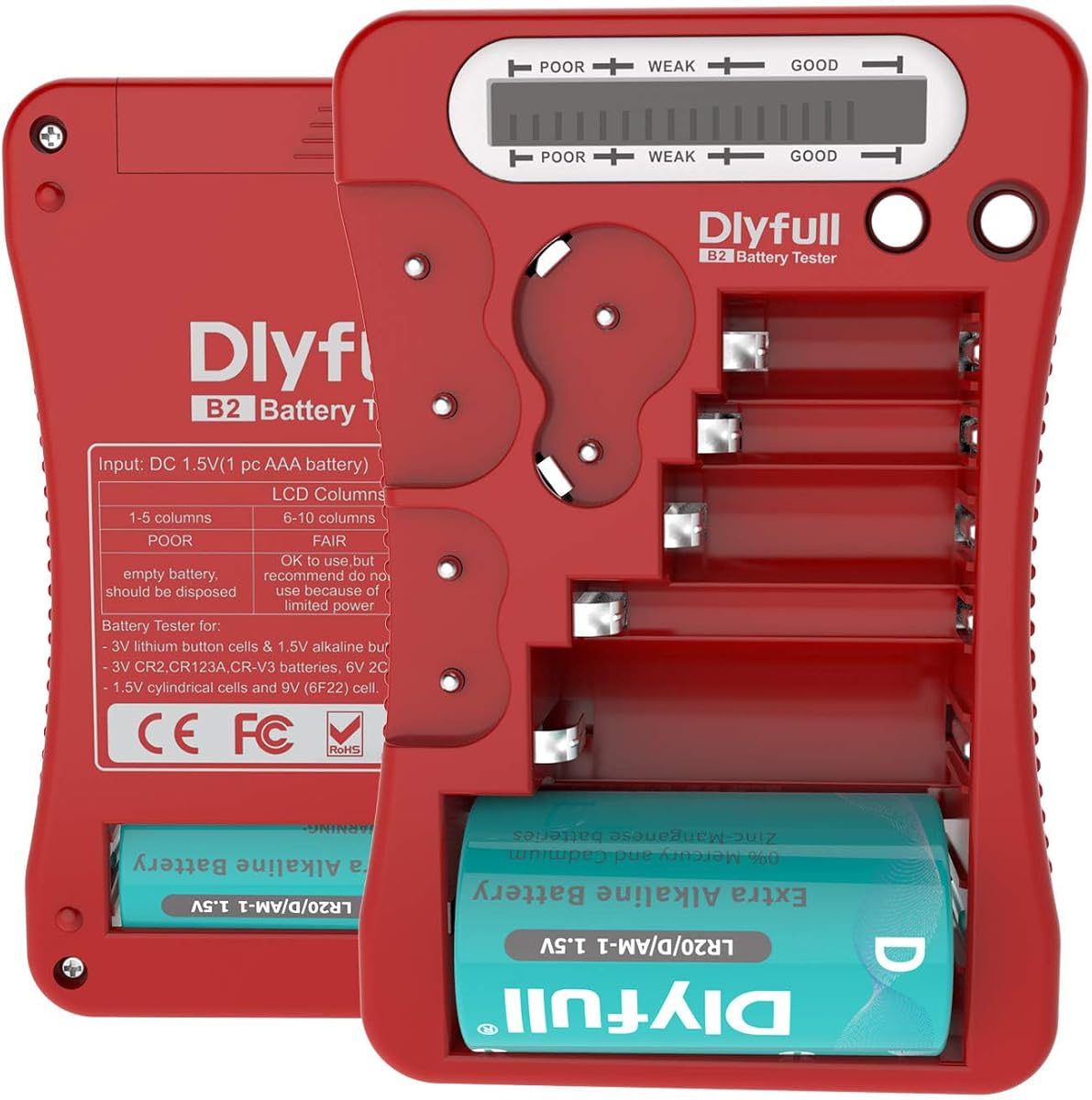


The Dlyfull Battery Tester stands out for its clear LCD screen and broad compatibility. It earns a high 4.5 rating for delivering quick and accurate status updates on AA AAA C D 9V and button cells.
We may earn a commission when you buy through this link, at no additional cost to you.
Its compact design fits easily in a pocket or drawer. The analog bars show if a battery is good weak or poor. This simple feedback helps you avoid wasting good batteries or using weak ones.
It does require a AAA battery to operate and does not test rechargeables. These are minor trade-offs for a tool that offers reliable and fast results for everyday household use.
Buy this if you want a balance of precision and convenience. It is ideal for families who use many household devices and need a dependable tester to check battery health regularly.
The crisp LCD screen displays clear status bars that make it easy to see if a battery is good weak or needs replacement without confusion.
This lightweight compact tester is designed for portability so you can keep it in a toolbox or drawer for quick checks whenever devices run low.
We may earn a commission when you buy through this link, at no additional cost to you.
This tester offers real-load testing which simulates actual device use for more accurate results. Its 4.4 rating reflects strong performance and clear display features that show exact voltage and power levels.
We may earn a commission when you buy through this link, at no additional cost to you.
The auto power-on function activates when you insert a battery and saves energy by shutting off after three seconds. Its wide compatibility includes common and button cells plus rechargeable options for better versatility.
A lack of backlight and need for AAA power may limit low-light use. Still the durable build and smart detection system make it a premium choice for accurate household battery management.
Choose this if you need precise voltage data and reliable load tests. It suits users who want advanced features and long-term durability in a portable battery checking tool.
Using specific discharge resistors this tester measures battery performance under load which provides a truer picture of how the battery will work in actual devices.
Automatic power-on and three-second shut-off help conserve battery life and keep the unit ready for use when needed without extra manual switches.
We may earn a commission when you buy through this link, at no additional cost to you.
The D-FantiX Battery Tester is a simple and effective tool that needs no external power. It earns a 4.5 rating for its straightforward design and clear analog scale that shows good low or replace status.
We may earn a commission when you buy through this link, at no additional cost to you.
You insert the battery and the needle moves on a color-coded scale to show status. This makes it perfect for quick checks at home or on the go without worrying about charging or extra batteries.
It lacks the precision of digital models and cannot provide voltage details. For basic household use though its low cost and reliability make it a smart pick for many users.
Buy this if you want a no-fuss and affordable tester. It is ideal for casual users who need to sort batteries quickly without paying for advanced features.
This tester works entirely from the battery being tested so there is no need for internal batteries or charging and it is always ready to use.
The analog scale uses color bands to show status at a glance which makes it easy for anyone to understand battery health without reading numbers.
We may earn a commission when you buy through this link, at no additional cost to you.
This tester matches the original Dlyfull model with a crisp LCD and broad compatibility. It receives a strong 4.6 rating for its pocket-friendly design and fast results on AA AAA C D 9V and button cells.
We may earn a commission when you buy through this link, at no additional cost to you.
Its lightweight build and anti-slip finish make it easy to hold and carry. The bar display quickly shows battery health helping you avoid damage from unnecessary recharges or dead power.
It does need an AAA battery to run and does not support rechargeable types. Still the included power source and 18-month warranty add value for a compact and reliable household checker.
Pick this if you want a small and trusted tester for daily use. It suits families who need a lightweight tool that delivers clear status on common household batteries.
One of the smallest and lightest portable checkers it fits easily in a pocket or toolbox while keeping an anti-slip finish for a secure grip.
Inserting a battery shows health status instantly via clear bars which saves time and helps you avoid wasting good batteries by guessing.
We may earn a commission when you buy through this link, at no additional cost to you.
The La Crosse Digital Tester allows you to select voltage ranges for alkaline rechargeable and lithium button cells. It earns a 4.6 rating for its simple three-step process and clear LED display of voltage and strength.
We may earn a commission when you buy through this link, at no additional cost to you.
You choose the correct voltage tray pull out the orange tray and insert the battery. The sliding tray ensures a positive connection and the LED shows the test result clearly without complex menus.
Its manual range selection may slow quick checks but ensures accuracy across different battery chemistries. This makes it a reliable tool for homes that mix standard and rechargeable power sources.
Choose this if you need a dedicated tester for rechargeable batteries. It is ideal for users who want simple operation and clear feedback on various household battery types.
Users select 1.5V 1.2V or 3.0V based on battery type which ensures accurate readings and proper testing for alkaline rechargeable and lithium cells.
An orange tray slides out to accept the battery then closes to lock polarity for consistent contact and reliable test results every time.
We may earn a commission when you buy through this link, at no additional cost to you.
This set includes two simple testers that need no batteries to operate. With a 4.4 rating they offer great value for households that want to keep one tester at home and one in a car or toolbox.
We may earn a commission when you buy through this link, at no additional cost to you.
You place the battery in the slot and read indicator bars to check power level. The lightweight compact build fits in a pocket and makes quick checks easy without extra power needs.
While they do not show exact voltage their simplicity and dual-pack design make them ideal for budget-conscious users. They help avoid waste by identifying good versus dead batteries quickly.
Buy this if you want an affordable and practical solution for multiple locations. It suits users who need basic status checks without investing in advanced digital features.
The package includes two testers in a soft bag so you can keep one at home and another for travel or emergencies without extra cost.
These units draw power from the battery being tested so they never need internal batteries and are always ready to use whenever you need a quick check.
We may earn a commission when you buy through this link, at no additional cost to you.
The Tenergy T-333 is a low-power universal tester with an LCD display and wide compatibility. It earns a 4.6 rating for offering clear status readings and working with twelve different battery types from AA to button cells.
We may earn a commission when you buy through this link, at no additional cost to you.
Its compact build and included AAA battery make it ready to use right out of the box. The display shows health status clearly which helps you decide if a battery is still usable or needs replacing.
It does need a AAA battery and does not test rechargeables. Despite this its low cost and reliable performance make it a smart pick for general household electronics and gadgets.
Choose this if you want a budget-friendly and versatile checker for home electronics. It is ideal for users who need a compact tool that covers most common battery sizes.
It supports twelve battery types including AA AAA C D 9V and several CR button cells so one device covers most of your household electronics needs.
Powered by a single AAA battery this tester is a low-power unit that ensures long standby time and reliability for all your everyday powering needs.
We may earn a commission when you buy through this link, at no additional cost to you.
The Gardner Bender tester supports a wide 14-battery range and comes with test leads for flexible testing. It earns a 4.6 rating for its ability to handle lantern cells and photo batteries other models miss.
We may earn a commission when you buy through this link, at no additional cost to you.
Its analog meter provides a straightforward readout and the included leads let you test batteries with contacts or terminals outside standard slots. This adds versatility for older devices or specialty batteries.
It is bulkier than compact checkers and offers no digital readout. For households with large or unusual battery types its broader coverage and sturdy design make it a useful addition.
Choose this if you often need to test lantern photo or unusual battery sizes. It is ideal for users who value broad compatibility and include test leads in their tool kit.
Test leads allow you to check battery terminals directly which is helpful for specialty cells or devices that do not fit standard tester slots.
Covering 14 types including lantern and photo cells this unit handles sizes that many compact testers cannot test and makes it ideal for larger battery sets.
We may earn a commission when you buy through this link, at no additional cost to you.
This tester uses a magnetic tip to hold the battery in place for stable contact and accurate readings. It earns a 4.6 rating for its clear analog display and one-step process that simplifies testing.
We may earn a commission when you buy through this link, at no additional cost to you.
The magnetic design prevents slippage and keeps the battery aligned for consistent results. Its compact build and simple interface make it easy to use for anyone who wants clear and quick battery status checks.
It provides status rather than exact voltage and does not support rechargeables. Still the durable materials and magnetic feature make it a reliable and user-friendly choice for daily battery checks.
Buy this if you want a simple tool that makes testing easier with less handling. It suits users who prefer a compact and reliable tester for common household battery types.
The magnetic tip holds the battery securely in place to ensure stable contact and reliable measurement without slipping during testing.
The one-step testing and clear display let you get status results in seconds making it the most user-friendly tool for quick battery checks.
We may earn a commission when you buy through this link, at no additional cost to you.
The Dlyfull Health Tester offers a smart LCD display that shows voltage and battery level as a percentage or bar. It earns a 4.2 rating for detailed feedback and self-test capability that checks its own power before use.
We may earn a commission when you buy through this link, at no additional cost to you.
It supports twelve battery types from AA to Li-ion and LiFePO4 packs. Its compact build weighs less than 0.36 pounds and uses a simple pin or slot setup for easy testing of both cylindrical and button batteries.
You must use AAA alkaline batteries to power it and may need to hold a button to run a self-test. These steps add a bit of effort but ensure the tester stays accurate and reliable over time.
Choose this if you want more detail than basic status bars and it is ideal for users who want to track battery levels closely and maintain consistent testing accuracy.
The LCD shows voltage and battery level as both a percentage and bar which gives clearer insight into remaining capacity than simple good or weak indicators.
Holding the check button for three seconds runs a self-test to confirm the tester is working and shows if its internal battery needs replacement.
We may earn a commission when you buy through this link, at no additional cost to you.
Choosing the right battery tester depends on accuracy display type and battery compatibility. These factors help you find a tool that meets your needs.
Digital testers show exact voltage and clear status bars which helps you see precise battery health. Analog models use a needle and color scale for quick checks without extra power needs. If you need detailed data choose digital; for fast and simple use analog may suffice.
Pick a display that you can read easily and that fits your testing habits.
Ensure the tester supports the sizes you use most such as AA AAA C D 9V and button cells. Some models also handle rechargeables or lithium button cells which adds versatility for mixed households. Check the product specs to confirm the range covers your devices.
A wider compatibility range ensures you won't need multiple tools for different battery types.
Some testers need a battery to operate while others draw power from the battery being tested. Battery-powered units can offer advanced features but need periodic replacement. Self-powered units are always ready but may lack detailed readouts. Decide based on whether you want convenience or independence.
If you value always-ready tools choose a self-powered model; for advanced features choose battery-powered.
Load testers simulate real device use for more accurate health status than simple voltage checks. Voltage-only testers are faster but may not show how a battery performs under actual load. If you use high-drain devices choose a model with load testing to avoid false results.
For precise and reliable health checks prefer testers that offer load or real-load testing options.
Compact lightweight designs fit in pockets or drawers and make testing easy anywhere. Durable materials and anti-slip finishes help the unit last longer and feel secure in hand. If you travel or keep testers in multiple locations prioritize small size and rugged build.
Look for a compact durable build that fits your storage space and usage habits.
Simple one-step testing and clear indicators save time and reduce frustration. Features like auto on-off self-tests or LED strength displays add convenience. Avoid complex setups if you want quick status checks. Balance extra features with how often you will use the tester.
Choose a model with intuitive steps and clear readouts to keep testing fast and easy.
A warranty of one year or more shows the manufacturer stands behind the product. Customer support can help if the tester acts up or you need replacements. Check product listings for warranty length and service options before buying.
Prefer models with a clear warranty to protect your purchase and ensure long-term reliability.
Basic analog testers cost less but offer limited data while digital units cost more and show precise readings. Consider how often you test batteries and what details you need to decide value. A slightly higher cost may be worth it for accuracy and longevity.
Select a price range that matches your usage needs without overspending on unused features.
Insert the battery correctly with positive and negative terminals aligned to the tester slots. Read the display or needle to check if the battery is good weak or needs replacing.
Keep the tester clean and dry to avoid damage. Store it in a pocket or toolbox away from moisture and extreme temperatures to maintain accuracy over time.
Replace internal batteries when needed and run self-tests if your model has them. Regular care ensures consistent readings and extends the life of your testing tool.
Some testers support 1.2V rechargeable AA AAA C D N and AAAA cells while others do not. Check the product specs for rechargeable support before buying. If you use many rechargeables pick a model that lists them explicitly.
New batteries can show low if tested without a load or at incorrect voltage. Use a tester that supports load testing and select the right range for your battery type. This ensures the reading matches the actual performance in devices.
Choose a model that lists CR1616 CR2032 and similar button types in its compatibility. Some units have dedicated slots or magnetic tips for small cells. Confirm the range before buying to ensure proper fit and accurate readings.
Some testers need AAA batteries to operate while others draw power from the battery being tested. Battery-powered models often show more detailed info but need internal power. Self-powered units are always ready but may lack advanced displays.
Analog testers give quick status readings using color scales and are good for basic checks. They are less precise than digital models that show exact voltage. For general household use analog units are usually accurate enough to sort good from dead batteries.
Test batteries when devices stop working or before long trips to avoid surprises. Regular checks help you use good batteries before they leak or degrade. Keep a tester handy to make this quick and easy.
Our top picks include the Dlyfull Tester for accuracy the Multi-Range Tester for load testing and the D-FantiX Tester for budget value. Each offers strong performance for AA AAA C D 9V and button cell needs.
Prioritize compatibility display clarity and whether you need rechargeable or load testing. These factors help you match a tester to your devices and testing habits.
Prices change so check current details before buying. Use this guide to pick a reliable tool that keeps your household devices powered and ready.