
WOSPORTS Mini Trail Camera
4.2Editor score
4 AA battery power
Low power consumption
Compact lightweight design
This guide compares the best battery life trail camera options for 2026, analyzing power sources, runtime, and efficiency to help you choose the most reliable
Finding a trail camera with exceptional battery life is crucial for uninterrupted wildlife monitoring. Long-lasting power ensures you capture every moment without frequent visits to replace batteries or recharge units in remote locations.
We evaluated ten top-rated models based on power efficiency, solar compatibility, and real-world runtime. Our analysis considers battery type, standby modes, and detection features to determine which cameras deliver the most consistent performance over time.
Each pick highlights specific strengths like low-power sensors or rechargeable options. Prices and availability change frequently so verify current details on Amazon before purchasing to ensure you get the best value for your outdoor monitoring needs.
4.2Editor score

4.4Editor score

4.3Editor score
The following table provides a side-by-side comparison of all ten selected trail cameras. We highlight key specifications related to power, resolution, and features to help you quickly identify the best model for your specific battery life requirements and outdoor monitoring goals.




The WOSPORTS Trail Camera ranks first for its versatile power management system and high resolution imaging capabilities. With a 4.3 star rating it stands out as a reliable choice for users seeking long-term monitoring without constant battery changes.
We may earn a commission when you buy through this link, at no additional cost to you.
Its support for standard AA batteries combined with optional rechargeable lithium packs or solar panels offers unmatched flexibility. The 4K video recording and 64MP photos ensure detailed wildlife captures while the 0.2S trigger speed prevents missed moments.
While it requires separate purchases for batteries and SD cards the extended power options justify the initial investment. Users appreciate the 120° wide angle detection and No-Glow night vision which keeps wildlife calm during night recordings.
This camera is ideal for scouts and homeowners who need dependable performance across varied environments. We recommend it for those prioritizing battery longevity and image quality in equal measure for comprehensive outdoor surveillance.
The ability to switch between AA batteries and solar charging extends runtime significantly for remote deployments.
64MP photos and 4K videos provide clear details essential for accurate wildlife identification and activity tracking.
We may earn a commission when you buy through this link, at no additional cost to you.
The Moultrie Edge 3 offers premium features with advanced power management for tech savvy users. Its rechargeable battery packs and solar compatibility ensure extended operation even in areas without direct sunlight access for months.
We may earn a commission when you buy through this link, at no additional cost to you.
AI buck detection reduces false alerts saving battery power that would otherwise be wasted on irrelevant movements. The integrated GPS and app controls allow remote monitoring without physical visits to the camera site.
A monthly subscription fee is necessary for cellular connectivity which adds to the cost but provides instant access to footage. This trade-off is acceptable for hunters who need immediate data to track mature buck movements effectively.
Ideal for serious hunters this model combines long battery life with intelligent detection systems. It is best suited for those willing to invest in a comprehensive ecosystem for maximum monitoring efficiency.
AI filters unnecessary triggers to conserve battery power for significant wildlife events only.
Control settings and check battery status via app to minimize physical trips and preserve power.
We may earn a commission when you buy through this link, at no additional cost to you.
The WOSPORTS Mini Trail Camera delivers efficient power usage in a compact affordable package. With 4.2 stars it proves that small devices can still provide reliable monitoring with minimal battery drain over time.
We may earn a commission when you buy through this link, at no additional cost to you.
Its low-power design supports longer standby times compared to bulkier models. The lightweight build and camouflage help it blend into surroundings while reducing energy needed for operation and mounting stability.
Video quality is limited to 1080P which is sufficient for general wildlife observation but not for detailed analysis. However for users on a tight budget this model offers the best value for battery longevity per dollar.
We recommend this for beginners or those monitoring smaller areas where high resolution is not critical. Its simplicity and low power demand make it a practical choice for extended outdoor deployment.
Minimal power draw allows standard batteries to last much longer than in high-res cameras.
Quick installation reduces handling time and ensures the camera starts capturing immediately.
We may earn a commission when you buy through this link, at no additional cost to you.
The MAXDONE Solar Trail Camera stands out with its built-in solar charging and massive 6000mAh battery capacity. This combination ensures nearly unlimited power for year-round monitoring without frequent battery replacements.
We may earn a commission when you buy through this link, at no additional cost to you.
Users can view and download photos via a free app without subscription fees. The 64MP photos and 4K videos deliver high clarity while the IP66 rating protects against harsh weather conditions.
The camera relies on its own hotspot for connectivity which limits use to direct phone proximity. This design simplifies power management but means remote viewing isn't possible without physical presence.
Best for property owners with sunny locations this model provides true maintenance-free operation. It is perfect for those who want high quality imaging with the convenience of solar recharging capabilities.
Solar panels recharge the battery continuously to eliminate the need for disposable batteries.
All data stored locally ensures privacy while the app provides easy access for viewing.
We may earn a commission when you buy through this link, at no additional cost to you.
The Meidase P70 balances high performance with efficient power management for diverse hunting needs. Its 4.4 rating reflects strong user satisfaction with clear images and reliable night vision in various conditions.
We may earn a commission when you buy through this link, at no additional cost to you.
Video compression technology reduces file sizes which conserves battery power during playback and storage. The 64MP photos capture crisp details while the 0.1s trigger speed ensures fast action is recorded accurately.
Although it lacks built-in solar power compatibility with external panels makes it versatile for remote use. Users must purchase batteries separately which adds to initial cost but allows flexible power choices.
We suggest this for hunters who need sharp images without constant battery swaps. Its efficient design and solar readiness make it a strong contender for long-term wildlife observation projects.
H.264 compression lowers data size to save battery life during video recording sessions.
Solar panel support allows extended deployment without needing to change AA batteries often.
We may earn a commission when you buy through this link, at no additional cost to you.
The GardePro E5S offers exceptional battery efficiency through its Non-Cellular and Non-WiFi design. With a 4.4 star rating users praise its ability to maintain performance over months with minimal battery changes.
We may earn a commission when you buy through this link, at no additional cost to you.
Three PIR sensors ensure accurate detection which prevents wasted power on false triggers. The 64MP photos and 1296P videos provide detailed imagery while the solar panel option extends runtime significantly.
Accessing footage requires removing the SD card which is a trade-off for reduced power consumption. This simplicity ensures the camera remains active longer without needing constant data transmission energy.
Ideal for hunters prioritizing battery longevity over real-time alerts this model excels. Its rugged build and efficient power use make it a top choice for remote and long-term monitoring setups.
Removing wireless features significantly reduces energy drain for extended battery life.
IP66 rating ensures the unit continues to function well in rain and snow conditions.
We may earn a commission when you buy through this link, at no additional cost to you.
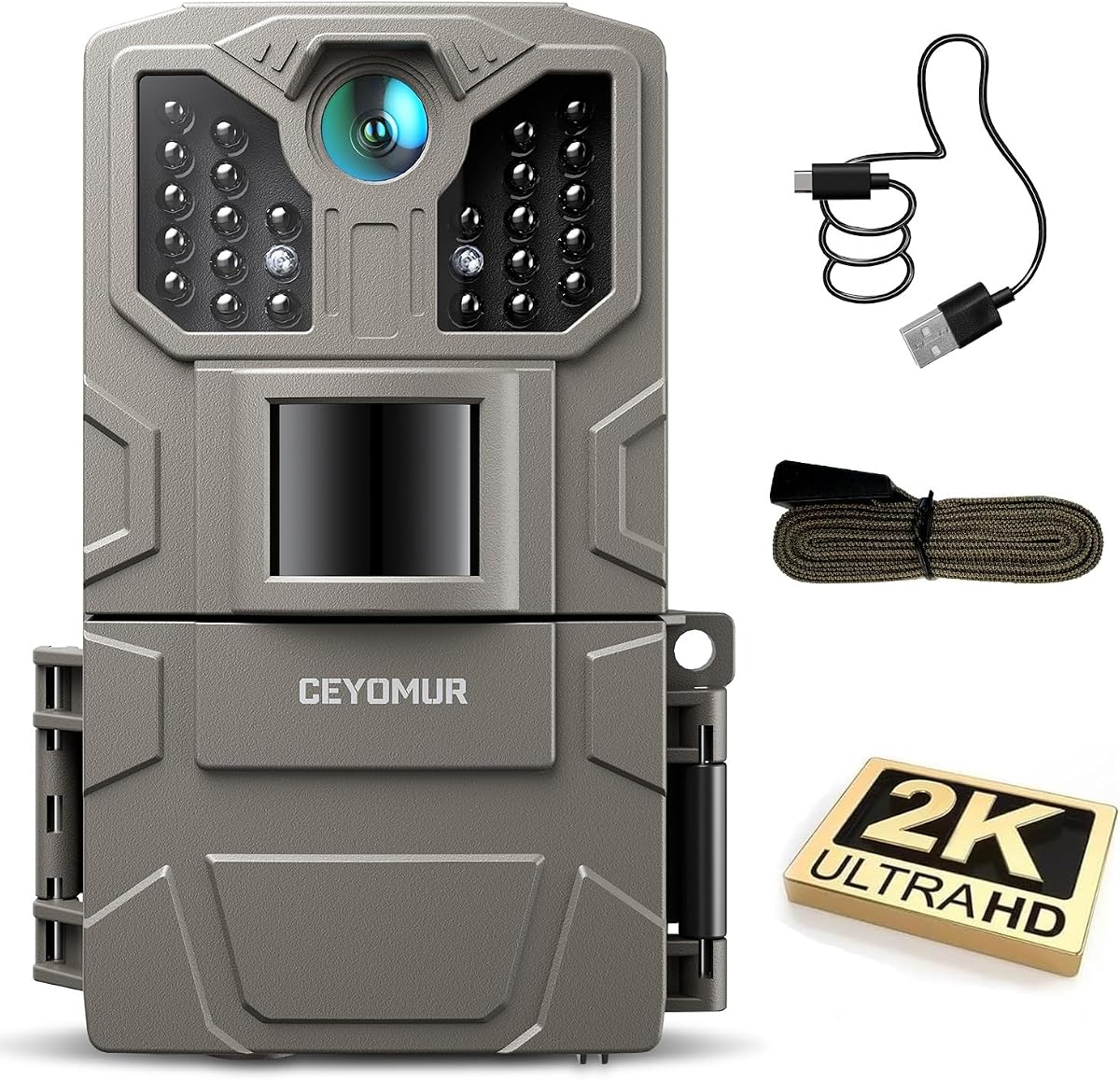
The CEYOMUR Trail Camera is designed for beginners needing reliable performance with simple power use. Its 4.0 rating indicates solid functionality for basic monitoring tasks without complex battery draining features.
We may earn a commission when you buy through this link, at no additional cost to you.
The integrated design with all controls on one side speeds up setup reducing handling and potential power loss. 2K video offers decent clarity while the IP66 waterproof rating ensures longevity in tough weather.
It relies on standard AA batteries and lacks advanced connectivity which keeps power needs low. This simplicity makes it a good choice for those who do not need live data feeds.
We recommend this for first-time users or budget conscious buyers. Its easy operation and reliable power management make it a practical tool for basic wildlife observation projects.
Straightforward interface reduces setup time and ensures quick deployment in the field.
Sealed body protects electronics to prevent power loss due to moisture or debris.
We may earn a commission when you buy through this link, at no additional cost to you.
The WOSPORTS Mini 2 Pack allows broad coverage with efficient power use across two locations. With a 4.2 rating these cameras are valued for their low power consumption and reliable performance in outdoor settings.
We may earn a commission when you buy through this link, at no additional cost to you.
Each unit runs on 4 AA batteries reducing overall drain compared to larger models. The included SD cards simplify setup saving time and ensuring immediate recording upon deployment.
While total battery usage doubles with two units the low power per camera makes this manageable. The camouflage design helps them blend in ensuring minimal disruption to wildlife behavior.
This kit is ideal for monitoring multiple entry points or trails simultaneously. Its balance of cost and battery efficiency makes it a smart choice for property wide security.
Two cameras capture broader areas with each using minimal power for extended use.
Included accessories reduce the need for additional purchases and speed up setup.
We may earn a commission when you buy through this link, at no additional cost to you.
The WOSODA Mini Trail Camera 4 Pack provides extensive monitoring with low power demands per unit. A 4.3 rating highlights its value as a comprehensive solution for securing large properties efficiently.
We may earn a commission when you buy through this link, at no additional cost to you.
Each camera uses only 4 AA batteries and the kit includes 16 AA batteries and 4 SD cards. This all-inclusive package reduces setup effort and allows immediate deployment across multiple areas.
Low power consumption ensures that even with four units battery changes remain infrequent. The compact design helps in stealth placement which is crucial for undisturbed wildlife observation.
We recommend this for landowners needing wide-area coverage without high power drain. The included batteries and easy setup make it a convenient choice for large-scale monitoring.
Included batteries and cards allow immediate use without extra shopping or delays.
Multiple small units provide broad coverage while maintaining low energy requirements overall.
We may earn a commission when you buy through this link, at no additional cost to you.
The GardePro E5S 2-Pack combines high resolution with efficient power use for wide monitoring. Its 4.4 rating reflects user trust in its ability to capture detailed photos without frequent battery changes.
We may earn a commission when you buy through this link, at no additional cost to you.
Two units support solar panels for extended runtime without manual intervention. The 64MP photos and 1296P videos ensure clear capture while the Non-Cellular design minimizes energy consumption.
Managing 16 batteries initially is a trade-off for the detailed imaging and dual coverage offered. However the solar option and low-power sensors significantly reduce long-term maintenance needs.
This kit is ideal for those needing two high-performance cameras efficiently. We suggest it for serious scouts prioritizing image quality and battery longevity across two key locations.
Two cameras allow broader area monitoring with shared solar and power management options.
Advanced sensors capture clear images that justify the battery usage for detailed analysis.
We may earn a commission when you buy through this link, at no additional cost to you.
Selecting a trail camera with optimal battery life involves balancing features power source, and usage patterns. This guide outlines critical factors to ensure your camera operates reliably over extended periods.
The type of battery used significantly impacts runtime. Lithium batteries generally last longer than alkaline especially in cold weather. Higher capacity rechargeable packs can reduce the frequency of changes for remote setups.
Look for cameras supporting standard lithium or rechargeable packs for consistent performance across seasons.
Solar panels provide an eco-friendly way to extend battery life indefinitely. Many models allow external solar connections or have built-in panels. This is essential for locations without easy access for maintenance.
Prioritize models with solar support if you need year-round monitoring without regular site visits.
Fast trigger speeds ensure action is captured without wasting battery on missed shots. Multiple PIR sensors improve accuracy reducing false triggers that drain power unnecessarily. This balance is vital for efficient operation.
Choose cameras with reliable sensors to minimize wasted energy and maximize true capture events.
Effective standby modes consume minimal power when no motion is detected. Cameras that sleep quickly after inactivity extend battery life significantly. This is crucial for areas with low wildlife traffic.
Ensure the model enters low-power standby quickly to preserve battery during quiet periods.
Cellular and WiFi connections transmit data wirelessly but consume much more power. Non-Cellular models save battery by requiring physical retrieval of SD cards. Decide if instant alerts are worth the extra power drain.
Opt for Non-Cellular cameras if battery life is your top priority over real-time notifications.
Higher resolution photos and videos use more power and storage. Adjusting settings to lower resolutions can extend battery life. Some cameras allow time-lapse modes to reduce continuous power consumption.
Use lower resolution settings or time-lapse modes to conserve power for long deployments.
Extreme cold reduces battery efficiency significantly. Look for cameras rated for low temperatures to prevent premature power loss. Insulated housing can also help maintain internal temperatures.
Check temperature ratings to ensure the battery performs well in your specific climate.
Advanced features like programmable detection zones help target specific areas and save power. Some cameras allow you to disable unnecessary functions like audio recording. These small adjustments improve overall efficiency.
Use programmable features to focus on key areas and reduce unnecessary battery drain.
Start by installing fresh batteries correctly ensuring polarity matches the guide. Use high-quality alkaline or lithium cells for best performance. Always test the camera before mounting in the field to verify operation.
Mount the camera securely using straps or screws to prevent accidental shifts that cause false triggers. Ensure the lens is clean and unobstructed to avoid energy waste from cleaning later. Position it at eye-level for best coverage.
Regularly inspect the unit for debris or weather damage. If using solar panels keep them clean for maximum charging efficiency. Check the battery status periodically through the display to avoid data loss from power failure.
Battery life varies based on activity and settings. A typical trail camera with alkaline batteries can last several months in low-activity zones. Using lithium batteries or solar panels can extend this to over a year for consistent monitoring.
Yes many models support rechargeable lithium batteries for extended life. Ensure the voltage matches the camera requirements to prevent damage. Some cameras even offer dedicated rechargeable packs designed for their specific systems.
Cellular connectivity consumes significantly more power than non-Cellular options. Transmitting images requires energy draining batteries faster. If battery longevity is crucial consider models that store images locally on an SD card.
Solar panels attach to the camera to charge internal batteries continuously. This allows for near-infinite runtime in sunny locations. It is ideal for remote areas where regular battery changes are difficult.
Lithium batteries generally last longer than alkaline especially in cold weather. High-capacity rechargeable packs are also excellent for extended use. Avoid standard alkaline batteries if planning deployments longer than six months.
Quick drain often results from frequent false triggers due to poor positioning. Settings like high sensitivity or constant video recording also increase usage. Adjust detection zones and lower video resolution to conserve power.
Some cellular and app-connected models allow remote battery status checks. Non-Cellular cameras usually require physical inspection to determine battery life. Check the product features to see if remote monitoring is supported.
Use lithium batteries and enable sleep modes to conserve power. Reduce video resolution and limit motion detection zones to essential areas. Also ensure solar panels are clean if using external power sources.
The WOSPORTS Trail Camera leads as the top pick for its balanced performance and flexible power options. For premium needs the Moultrie Edge 3 offers advanced detection while the WOSPORTS Mini remains a strong budget choice.
When selecting a camera consider whether solar compatibility or low-power sensors fit your deployment plan. Prioritizing battery management features ensures you capture all critical wildlife moments without constant maintenance.
Verify current prices and availability on Amazon before purchasing since deals change often. Choosing the right model ensures long-term reliability and optimal performance for your outdoor monitoring requirements.