
10Gb/s SFP+ Fiber Port Ethernet Adapter
4.3Editor score
Intel 82599ES Controller
PCIe x4 Interface
Compatible with Multiple OS
This guide compares the top Fiber Optic Network Interface Card models for speed, compatibility, and reliability in modern networking setups.
Modern networks demand faster and more reliable connections than ever before. A Fiber Optic Network Interface Card delivers high-speed data transmission with minimal latency and maximum stability. Choosing the right card ensures your system keeps pace with evolving bandwidth requirements.
We evaluated leading models based on chipset performance, interface compatibility, and feature sets. Our analysis covers everything from budget-friendly 10GbE options to advanced 25GbE adapters. Each product was assessed for real-world usability across servers, desktops, and NAS environments.
Every pick highlights key strengths, limitations, and ideal use cases for different users. You will find detailed breakdowns of specs, pros, and cons to guide your decision. Please note that prices and availability can change frequently over time.
4.3Editor score

5.0Editor score
4.9Editor score
This side-by-side comparison highlights key specifications and features across all ten selected Fiber Optic Network Interface Card models to help you make an informed decision quickly.


The StarTech 2-Port GbE SFP Network Card stands out as the top choice for reliability and compatibility. It holds a perfect 5.0 rating, reflecting exceptional performance in real-world server and desktop environments. This card adds two gigabit open SFP slots to any compatible system using an Intel I350 chipset.
We may earn a commission when you buy through this link, at no additional cost to you.
Its standout feature is the unlocked 1GB SFP slots that work with any Singlemode or Multimode MSA-compliant modules. You can use fiber optics for longer cable runs while enjoying immunity to electromagnetic interference. The built-in heatsink ensures sustained performance even under heavy load conditions.
While it is limited to 1Gbps speeds which might not suit high-bandwidth NAS transfers, it is perfect for stable office networks. The inclusion of low profile brackets makes it ideal for smaller form factor cases where space is tight.
Server administrators and desktop users seeking stable connectivity will benefit most from this card. It supports advanced features like PXE boot and jumbo frames making it versatile for various IT manageability tasks. We recommend this for those prioritizing reliability over raw speed.
The Intel I350-AM2 chipset delivers high performance with TCP/UDP offloading and link aggregation capabilities. This reduces CPU load and improves overall network efficiency across your system.
With unlocked SFP slots you can choose between fiber optic or direct attach copper cables. This flexibility allows you to optimize your cabling based on distance and environment.
We may earn a commission when you buy through this link, at no additional cost to you.
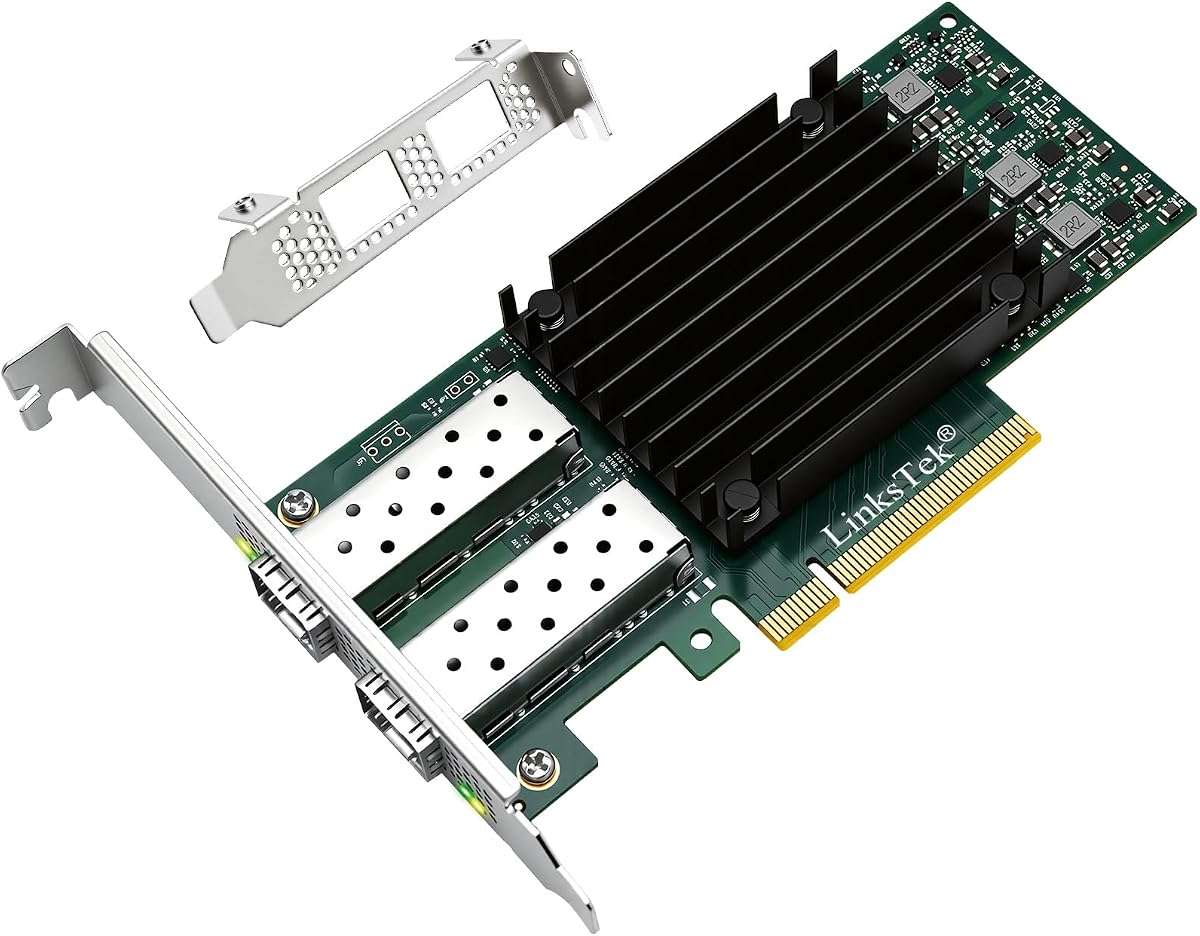
This LinksTek X520 DA1 adapter is the best budget option for users needing 10GbE speeds without breaking the bank. With a 4.3 rating it offers stable and unified connectivity for NAS and desktop PCs. The Intel 82599ES controller ensures reliable performance for gaming and streaming.
We may earn a commission when you buy through this link, at no additional cost to you.
It delivers 10GbE LAN and SAN connectivity with support for major virtualization technologies. The PCIe 2.0 x4 interface provides sufficient bandwidth for most home and small office setups. You get both full height and low profile brackets for easy installation in various cases.
While it requires driver installation on Windows client OS and lacks PCIe 3.0 speed the cost savings are significant. The card is perfect for upgrading a desktop for media streaming or NAS file transfers. It does not support hot swapping which limits server flexibility.
Gamers and NAS owners looking to upgrade from gigabit will find great value here. The inclusion of VLAN tagging and traffic management features adds professional utility to the budget price. We recommend this for cost-conscious buyers needing high speed.
This adapter delivers 10GbE speeds at a fraction of the cost of premium branded cards. It includes necessary brackets and supports multiple operating systems for broad compatibility.
Features like SR-IOV and VMDq enable efficient virtual machine networking. This makes it ideal for home labs or virtualization projects on a budget.
We may earn a commission when you buy through this link, at no additional cost to you.
The CX4121A represents the pinnacle of performance for serious storage and virtualization servers. Holding a 4.9 rating it provides dual 25GbE SFP28 fiber ports for maximum throughput. Powered by the Mellanox ConnectX-4 Lx EN controller it handles heavy data loads effortlessly.
We may earn a commission when you buy through this link, at no additional cost to you.
Its intelligent RDMA Ethernet adapter design supports advanced protocols like NVGRE and VXLAN for overlay networks. The PCIe 3.0 x8 interface ensures full bandwidth delivery to both ports simultaneously. It is ideal for cloud infrastructure and big data analytics environments.
The main trade-off is the requirement for a PCIe x8 slot and higher investment. However for data centers the speed and efficiency gains justify the cost. It includes Open Fabrics support and auto-negotiation for flexible deployment.
Enterprise users and server architects needing top-tier connectivity should choose this model. It supports virtualization and storage servers with advanced offload capabilities for improved CPU efficiency. We recommend it for those requiring the fastest available speeds.
Supports Remote Direct Memory Access to reduce CPU overhead during data transfers. This is crucial for high-performance storage clusters and virtualized environments.
The 25GbE speed and PCIe 3.0 ensure you won't outgrow the card quickly. It meets the demands of next-generation server applications effectively.
We may earn a commission when you buy through this link, at no additional cost to you.
Asus delivers a visually appealing adapter with the XG-C100F featuring a sophisticated aluminum heatsink. With a 4.3 rating it combines form and function for desktop gaming setups needing fiber speed. It offers blazing fast 10 Gbps speeds to complete tasks ten times faster than gigabit.
We may earn a commission when you buy through this link, at no additional cost to you.
The built-in cooling keeps the card cool during high performance tasks ensuring sustained reliability. SFP+ cage allows for both fiber optic and Direct-Attach copper connections giving you flexibility. Automatic prioritization boosts bandwidth to important streams or games via QoS technology.
While it lacks some of the deeper virtualization features found in server cards it is ideal for power users. The design prioritizes stability and style without compromising on raw speed. It is simple to install and works well in enthusiast PCs.
Gamers and enthusiasts who value aesthetics alongside performance will appreciate this choice. It handles large file transfers smoothly and supports various connection types. We recommend it for home users seeking a reliable and attractive upgrade.
The aluminum heatsink passively cools the card to prevent thermal throttling. This ensures consistent performance even during extended high traffic periods.
QoS technology automatically boosts bandwidth for gaming to reduce latency. This creates a smoother online experience for competitive players.
We may earn a commission when you buy through this link, at no additional cost to you.
This 10Gtek card offers a versatile solution with an original Intel 82599EN controller for stability. It holds a 4.4 rating and supports a wide range of systems including Windows Server and VMware. The single SFP+ port connects to 10 Gigabit modules for high-speed data center environments.
We may earn a commission when you buy through this link, at no additional cost to you.
It supports I/O virtualization making servers more stable during heavy workloads. The PCIe X8 lane ensures full bandwidth usage for the port. You get a low profile bracket and full height bracket included in the package for flexibility.
The card does not support 1G or 2.5G speeds which can be a limitation for mixed networks. However it excels in pure 10GbE setups. The 30 days free return and 3 year warranty add significant value to the purchase.
Virtualization users and those migrating from Intel branded cards will find this appealing. It is compatible with many enterprise OS options and offers reliable performance. We recommend it for anyone needing a robust single port solution.
Equipped with high quality original Intel controller for proven stability. This reduces compatibility issues in virtualization environments.
The 3 year warranty and lifetime technology support provide peace of mind. This is rare for third-party network adapters.
We may earn a commission when you buy through this link, at no additional cost to you.
This card features the Realtek RTL8127 controller with exclusive RealWoW technology for enhanced stability. A 4.5 rating confirms its high-stability design for daily and professional network needs. It uses a PCIe Gen4 x1 lane design to allow seamless installation on most computers.
We may earn a commission when you buy through this link, at no additional cost to you.
The single 10G SFP+ port supports DAC or AOC cables offering a dramatic 10x speed increase. Comprehensive protocol support includes VLAN tagging and flow control to adapt to complex network environments. You can download drivers quickly by scanning the QR code on the NIC.
It is limited to Linux kernels up to 6.15 and does not support FreeBSD or ESX/ESXi. This means you must verify your specific OS version before purchase. However for standard Windows and Linux servers it performs excellently.
Users looking to utilize PCIe Gen4 lanes will appreciate the modern interface. It supports PXE and WOL features making it suitable for various deployment scenarios. We recommend it for those needing a stable Gen4 compatible adapter.
Features PCIe Gen4 x1 lane design to utilize newer motherboard slots. This ensures forward compatibility with modern systems.
Exclusive RealWoW technology significantly enhances data transmission stability. This reduces errors during high throughput tasks.
We may earn a commission when you buy through this link, at no additional cost to you.
This card uses the genuine Intel 82599EN silicon for sustained 10 Gigabit throughput. With a 4.5 rating it delivers reliable NAS transfers and VM migration without vendor lock. Third-party DAC twinax and AOC cables work seamlessly without rejection issues.
We may earn a commission when you buy through this link, at no additional cost to you.
It is plug and play on Proxmox Truenas Unraid and ESXI with minimal driver setup. Only four PCIe lanes are used leaving the rest of the board free. You get both full-height and low-profile brackets in the box for flexible installation.
The passive heatsink runs warm by design so case airflow is critical. If you clip a small fan to it in a silent build it performs optimally. Jumbo frames to 9KB run in hardware for reduced overhead.
Users building a home lab or NAS server will value the native compatibility. It removes the frustration of blocked ports found on branded Intel cards. We recommend this for open OS enthusiasts and storage admins.
No vendor lock on SFP+ cage allows third-party optics usage. This saves money while maintaining full Intel chipset performance.
Detected by QNAP Synology Ubuntu and Debian with no driver steps. Ideal for network attached storage upgrades.
We may earn a commission when you buy through this link, at no additional cost to you.
This card offers a convenient package that includes a multimode optical module for immediate use. With 82599EN chip it ensures stable performance low consumption and low latency for fiber optics. It offloads TCP UDP IP checksum to free up CPU resources efficiently.
We may earn a commission when you buy through this link, at no additional cost to you.
The PCIe X1 port is compatible with various slots making installation easy. Gold-plate fingers provide effective antioxidant protection and reduce hardware contact faults. The card can auto adaptive transmission rate supporting half and full duplex modes.
While it lacks a rating this model shows promise for industrial PC and workstation use. It is compatible with multiple OS including Windows Linux and VMware. The included module saves you from needing to buy one separately.
Users needing a quick deployment with necessary optics will find this handy. It supports multiple cable ports including SFP+ single mode and multimode. We recommend it for those needing an all-in-one fiber solution.
Comes with one piece multimode optical module for out of box use. This simplifies the setup process significantly.
Gold-plate fingers reduce contact faults and improve service life. This ensures reliable connections in demanding environments.
We may earn a commission when you buy through this link, at no additional cost to you.
The TP-Link TX401 delivers extreme speeds via 10GBase-T technology on copper connections. With a 4.2 rating it is 10 times faster than typical gigabit adapters. It is versatile with ultra-low latency ensuring smooth data transmissions for access and local storage.
We may earn a commission when you buy through this link, at no additional cost to you.
Backwards compatible with multiple data rates it automatically negotiates to your switch speed. Quality of Service technology prioritizes performance for gamers to avoid network congestion. A 1.5 m CAT6A Ethernet cable is included to maximize performance.
This card does not have SFP slots but excels as a copper fiber alternative. It fits standard and mini tower cases with both bracket types. The 2-year warranty and technical support add to its appeal.
Gaming and home office users with Cat6A cabling will benefit most. It simplifies 10G networking without requiring fiber optics. We recommend this for those upgrading existing copper infrastructure.
Includes a CAT6A cable rated for 10Gbps to maximize performance. This saves the cost and hassle of buying a separate cable.
QoS technology delivers prioritized performance for games. It ensures network congestion does not impact your play.
We may earn a commission when you buy through this link, at no additional cost to you.
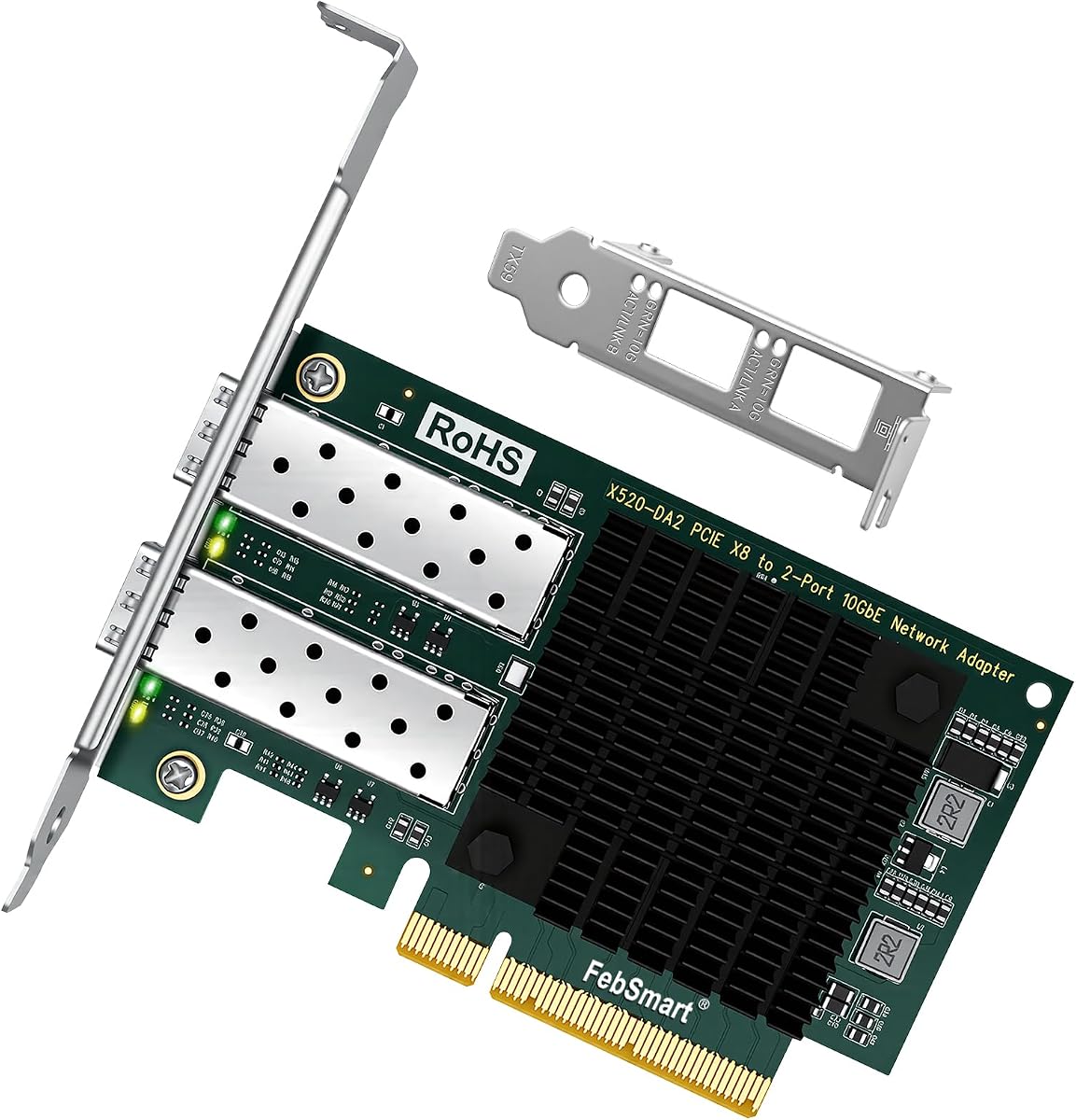
The FebSmart X520-DA2 provides dual 10GbE SFP+ ports for redundant connectivity. With a 4.8 rating it delivers stable connectivity for desktops and data centers. Powered by Intel 82599ES controller it is ideal for virtualization and storage-intensive environments.
We may earn a commission when you buy through this link, at no additional cost to you.
It supports 40 Gbps total bandwidth enabling full-duplex connections for both paths. Features like IEEE 802.3ae and Intel Virtualization Technology enhance performance and management. It is compliant with Open Fabrics standards for broad system support.
This card does not support 1G/2.5G speeds which limits mixed environments. It requires driver installation on Windows client systems for full functionality. The low and full height brackets ensure compatibility with various PC sizes.
System builders needing redundancy will appreciate the dual port design. It supports storage protocols and traffic management for efficient network use. We recommend this for advanced users needing dual-link bandwidth.
Dual 10GbE ports allow for link aggregation and failover setups. This ensures continuous uptime for critical server tasks.
Supports storage over Ethernet protocols like iSCSI and FCoE. This enhances performance for virtualized storage systems.
We may earn a commission when you buy through this link, at no additional cost to you.
Choosing the right Fiber Optic Network Interface Card requires understanding your specific network needs and system compatibility. This guide covers the essential factors to consider.
Determine whether you need 1Gbps 10Gbps or 25Gbps speeds based on your traffic. PCIe 3.0 and Gen4 interfaces offer higher bandwidth than older 2.0 versions for better throughput.
Match the speed generation to your current infrastructure to avoid bottlenecks in your network.
Intel controllers offer proven reliability for virtualization and server tasks. Realtek and Mellanox options provide excellent cost-effective alternatives for home or cloud use.
Always verify the chipset supports your specific OS and virtualization features.
Single or dual SFP ports let you connect fiber or copper directly. Choose the port count that matches your redundancy and bandwidth requirements.
Ensure you have the right fiber transceivers or DAC cables to pair with the ports.
Check driver availability for your server or desktop OS. Windows and Linux usually have broad support but FreeBSD or ESXi may require specific firmware.
Confirm compatibility to avoid installation issues or limited functionality.
Look for support for SR-IOV and VMDq if you run multiple VMs. These features improve performance and reduce CPU load during data transfers.
Advanced virtualization support is crucial for server and lab environments.
Small cases need low profile brackets while servers need full height. Most cards include both but verify what is in the package.
Ensure the card fits your motherboard and case dimensions before purchasing.
Features like Jumbo frames and VLAN tagging improve network management. Offloading checksums to the card reduces CPU usage significantly.
Prioritize cards that support protocols relevant to your storage or VLAN needs.
Third-party cards often include warranties and lifetime support. Brand cards may have better firmware updates but higher costs.
Choose a seller that offers reliable return policies and documentation.
Power down your computer and ground yourself to avoid static before installing the card. Insert the card firmly into the PCIe slot and secure it with screws to ensure stability.
Install the latest drivers from the manufacturer site to enable full features. Use a network analyzer to verify speed and check for errors after installation.
Keep the heatsink free of dust using compressed air periodically. Check firmware updates to maintain compatibility and fix any bugs.
Yes you typically need SFP transceivers paired with fiber cables or DAC cables. The cards use standard SFP ports that accept third party optics if supported.
Most home routers use copper ports so you will need a compatible switch. These cards are best for servers NAS or high speed LAN setups.
Some cards support auto negotiation but you may need to manually set the speed. Check the specs for specific compatibility with 1Gbps switches.
Server OS usually has built-in drivers but client Windows needs manual installs. Always download the latest pack from the card vendor site.
PCIe 3.0 and 4.0 provide higher bandwidth for high-speed networks. Ensure your motherboard supports the generation needed for full performance.
Dual ports offer redundancy and link aggregation for higher reliability. This is essential for servers that cannot afford network downtime.
VLANs are optional but helpful for network segmentation. Most cards support VLAN tagging to manage traffic efficiently.
Yes most support virtualization features like SR-IOV. This allows VMs to access the network with minimal overhead.
We explored ten top Fiber Optic Network Interface Card models from budget to premium options. The StarTech and LinksTek adapters excel in reliability and cost respectively for different users.
Prioritize chipset compatibility and speed based on your network goals. Virtualization features and form factor matter just as much as raw speed in practice.
Remember to check current prices and driver availability before buying. These cards deliver excellent upgrades for servers and enthusiast desktops alike.