
Siraya Tech Tenacious Highly Flexible 3D Printer Resin
4.7Editor score
Rubber-like flexibility
Fast rebound action
High impact resistance
This guide compares the top flexible resin for 3D printing options available in October 2026 to help makers select the right material for their projects.
Flexible resin for 3D printing opens up new possibilities for creating durable and impact-resistant parts. Whether you need soft grips or shock-absorbing components, choosing the right formulation matters for success.
We evaluated ten leading products based on flexibility, durability, ease of use, and print quality. Each entry balances cost with performance to suit different needs and printer types available today.
Every pick highlights key strengths and trade-offs so you can decide quickly. Note that product availability and pricing vary over time, so check current listings before placing an order.
4.7Editor score
4.7Editor score
4.2Editor score
The table below lists all ten products side by side so you can compare key attributes at a glance and find the option that matches your specific workflow and project requirements.



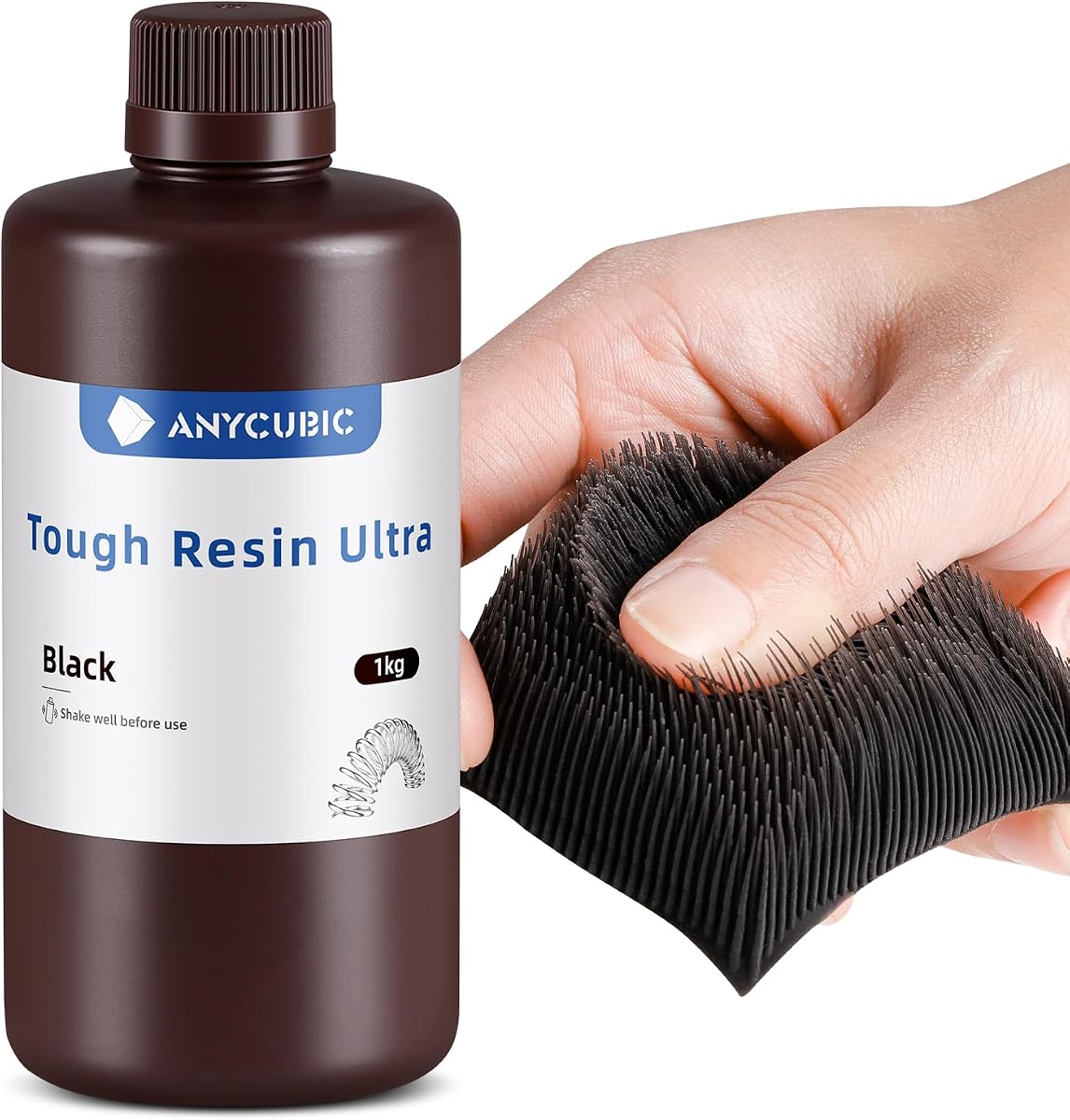
The ANYCUBIC Ultra Tough Resin stands out as a top choice for flexible printing. With a 4.7 rating, it delivers a balance of flexibility and impact resistance that suits many makers.
We may earn a commission when you buy through this link, at no additional cost to you.
Its exceptional flexibility allows printed models to recover shape quickly after deformation. This property makes it ideal for articulated figures or wearable items needing durability and comfort.
While the resin performs well, mixing it with other colors might alter the final shade slightly. This trade-off is minor compared to the benefits of its resilience and skin-friendly finish.
Anyone needing reliable flexible prints for prototypes or wearables should consider this option. It simplifies workflows with strong performance across varied printing conditions.
The resin elevates sharpness in fine details like hair textures while allowing seamless part movement.
It can be used directly for models or as an additive to boost toughness in other resin blends.
We may earn a commission when you buy through this link, at no additional cost to you.
Siraya Tech Tenacious Highly Flexible offers a softer and more rubber-like experience than its classic version. Rated at 4.7, it brings quick rebound and elasticity for resilient prints.
We may earn a commission when you buy through this link, at no additional cost to you.
This formulation withstands extreme bending and compression returning to shape quickly. It excels in shock-absorbing components or pliable prototypes needing dynamic flexibility without cracking.
While highly flexible, it may not suit every application where the original Tenacious resin fits best. This limitation is small given its strong impact resistance and ability to boost other resins.
Users seeking affordable yet highly flexible resins for durable parts will appreciate this option. It supports a wide range of practical projects from tool grips to gaskets effectively.
The new formulation delivers faster rebound and incredible elasticity compared to the original Tenacious resin.
It is ideal for soft grips, gaskets, and pliable prototypes that demand high flexibility and resilience.
We may earn a commission when you buy through this link, at no additional cost to you.
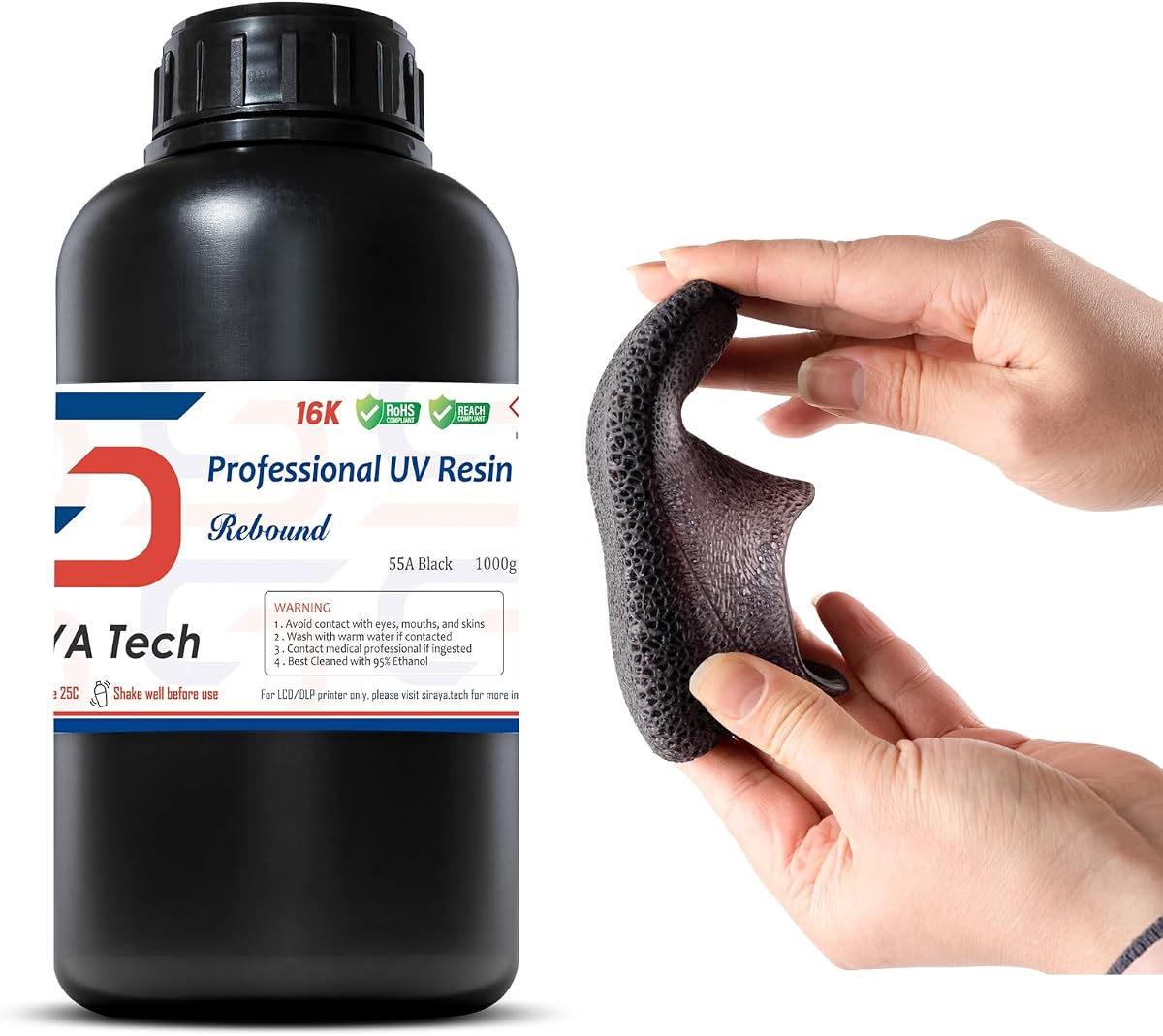
Siraya Tech Rebound 55A provides significantly faster rebound than standard elastic resins. With a 4.2 rating, it targets applications needing quick shape recovery and impact absorption.
We may earn a commission when you buy through this link, at no additional cost to you.
Its 55A Shore hardness balances flexibility with structural integrity for shock-absorbing components. It prints on standard LCD or DLP printers and cleans with isopropyl alcohol easily.
Though initial testing shows good resilience over cycles long-term performance data is still growing. This uncertainty is outweighed by its ease of use and versatile prototyping potential.
Designers requiring precise elastic parts like seals or PPE prototypes will find value here. It delivers consistent results without complex mixing or special cleaning steps during use.
The 55A Shore hardness offers a mix of flexibility and integrity softer than Tenacious Flex.
It suits shock-absorbing components and industrial prototyping where rebound performance matters most.
We may earn a commission when you buy through this link, at no additional cost to you.
Superflex 3D Printer Resin combines softness with strength to simulate rubber prototypes. Rated at 4.4, it supports fast printing and passes ISO safety tests when properly cured.
We may earn a commission when you buy through this link, at no additional cost to you.
Its 80A Shore hardness and 100% elongation make it suitable for cushioning and shock absorption. Printing a 50um layer in under two seconds enhances productivity by up to forty percent.
Users note that it comes only in clear which limits aesthetic options for some projects. Despite this, the speed and certified safety profile make it a strong practical choice for industrial use.
Anyone seeking speed and reliable flexible prototypes will benefit from this resin. It is ideal for farms needing high throughput without sacrificing mechanical performance or safety.
Printing a 50um layer in 1.7 seconds saves time and electricity on monochrome LCD printers.
When properly cleaned and cured SuperFlex prints pass the ISO 10993-5 test for safety.
We may earn a commission when you buy through this link, at no additional cost to you.
SUNLU Flexible 3D Printer Resin offers balanced softness and strength for soft items. With a 3.5 rating, it provides high impact resistance and a smooth finish after cleaning.
We may earn a commission when you buy through this link, at no additional cost to you.
Its 70A Shore hardness and 135% elongation ensure models bend without breaking. The low shrinkage rate maintains accurate shapes while the leak-proof bottle reduces transport damage.
Some users find the rating lower than competitors which might reflect batch variability or handling needs. Still the minimal odor and high compatibility make it accessible for many LCD or DLP users.
Makers prioritizing bendability and durability at a standard price point should consider this. It suits general-purpose soft prints needing reliable performance across common printer types.
Printed models are durable and able to withstand drops without breaking due to flexibility.
It prints at 365-405nm wavelength compatible with 99% of printers including LCD and DLP.
We may earn a commission when you buy through this link, at no additional cost to you.
ANYCUBIC Tough Resin 2.0 delivers upgraded flexural strength and high flexibility. Rated at 4.6, it resists peeling and cracking during vibrations for durable thin models.
We may earn a commission when you buy through this link, at no additional cost to you.
Its formulation reduces volatile compounds for a comfortable low-odor environment. The resin maintains precision with minimal shrinkage ensuring smooth surfaces and clear details for parts.
Grey-only availability may limit users needing color variety but the performance remains solid. The wide compatibility with most LCD printers simplifies adoption across various setups.
Users needing tough and precise parts for industrial or daily design will find it useful. It balances strength and flexibility well for parts requiring long-term durability.
It exhibits formidable strength and flexibility resisting peeling and stress marks effectively.
The formulation significantly reduces volatile organic compounds for a comfortable environment.
We may earn a commission when you buy through this link, at no additional cost to you.
SUNLU High Toughness 3D Printer Resin features elongation five times higher than standard resin. Rated at 4.7, it ensures models are unbreakable and durable for structural parts.
We may earn a commission when you buy through this link, at no additional cost to you.
Low viscosity and high flowability lead to shorter curing time and easier model formation. The low shrinkage reduces distortion ensuring crisp details and improved success rates.
It remains grey which may not suit all design needs but the toughness is notable. The low odor and compatibility with most LCD or DLP printers enhance user experience.
Users needing high performance and reliability for solid parts should consider this. It provides consistent quality for makers needing strong flexible components for prototypes.
Low viscosity and high flowability result in shorter curing time and easier model formation.
The R&D team focuses on reducing volume shrinkage during curing to improve stability.
We may earn a commission when you buy through this link, at no additional cost to you.
ELEGOO Tough 3D Printer Resin delivers excellent flexibility and extraordinary resilience. Rated at 4.5, it withstands tension and stress with a Shore hardness of 84.7D.
We may earn a commission when you buy through this link, at no additional cost to you.
Its high-strength properties allow drilling without cracks and resist corrosion in humid environments. The fine texture and low odor provide a comfortable experience for producing high-quality prints.
The higher hardness means it may be less soft than other flexible options. This trade-off supports strong impact resistance making it suitable for tools and structural parts.
Anyone needing durable flexible parts for engineering prototypes will appreciate this option. It delivers reliable performance for hangers jigs and functional components needing strength.
It is easy to bend but not easy to break with strong damage resistance.
It resists brittleness and corrosion even in high humidity or humid environments.
We may earn a commission when you buy through this link, at no additional cost to you.
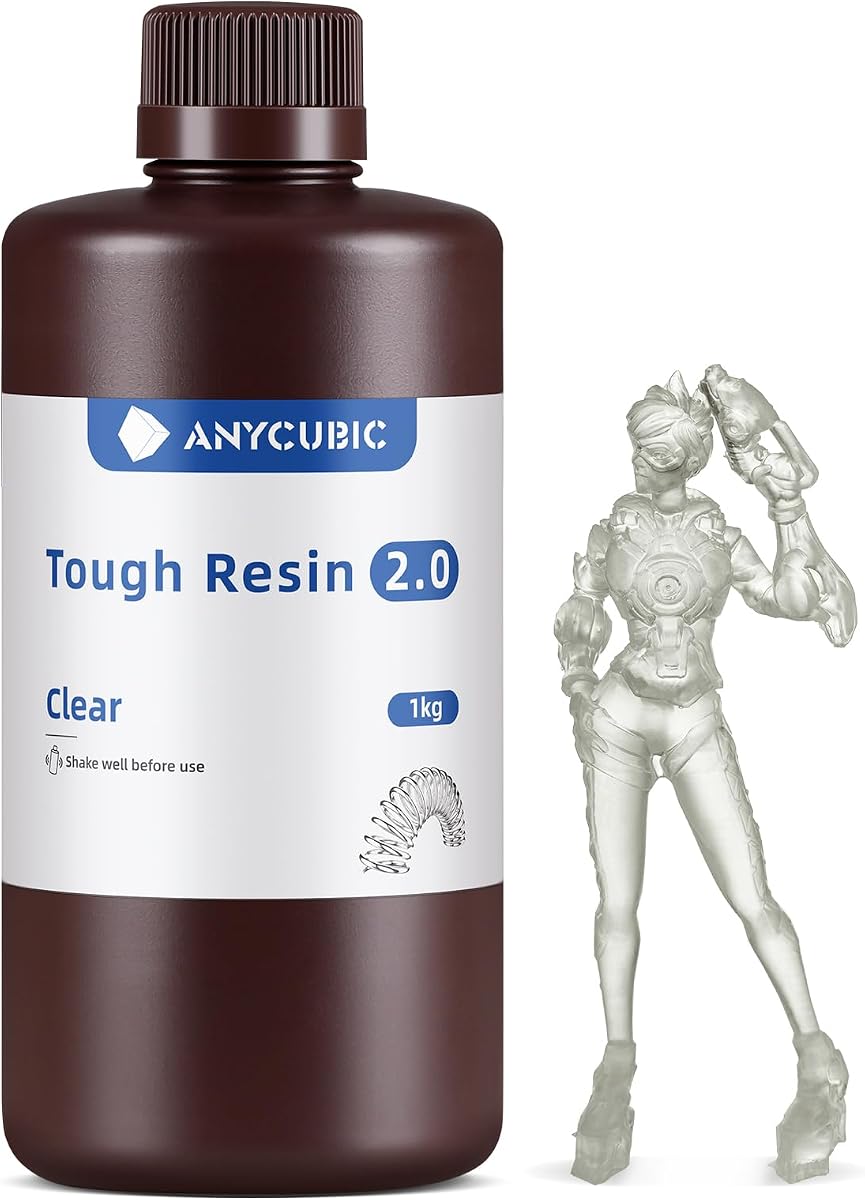
ANYCUBIC Tough 3D Printer Resin 2.0 achieves significant enhancement in flexural strength. Rated at 4.6, it offers superior toughness reducing breakage for delicate components.
We may earn a commission when you buy through this link, at no additional cost to you.
Its exceptional stretch resists damage from cyclic vibrations and drops. The low-odor composition and high precision ensure minimal shrinkage and clear details for models.
Available in clear only which may limit design choices but the toughness is clear. The industry-wide compatibility ensures it works across varied equipment setups.
Users needing reliable and precise parts for industrial applications should consider this. It balances flexibility and strength well for high-strength model production needs.
It significantly reduces the likelihood of breakage when printing delicate components.
It cuts down volatile organic compounds positioning itself as an environmentally friendly option.
We may earn a commission when you buy through this link, at no additional cost to you.
This resin simulates rubber with 90A Shore hardness and both softness and strength. Rated at 4.4, it folds and bends repeatedly without breaking or tearing.
We may earn a commission when you buy through this link, at no additional cost to you.
Its formula keeps cool under stress preventing brittle failures in handled parts. The high precision and low odor deliver crisp accurate prints suitable for workshop technical applications.
Good ventilation is needed though it remains low in odor compared to many resins. The design targets makers needing flexible and durable parts for various projects.
Designers and engineers needing reliable wearables or prototypes will find it useful. It handles shock-absorbing components and functional parts with tough performance.
Shore 90A hardness can simulate the toughness of rubber with softness and strength.
It is ideal for gaskets protective cases toy tires and ergonomic grips.
We may earn a commission when you buy through this link, at no additional cost to you.
Selecting the right flexible resin involves balancing hardness elongation and print requirements for your needs.
Shore hardness indicates how soft or hard the cured part will feel. Lower numbers mean softer rubber-like parts while higher numbers approach rigid plastics. Matching hardness to your application ensures proper flexibility and durability.
Choose a hardness that suits the function whether for soft grips or shock-absorbing components.
Elongation measures how far a part can stretch before breaking. Higher values mean more stretch without failure making it critical for dynamic parts. Check the value to ensure it fits your bending needs.
Look for elongation above one hundred percent for true flexible performance.
Impact resistance ensures parts survive drops or shocks without cracking. Flexible resins often excel here but verify the rating for your use. This factor protects functional prototypes in active environments.
Prioritize resins with high impact resistance for durable tools.
Confirm the resin works with your printer type and wavelength. Most LCD or DLP printers use 405nm UV but some vary. Compatibility avoids failed prints and wasted material during trials.
Check that the resin matches your printer settings and wavelength.
Resins with low odor improve comfort during printing. Some are ISO certified for skin safety after curing. These features matter for makers working in shared or enclosed spaces.
Choose low-odor or certified resins for safer workflows.
Some flexible resins require standard alcohol cleaning while others need special care. Simple steps save time and reduce effort. Easy handling is key for consistent results across prints.
Select resins with easy cleaning routines to save time.
Colors vary by product affecting visual design outcomes. Some flexible resins come only in clear or black. Matching your color needs prevents extra dye steps or mismatches.
Ensure the color fits your design requirements before buying.
Shrinkage affects size accuracy during curing. Low shrinkage keeps parts true to scale for fits. This matters for precise assemblies needing dimensional stability.
Opt for resins with low shrinkage to maintain accuracy.
Start by shaking the resin bottle gently to ensure uniform mixing. Avoid vigorous shaking that creates bubbles which can weaken prints during curing.
Print on a clean build plate with correct adhesion settings. Use support structures where needed to reduce sagging during flexible prints.
Clean models with isopropyl alcohol for standard resins. Ensure full UV curing before handling to achieve maximum flexibility and durability.
Flexible resin creates parts with rubber-like properties suitable for shock absorbers gaskets grips and wearable items. It handles repeated bending without cracking making it ideal for prototypes needing resilience and tactile function.
Many flexible resins are ISO certified for safety after proper cleaning and curing. Some options ensure a non-irritating finish suitable for wearables. Always check the safety data sheet before prolonged contact.
Yes several flexible resins can serve as additives to boost toughness or flexibility in other resins. Mixing may affect color or final properties so test small batches before scaling up your prints.
Most flexible resins work with standard LCD or DLP printers using 405nm UV light. No special equipment is needed beyond proper curing and cleaning. Just ensure settings match the resin requirements for success.
After washing clean parts with isopropyl alcohol and place them under UV light for full curing. Follow the recommended time to achieve maximum flexibility and avoid residual softness or stickiness.
Flexible resin usually lasts about one year when stored in a cool dark place. Keep the cap sealed to prevent moisture or air degradation. Proper storage maintains print quality over time.
The top picks like ANYCUBIC Ultra Tough Siraya Tech Tenacious Flexible and Siraya Tech Rebound 55A cover varied needs from budgets to premium prototypes. Each offers unique strengths to match project demands.
Prioritize hardness elongation and print compatibility when deciding. These factors ensure your models balance flexibility durability and ease of production effectively for best outcomes.
Remember to check current prices and availability as they can change. Verify listings for the latest features before placing an order to ensure satisfaction with your chosen resin.