
HGLRC Mini M100 GPS Module
4.6Editor score
Fits 2 to 7 inch drones
Ceramic antenna for stability
Clear onboard status indicators
Compare the top GPS modules for drones including HGLRC, SEQURE, and BZGNSS to find the best navigation solution for your FPV or fixed-wing UAV project today.
Selecting the right GPS module is crucial for reliable navigation and safety in modern drone builds. High-quality units offer fast satellite locks, accurate positioning, and essential features like built-in compasses for autonomous flight modes.
This guide evaluates ten leading GPS modules based on chip generation, antenna stability, protocol support, and compatibility with popular flight controllers. We analyze real-world performance data to help you choose the most capable hardware for your specific aircraft.
Each selection highlights unique strengths ranging from compact racing designs to robust long-range capabilities. While rankings reflect current market performance, availability and pricing may vary by region and time. Always verify the specifications before finalizing your purchase decision.
4.6Editor score
4.8Editor score

4.5Editor score
The following table provides a side-by-side comparison of all ten selected GPS modules. It highlights key technical specifications to help you quickly identify the best fit for your flight controller and aircraft type.




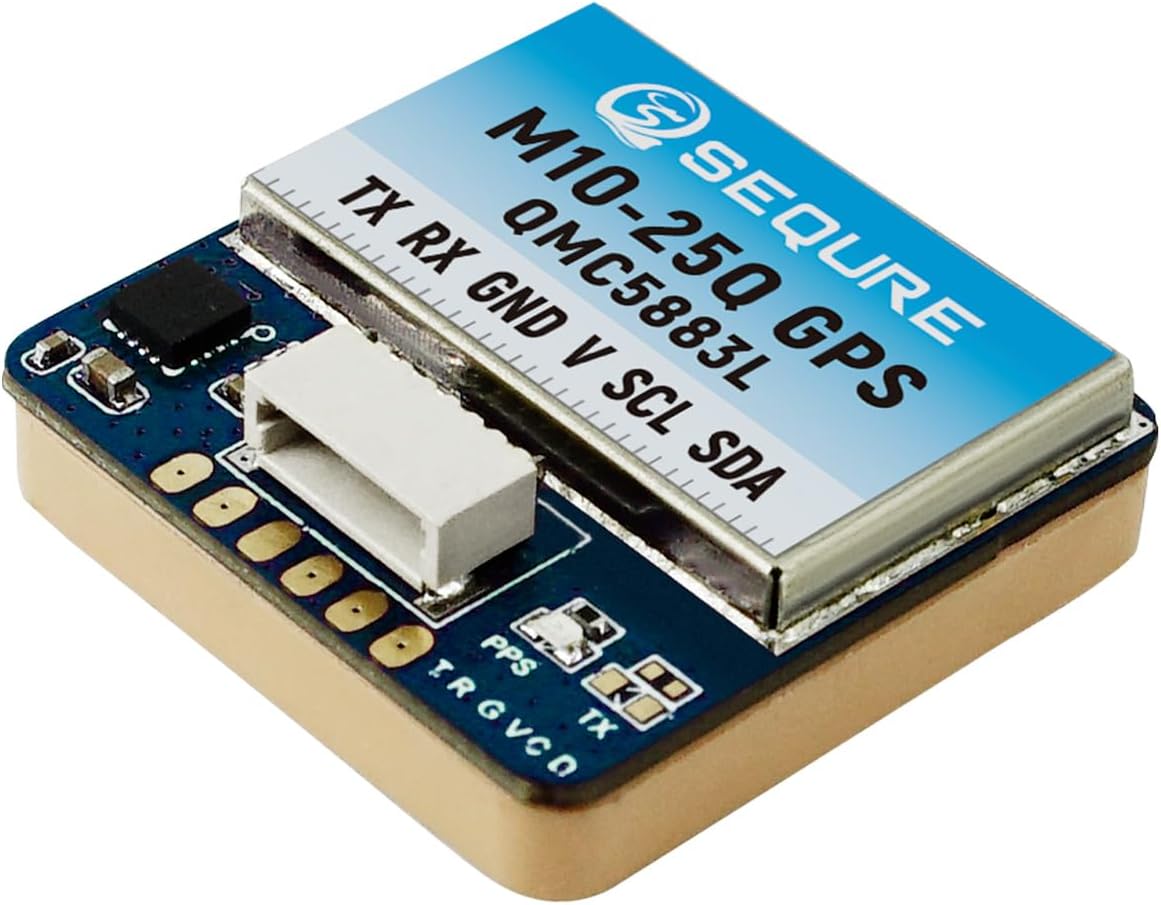
This module stands out with its upgraded 10th generation chip and ceramic antenna. It delivers reliable performance for FPV racing and fixed-wing applications alike.
We may earn a commission when you buy through this link, at no additional cost to you.
Its support for multiple GNSS systems ensures you get fast locks anywhere. The low power consumption makes it efficient for longer flights.
While soldering is an option, the plug-and-play feature adds convenience for builders who want to save time. It is compact enough for smaller drones yet robust for larger builds.
Pilots seeking high reliability and versatile compatibility will find this unit essential. It balances advanced features with ease of installation perfectly.
The 10Hz update rate ensures your flight controller gets real-time data for precise maneuvering.
The externally expanded PCB design with ceramic antenna minimizes signal interference for accurate tracking.
We may earn a commission when you buy through this link, at no additional cost to you.
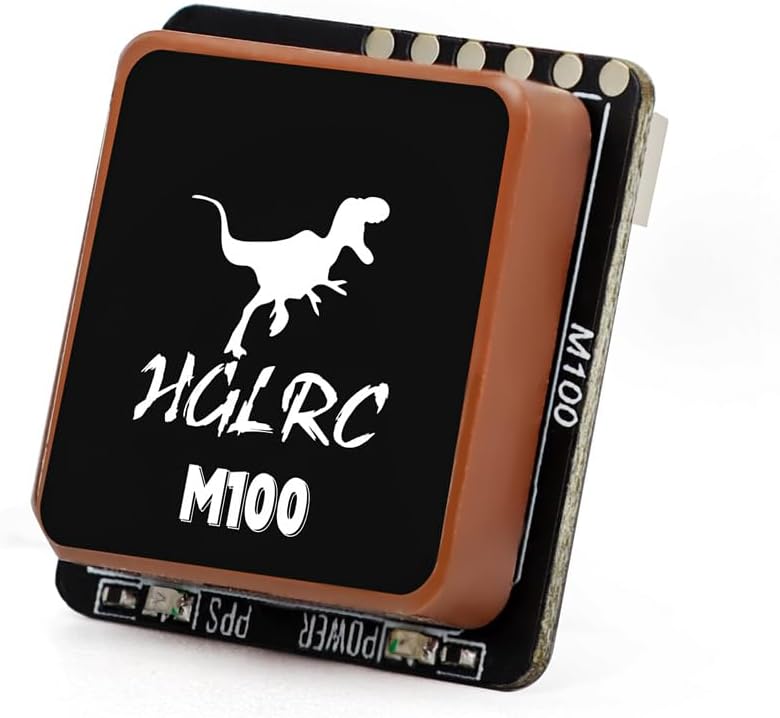
Ideal for budget-conscious builders, this mini module fits 2 to 7 inch drones easily. It provides stable positioning without breaking the bank.
We may earn a commission when you buy through this link, at no additional cost to you.
The ceramic antenna ensures signal quality is maintained even during high-speed maneuvers. Power options are flexible for various setups.
While it lacks a built-in compass, it works well for navigation tasks. The status indicators make troubleshooting straightforward.
Beginners and hobbyists will appreciate the simplicity and cost efficiency. It is a solid choice for entry-level FPV projects.
Its small size allows for easy integration into tight spaces on racing drones without adding bulk.
Supporting 3.3V to 5V input means you can connect it directly to most common flight controller ports.
We may earn a commission when you buy through this link, at no additional cost to you.
This module is a top choice for serious pilots using Pixhawk systems. It offers 72-channel tracking and a built-in compass for precise heading control.
We may earn a commission when you buy through this link, at no additional cost to you.
The 10Hz update rate ensures responsiveness during autonomous flights. Its multi-GNSS support maximizes satellite availability anywhere.
Installation requires a flight controller update for some models. The included cable simplifies setup for standard configurations.
Advanced users will value the robust performance and compatibility. It is perfect for robots or larger drones needing reliable navigation.
Designed specifically for Pixhawk and PX4, it ensures seamless data exchange for complex autonomous missions.
Tracking over 26 satellites provides redundancy and accuracy even in challenging environments like urban areas.
We may earn a commission when you buy through this link, at no additional cost to you.
The M100 Pro is designed for FPV fixed-wing UAVs. With 120 channels, it offers exceptional satellite reception stability.
We may earn a commission when you buy through this link, at no additional cost to you.
Its dedicated QMC5883L compass enhances orientation accuracy. The manufacturer offers direct support for any issues.
The larger channel count means better performance in crowded skies. It is built for reliability during long-range flights.
Fixed-wing pilots should consider this module for precision. It combines speed and accuracy effectively.
Supporting 120 channels allows the module to track more satellites simultaneously for better position fixes.
Buying from the original manufacturer provides access to direct help if you encounter setup difficulties.
We may earn a commission when you buy through this link, at no additional cost to you.
This module features a new upgraded chip with compass support. It quickly locates satellites across GPS, Galileo, and BDS systems.
We may earn a commission when you buy through this link, at no additional cost to you.
The carefully modulated ceramic antenna ensures steady signal reception. Its small 21mm size fits into tight aircraft frames.
You get reliable performance without a large weight penalty. The multi-mode positioning adapts to different global regions.
Pilot looking for a balance of cost and capability will find this ideal. It is a straightforward upgrade for existing builds.
Supporting multiple satellite systems helps you maintain a lock even when one network is weak.
Weighing just 7.73 grams, it adds minimal weight to your drone while maintaining high performance.
We may earn a commission when you buy through this link, at no additional cost to you.
This module is designed specifically for Pixhawk 2.4.8 controllers. It offers high precision positioning with low power consumption.
We may earn a commission when you buy through this link, at no additional cost to you.
Onboard flash memory retains settings even after power loss. The external compass provides accurate heading data.
Be aware it does not work with other flight controllers. It is a specialized tool for dedicated users.
Those invested in the Pixhawk ecosystem will appreciate its tailored features. It ensures precise control and return to home.
Settings saved on flash storage ensure your configuration remains intact without re-setup every time.
With ideal positioning accuracy of 1.5 meters, you get reliable data for autonomous navigation tasks.
We may earn a commission when you buy through this link, at no additional cost to you.
This module excels in fail-safe return to home scenarios. Its advanced 10th-gen chipset ensures stable locks even in complex environments.
We may earn a commission when you buy through this link, at no additional cost to you.
The oil-sprayed ceramic antenna offers extra durability. It supports both NMEA and UBX protocols for broad compatibility.
With 1.5m accuracy, navigation is precise for rescue missions. It is built for reliability during critical flights.
Pilots prioritizing safety should choose this for their aircraft. It provides essential data when you need it most.
Providing critical location data enables your flight controller to activate reliable return to home functions.
The unique antenna coating prevents oxidation and scratching to maintain signal stability over time.
We may earn a commission when you buy through this link, at no additional cost to you.
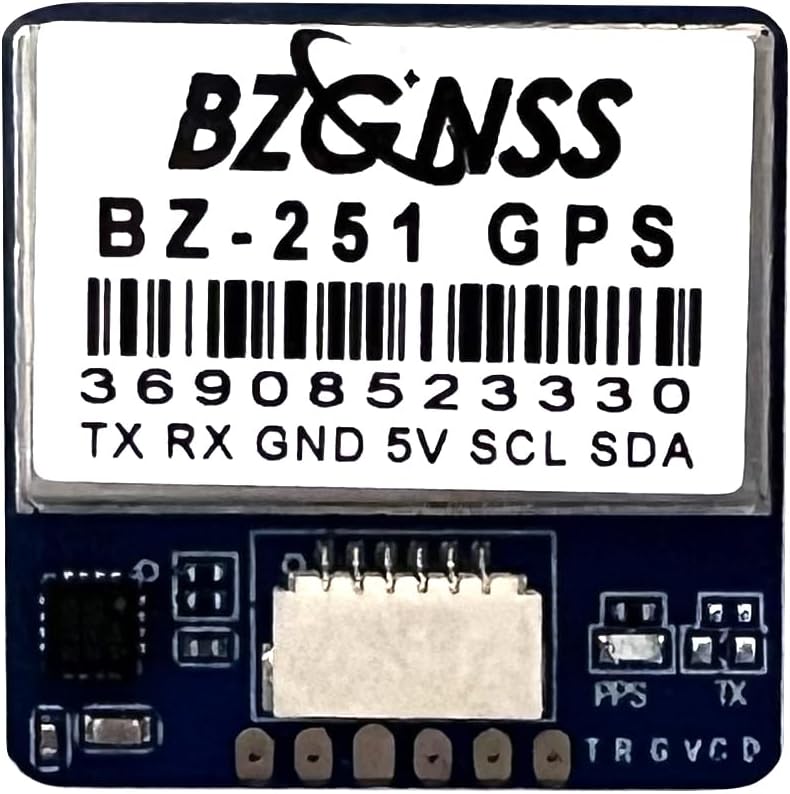
This module is engineered for FPV drone racing and long-range flights. It locks onto signals rapidly for minimal wait time.
We may earn a commission when you buy through this link, at no additional cost to you.
Supporting BDS satellites ensures better positioning globally. The compact design fits easily on small aircraft.
It works with common flight controllers like F405 and F722. Setup is simple for quick turnaround.
Racers needing lightweight navigation will find this reliable. It offers great performance in challenging environments.
Including BDS support means you can maintain a lock in regions where GPS might be sparse.
Quick satellite acquisition lets you take off faster and start flying without unnecessary delays.
We may earn a commission when you buy through this link, at no additional cost to you.
Powered by the M9 chipset, this module excels in urban canyons. It supports multiple constellations for enhanced accuracy in dense areas.
We may earn a commission when you buy through this link, at no additional cost to you.
The IST8310 compass provides reliable heading data. Its compact 20mm design is ideal for FPV drones.
Low power consumption helps extend flight times. The LED feedback keeps you informed of status.
Pilots flying in cities will appreciate its stability. It balances size and performance well for modern builds.
Supporting GPS GLONASS Galileo and BeiDou increases satellite count in signal-challenged areas.
With a footprint of just 20mm by 20mm it fits into tight drone frames without obstructing other parts.
We may earn a commission when you buy through this link, at no additional cost to you.
This module is built for drones and robotics applications. The 10th-gen chip offers fast positioning with 10Hz updates.
We may earn a commission when you buy through this link, at no additional cost to you.
A high-gain antenna ensures optimal performance in tough conditions. Flash memory saves settings for effortless operation.
It is compatible with popular systems like INAV and Betaflight. At 12g it integrates easily into many platforms.
Robotics developers should consider it for its reliability. It delivers accurate navigation for autonomous projects.
Compatibility with multiple flight control systems makes it a versatile choice for diverse projects.
The high-gain antenna improves signal reception ensuring consistent performance even in dense natural cover.
We may earn a commission when you buy through this link, at no additional cost to you.
Choosing the right GPS module requires understanding chip type, antenna quality, and flight controller compatibility.
Modern 10th-generation chips provide faster satellite acquisition and lower power consumption. These units lock on quicker even in crowded skies.
Ceramic antennas offer better signal stability compared to standard rubber types. Ensure the PCB is well-shielded to prevent interference.
Support for multiple constellations like GPS GLONASS and Galileo improves accuracy. It ensures you have satellites available in your region.
An integrated compass simplifies installation and enhances heading accuracy. Look for high-quality sensors to ensure reliable directional data.
Dual protocol support like NMEA and UBX ensures your flight controller can read the data. Verify compatibility before purchasing.
Select a module that fits your drone size without adding unnecessary bulk. Compact units are critical for racing or small fixed-wing aircraft.
Check voltage ranges to match your power distribution setup. Efficient power usage helps extend flight times significantly.
Decide between plug-and-play connectors or soldering options. Plug-and-play simplifies maintenance and swapping for repairs.
Mount the module away from motors to reduce interference. Ensure the antenna faces upwards for clear sky visibility.
Update flight controller firmware to support the GPS protocol. Test the lock status indoors and outdoors before flight.
Protect the ceramic antenna from scratches and impacts. Clean the module regularly to ensure stable electrical connections.
Check if the antenna has a clear view of the sky. Ensure connections are secure and your firmware supports the module. Move away from magnetic sources.
Most modern modules are compatible with Betaflight. Verify the protocol is set correctly in the configuration menu to enable return to home features.
GNSS includes multiple satellite systems beyond just GPS. Using GNSS allows for better accuracy and more satellites available globally.
Yes a compass helps the drone determine its heading. This data is essential for accurate autonomous return to home functions.
Place it at least a few centimeters away to avoid magnetic interference. Use provided mounts to keep it elevated from metal parts.
This means the module sends position data ten times per second. Higher rates provide more responsive navigation for fast drones.
We highlighted top performers like SEQURE HGLRC and JeeFly for reliability and feature sets. Each model offers unique strengths tailored to different flight needs.
Prioritize antenna quality and chipset generation for stable performance. Ensure compatibility with your flight controller before finalizing your choice.
Check current product details online to confirm specifications and availability. Always verify the correct setup guides for your specific hardware.