
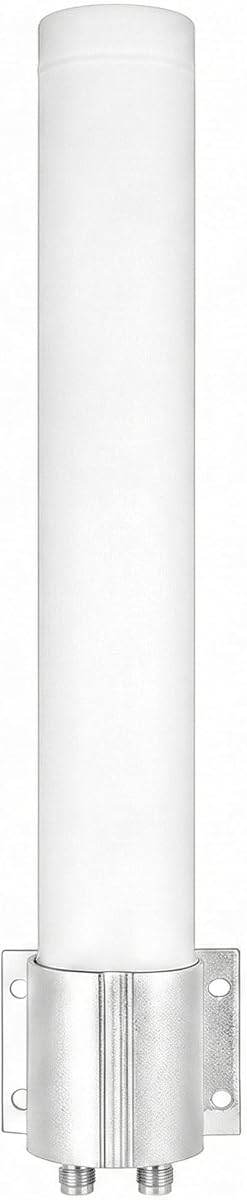
Eifagur 9dBi Long Range Dual Band WiFi Antenna
4.7Editor score
9dBi high gain design
Supports 2.4 and 5GHz
Outdoor ready construction
This guide compares the top 10 Marine WiFi Antenna options for boats, focusing on gain, durability, and frequency support to help you choose the right
Connecting to the internet while on the water requires reliable hardware designed for harsh conditions. A good Marine WiFi Antenna extends your range significantly beyond the standard router limits found on most boats.
We evaluated ten top-rated models based on their gain capabilities, weather resistance ratings, and compatibility with modern wireless standards. Our analysis covers everything from budget-friendly options to enterprise-grade solutions.
Each pick below highlights specific strengths and ideal use cases for different types of vessels and connectivity needs. Please note that prices and availability change frequently on the retailer platforms.
4.7Editor score

5.0Editor score
4.0Editor score
The following table provides a side-by-side comparison of all ten products selected for this guide. It highlights key specifications to help you quickly identify the model that fits your specific marine connectivity requirements.


The Poynting Omni-496 stands out as the premier choice for serious marine applications. It combines robust construction with advanced frequency support, ensuring that your vessel remains connected even in demanding environments. The perfect rating reflects its reliability and performance consistency.
We may earn a commission when you buy through this link, at no additional cost to you.
Its dual-band capability covers both standard 2.4 GHz and newer 4.9 to 7.2 GHz ranges. This future-proofs your network against emerging Wi-Fi 6e and Wi-Fi 7 devices. The antenna also supports 5G frequencies, offering versatility if you need to bridge cellular and Wi-Fi signals on board.
While the investment is higher, the durability justifies the cost. The IP68 rating means it is fully protected against continuous water immersion and salt spray. For sailors who need uninterrupted communication and data transfer, this model is a dependable asset.
Buy this if you prioritize long-term reliability and cutting-edge frequency support. It is the ideal solution for boats equipped with high-end routers that demand superior signal integrity. The included marine adapter ensures a secure fit on standard poles.
Supporting 5G and future Wi-Fi standards ensures you won't need to replace this antenna when your router upgrades to newer generations.
The UV and saltwater resistant materials prevent corrosion, ensuring the antenna maintains its structural integrity and signal performance over years of exposure.
We may earn a commission when you buy through this link, at no additional cost to you.
This antenna is engineered for challenging environments where signal strength is often compromised. Its MIMO technology allows for better data throughput, making it ideal for marine vessels that act as remote offices. The high gain ensures stable connections even when far from shore.
We may earn a commission when you buy through this link, at no additional cost to you.
The ability to support over ten devices simultaneously is a significant advantage for larger crews or guests on board. Whether it is streaming video or handling telemetry, the antenna maintains low latency. This reliability is crucial for professional marine operations.
One trade-off is the complexity of installation. You may need to source specific cables to unleash the full potential of the gain. However, for users needing enterprise-grade performance, this is a minor hurdle. The durability matches the high-tech capabilities.
Select this model if your boat requires stable connectivity for business or critical communications. It is designed to penetrate obstacles like dense forest or metal structures. This makes it a versatile choice for various marine scenarios.
Supporting over ten devices ensures that multiple crew members or guests can connect simultaneously without degrading the overall network speed or stability.
The low VSWR minimizes signal reflection, ensuring that the power transmitted is effectively used to boost range and maintain clear communication lines.
We may earn a commission when you buy through this link, at no additional cost to you.
This variant of the Poynting line is tailored for coastal and marine applications. It handles the rigors of saltwater and wind exceptionally well. While it lacks some of the newest frequency bands of the top model, it remains a robust choice for standard connectivity.
We may earn a commission when you buy through this link, at no additional cost to you.
The mounting system is designed for easy installation with standard marine adapters. This simplifies the upgrade process for boat owners who want to improve range without custom fabrication. The weatherproof rating ensures it stays functional during heavy storms.
While it is a solid performer, the gain is slightly lower than premium competitors. However, for typical coastal cruising, this is rarely an issue. The focus here is on durability and ease of integration into existing systems.
Choose this if you need a reliable, no-fuss antenna for regular coastal trips. It provides consistent coverage without the complexity of more advanced setups. The included marine adapter fits most standard deck poles perfectly.
The feed-through mounting style allows you to route cables neatly through the deck, reducing clutter and maintaining a clean aesthetic on your vessel.
Built to withstand harsh conditions, the IP68 rating ensures that the internal components remain dry and protected from salt spray and rain.
We may earn a commission when you buy through this link, at no additional cost to you.
For those looking to consolidate equipment on board, this combination antenna offers a streamlined solution. It supports 4G, WiFi, and GPS signals in a single unit. The puck design is perfect for boats with limited mounting surface area.
We may earn a commission when you buy through this link, at no additional cost to you.
The inclusion of 24-inch leads means you have the necessary cabling ready to connect to your devices. This reduces the need for separate purchases and ensures compatibility. The weatherproof rating protects these combined elements from the elements.
One limitation is the lack of detailed gain specifications in the product description. However, for general connectivity needs, it is sufficient. The primary advantage lies in its ability to handle multiple signal types simultaneously.
Buy this if you have limited space and need to support multiple communication systems. It is a practical choice for smaller vessels where every inch counts. The combination of GPS and WiFi is particularly useful for navigation and internet access.
The compact puck footprint minimizes clutter on your deck, leaving more room for safety gear and essential equipment on smaller boats.
Supporting GPS, WiFi, and 4G in one antenna simplifies your setup, reducing cable runs and the need for multiple mounting points on the vessel.
We may earn a commission when you buy through this link, at no additional cost to you.
This ALFA model offers a strong balance of performance and ease of installation. The 9 dBi gain provides excellent range for a standard dual-band setup. Its lightweight nature makes it easy to handle and mount on various boat structures.
We may earn a commission when you buy through this link, at no additional cost to you.
The integrated N-Female connector simplifies the connection process, allowing for quick attachment to compatible cables. This design choice reduces potential points of failure. The weatherproof rating ensures it remains functional even during harsh marine weather.
You will need to provide your own coaxial cable with an N-male connector. This is a standard requirement for many industrial antennas but requires extra preparation. However, the high gain and durability make this a worthwhile consideration.
Select this for outdoor setups where weight is a concern. It is suitable for sailboats or vessels where minimizing weight on the mast is crucial. The durability ensures it withstands the vibrations and motion of the sea.
With 9 dBi gain, this antenna provides a significant boost to your signal strength, allowing you to connect to routers from greater distances at sea.
The integrated N-Female connector ensures a secure and standardized connection, reducing the risk of signal loss due to poor contact at the base.
We may earn a commission when you buy through this link, at no additional cost to you.
This antenna is built for demanding enterprise and marine applications where reliability is non-negotiable. It supports 5G NR and CBRS bands, ensuring compatibility with modern cellular networks. The heavy-duty housing can withstand vibration and impact.
We may earn a commission when you buy through this link, at no additional cost to you.
The inclusion of an L-Bracket makes installation straightforward on vertical surfaces like masts or sides. This adds flexibility to your setup options. The multi-carrier compliance means it works with various providers, which is useful for global travel.
While it focuses heavily on cellular connectivity, it serves as a robust backbone for Wi-Fi hotspots that rely on cellular data. The durability ensures that even in rough conditions, the connection remains stable. It is a tool for serious professionals.
Buy this if you need reliable cellular data in harsh environments. It is designed for mobile and stationary applications alike. The high rating reflects its solid build quality and performance consistency in challenging conditions.
The included L-Bracket allows for secure attachment to vertical poles or railings, providing flexibility in positioning the antenna for optimal signal reception.
Constructed with heavy-duty ABS housing, this antenna is designed to endure the vibrations and impacts typical of mobile marine environments.
We may earn a commission when you buy through this link, at no additional cost to you.
This pack offers an affordable way to upgrade internal or sheltered antennas on board. While not designed for direct saltwater exposure, they work well in protected areas of a cabin. The RP-SMA connector is standard for many devices.
We may earn a commission when you buy through this link, at no additional cost to you.
Having a two-pack allows you to set up a MIMO system easily. This can improve the performance of your onboard router significantly. The dual band support covers the most common frequencies used by devices on the water.
The trade-off is the lack of marine-grade weatherproofing. You must ensure these are placed in dry, protected spaces. For a quick boost in signal quality for navigation computers or entertainment systems, they are a great option.
Choose this if you have a budget constraint and need to improve internal signals. It is perfect for upgrading older routers or adding range to security cameras. Just keep them out of direct rain and spray.
The 2-pack design allows for easy installation of MIMO antennas, which can significantly boost data throughput and stability on compatible routers.
At a low price point, this offers an excellent value for upgrading the range of existing devices without spending on high-end external marine antennas.
We may earn a commission when you buy through this link, at no additional cost to you.
This antenna brings cellular and wireless capabilities together in a single unit. It is designed for roof mounting on RVs and marine vehicles. The IP67 rating ensures it can handle rain and dust without issues.
We may earn a commission when you buy through this link, at no additional cost to you.
The included cables are short, which limits placement options. However, they are sufficient for direct connections to nearby modems. The global frequency range makes it versatile for travel, though it requires specific compatible routers.
The lower user rating suggests some variability in performance. However, the hardware itself is robust. It is a good choice if you need to consolidate connections on a small boat or RV where space is at a premium.
Buy this if you need a versatile all-in-one solution. It works well with standard 4G LTE routers. Ensure your modem supports the specific bands mentioned to get the best performance from this antenna.
By combining cellular and WiFi functions, this antenna simplifies the wiring and mounting process, saving valuable space on your vehicle or vessel.
The IP67 waterproof rating ensures that the antenna remains functional even in heavy rain conditions, protecting the internal electronics from water ingress.
We may earn a commission when you buy through this link, at no additional cost to you.
This antenna provides impressive performance for a budget price. The 9dBi gain helps extend range significantly, making it ideal for securing a wider area around your boat. It is simple to install as a direct replacement.
We may earn a commission when you buy through this link, at no additional cost to you.
While detailed weather sealing is not fully specified, it is marked as outdoor ready. This suggests it can handle standard rain and sun. For short-term use or protected areas, it delivers excellent value for money.
The main trade-off is the build quality compared to marine-specific models. It may not withstand long-term saltwater exposure. However, for general outdoor wireless needs, it is a robust solution at a fraction of the cost.
Choose this for budget-friendly outdoor coverage. It is perfect for extending range to security cameras or docking systems. The high gain ensures you get a strong signal even with lower power routers.
With 9dBi gain, this antenna significantly boosts signal strength, allowing you to connect devices that are further away from your main router or hotspot.
Compatible with a wide range of WiFi routers and access points, this antenna serves as a versatile upgrade option for existing network setups.
We may earn a commission when you buy through this link, at no additional cost to you.
This antenna is designed for VHF communication, not WiFi data, but is essential for safety at sea. It covers marine channels and NOAA weather alerts. The ratchet mount allows easy folding when not in use.
We may earn a commission when you buy through this link, at no additional cost to you.
The included cable is long and premium quality, reducing signal loss. The stainless steel hardware and fiberglass radome resist corrosion effectively. This makes it a reliable tool for emergency communication and navigation.
While it does not provide internet access, it is critical for distress and safety calls. The 162.400-162.550 MHz range ensures you hear weather warnings. This is a must-have for any vessel operating outside of sight.
Buy this to ensure reliable communication capabilities. It is compatible with standard marine radios. For safety and regulatory compliance, having a dedicated VHF antenna is necessary regardless of your internet needs.
Supporting NOAA weather frequencies ensures you receive real-time alerts and forecasts, which are critical for planning safe passages on the water.
The nylon ratchet mount allows you to fold the antenna down quickly, protecting it from low-clearance obstacles and preventing damage during docking.
We may earn a commission when you buy through this link, at no additional cost to you.
Selecting the right antenna requires understanding your specific needs regarding distance, weather, and device compatibility.
Gain measures how much power an antenna radiates in a specific direction. Higher gain means longer range but potentially narrower coverage. For boats, an omni-directional antenna is usually best to receive signals from any shore station.
Look for models with at least 8dBi gain to ensure reliable connectivity beyond the immediate dock area.
Saltwater and UV rays are the biggest enemies of outdoor electronics. Ensure the antenna has an IP67 or IP68 rating to handle rain and salt spray. Materials like fiberglass or stainless steel are preferred over cheap plastic.
Choose antennas with corrosion-resistant hardware to ensure longevity in marine environments.
Different routers use different connectors like N-Type, SMA, or RP-SMA. Check your device's ports before purchasing. You may need an adapter or a specific cable to bridge the gap.
Match the connector on the antenna to your router or use an appropriate adapter.
Ensure the antenna supports the frequencies your devices use. Most standard devices use 2.4GHz and 5GHz. Some newer models support 5G bands, which are great for future-proofing.
Verify compatibility with both Wi-Fi and potential cellular data networks on your boat.
Multiple Input Multiple Output technology allows for faster data speeds. If your router supports it, getting a MIMO antenna ensures you utilize the full bandwidth.
Prioritize MIMO compatible models for better performance in high-traffic networks.
Consider how and where you will install the antenna. Some come with brackets for rails or masts, while others require through-hole mounting. Stability is key in windy conditions.
Choose a mounting system that secures the antenna firmly without interfering with deck movement.
The distance from your antenna to the router matters. Longer cables cause signal loss, so keep them as short as possible. Ensure the included cable is sufficient for your specific setup.
Check cable length specifications to avoid signal degradation over long runs.
Prices vary widely from budget-friendly options to enterprise-grade models. Determine your needs before spending. Sometimes a higher investment pays off in durability and performance.
Compare long-term value over upfront cost to make the best financial decision.
Start by mounting the antenna as high as possible to clear obstructions. Use the provided brackets or adapters to secure it to your mast or rail. Ensure all connectors are tight and weatherproofed.
Run the cable neatly to avoid tangling or damage. If possible, use conduit or clips to protect the cable from UV exposure and abrasion. Keep the cable length minimal to maintain signal strength.
Regularly inspect the antenna for salt buildup or corrosion. Rinse it with fresh water after saltwater exposure. Check connectors periodically to ensure they remain dry and functional.
Typically, a high-gain marine WiFi antenna can extend your range up to several miles depending on power and obstacles. Real-world performance varies based on local conditions and router power. Most users see reliable speeds within 1 to 3 miles of shore.
Standard antennas may work temporarily, but they are not built for salt and UV exposure. Marine-specific models are coated and sealed to prevent corrosion. Using a standard model outdoors on a boat risks rapid degradation.
For most applications, an 8dBi to 9dBi gain is sufficient. Higher gain extends range but may have a narrower beam. Omni-directional antennas are preferred for general connectivity in any direction.
Not usually. Most modern routers have enough power to drive an external antenna. An amplifier is only needed if you have a weak router or very long cable runs. Check your device specs before adding one.
Install a lightning arrestor on the cable line before it enters your boat. Grounding the antenna mount to the boat's grounding system is also crucial. This protects your electronics from surges during storms.
N-Type connectors are larger and more robust, often found on marine gear. SMA connectors are smaller and common on consumer electronics. You may need an adapter if they do not match directly.
The Poynting Omni-496 remains the top pick for its future-proofing and durability. It is the best all-around choice for those who want reliability and advanced support.
For budget-conscious buyers, the Eifagur 9dBi offers great performance. However, consider the Pro-Gain if you need robust performance in remote areas.
Remember to check current prices and availability as these numbers can shift. Always verify compatibility with your specific router to ensure a smooth setup.