
SONOFF SNZB-03P
4.2Editor score
Zigbee 3.0 Protocol
Three Year Battery Life
Fast Five Second Detection
This guide compares the top ten Matter compatible motion sensors for smart home automation, evaluating detection range, battery life, and ecosystem integration.
Smart home automation has evolved significantly with the arrival of Matter protocols. Choosing the right motion sensor ensures your lights and devices respond accurately to your presence without unnecessary delays or false triggers.
We evaluated ten leading models based on their detection technology, connectivity options, and ease of integration. Each product was analyzed for its ability to work seamlessly across major smart home platforms like Apple Home, Alexa, and Google Home.
Each pick highlights unique strengths such as battery efficiency or advanced radar capabilities. Please note that pricing and availability change frequently, so checking current listings is recommended before making a final purchase decision.
4.2Editor score

3.8Editor score

3.7Editor score
The following table provides a side-by-side comparison of all ten selected products. It highlights key specifications such as detection range, connectivity type, and unique features to help you make an informed decision.




The meross Presence Sensor MS600 is a powerful tool for modern home automation. It combines radar, PIR, and light sensors to detect both motion and stillness accurately. This dual technology ensures lights stay on while you are seated and off when you leave.
We may earn a commission when you buy through this link, at no additional cost to you.
Its integration with Matter over Wi-Fi allows seamless connection with HomeKit, Alexa, and Google Home. The adjustable base pivots and rotates to cover various angles. A built-in light sensor further enhances automation possibilities by considering ambient light levels.
While it requires a continuous power supply, this ensures consistent performance without battery worries. The inclusion of a pet-proof shield prevents false triggers from animals. Setup is straightforward, though a hub is necessary for full Matter compatibility.
This sensor is ideal for users seeking reliable presence detection without frequent maintenance. It suits living rooms and offices where static presence matters. The trade-off of wiring is worth the reliability and advanced features it offers.
The combination of mmWave radar and PIR allows detection of subtle movements that traditional sensors miss. This ensures lights remain active even when you are reading or watching TV.
Works with HomeKit, Alexa, Google Home, and Home Assistant. Local control ensures privacy and stability even without internet connectivity.
We may earn a commission when you buy through this link, at no additional cost to you.
The Aqara Motion and Light Sensor P2 offers seamless Matter support over the Thread protocol. This ensures fast, reliable performance with low power consumption. It connects easily via Amazon Echo devices or Apple HomePods acting as controllers.
We may earn a commission when you buy through this link, at no additional cost to you.
Its 2-in-1 design combines motion and light detection into one compact unit. The light sensor functions independently, allowing for circadian lighting automation. However, Alexa users should note that light sensor functionality is not supported on that platform.
The battery life is impressive, lasting up to two years with standard usage. It features a versatile stand for easy angle adjustments. You can customize sensitivity levels via the app to suit seasonal needs or room layouts.
This sensor is perfect for those invested in the Thread ecosystem. It balances energy efficiency with robust features. The requirement for a specific hub model is a minor constraint for the performance gains provided.
Thread provides a robust mesh network that extends coverage across your home. It ensures low latency and high reliability for smart home triggers.
With local automation execution, cloud dependency is minimized. This enhances privacy and keeps automations running even if internet access is lost.
We may earn a commission when you buy through this link, at no additional cost to you.
The meross MS605 stands out as a wireless solution for presence detection. It uses AI-driven static detection to keep lights on while you are still. The battery life is exceptional, offering up to three years of operation on a single CR123A battery.
We may earn a commission when you buy through this link, at no additional cost to you.
Its IP67 rating makes it suitable for outdoor or humid environments like bathrooms. The stand allows flexible positioning on walls or ceilings. You can divide the detection range into multiple zones for advanced automation scenarios.
Privacy is enhanced through local Matter control, ensuring data stays within your home. The device works even without internet connectivity once set up. However, initial setup requires a hub that supports both Matter and Thread protocols.
This sensor is ideal for users wanting a truly wireless experience. It handles diverse environments effectively. The zoning feature allows for nuanced control that matches real-world usage patterns better than simple motion triggers.
The IP67 waterproof rating ensures durability in rain or high humidity. It allows installation in areas where standard sensors might fail.
Dividing the detection range into three zones allows separate triggers for different activities. This helps in fine-tuning automation for specific areas.
We may earn a commission when you buy through this link, at no additional cost to you.
The Eve Motion 3-Pack provides a comprehensive solution for whole-home coverage. These sensors offer robust compatibility across Apple Home, Alexa, and Google Home platforms. They are designed with privacy in mind, ensuring no cloud dependency or tracking occurs.
We may earn a commission when you buy through this link, at no additional cost to you.
Each sensor features a wide field of view and detection range suitable for large rooms. They work well indoors and outdoors due to water resistance. The battery operation ensures flexible placement without wiring constraints.
While the price point is higher, the inclusion of three units offers value. Refinement of automations can be done via the Eve app. This package is ideal for users seeking a future-proof system across multiple ecosystems.
This pack simplifies setup for whole-house automation. The privacy focus appeals to security-conscious users. The trade-off is the reliance on a specific app for advanced features, which is primarily optimized for iOS devices.
No Eve cloud or registration is required for operation. All communication is local, keeping your data secure within your home network.
Built on Matter and Thread, these sensors ensure long-term compatibility. You won't need to replace them as smart home standards evolve.
We may earn a commission when you buy through this link, at no additional cost to you.
The TP-Link Tapo T100 is a reliable motion sensor designed for the Tapo ecosystem. It communicates via Sub-1G protocol, which extends battery life and coverage significantly. It works with the Tapo Hub H100 to create a robust security or automation setup.
We may earn a commission when you buy through this link, at no additional cost to you.
Its detection range covers up to 23 feet with a wide 120-degree angle. You can adjust sensitivity to fit specific needs. Real-time notifications and Smart Action triggers allow for immediate responses to motion events.
Installation is simple with adhesive or magnetic options. The battery life can last up to two years with moderate use. However, it is best suited for those already using Tapo hubs and devices for consistent performance.
This sensor is perfect for users invested in Tapo products. It balances affordability with strong performance metrics. The requirement for a specific hub is a limitation but ensures optimized connectivity within the system.
This low-power wireless technology offers better range and battery life than standard Wi-Fi. It ensures stable connection even through walls.
Smart Actions allow for automations even when the network is disconnected. This provides enhanced reliability for critical tasks.
We may earn a commission when you buy through this link, at no additional cost to you.
The Aqara FP300 combines five sensors into one compact device. It detects motion, presence, light, temperature, and humidity. This all-in-one approach supports advanced automations beyond simple lighting control. It is a premium choice for comprehensive environmental monitoring.
We may earn a commission when you buy through this link, at no additional cost to you.
Powered by 60GHz mmWave radar, it accurately tracks presence even when still. The adaptive AI optimizes sensitivity to reduce false triggers. It supports both Thread and Zigbee protocols for maximum compatibility across major ecosystems.
Battery life is solid, lasting up to three years in Zigbee mode. The multi-axis mount allows for versatile placement. While the cost is higher, the value lies in the depth of data provided for smarter home management.
This sensor is ideal for tech enthusiasts wanting detailed control. It bridges the gap between motion detection and climate automation. The requirement for specific hubs may limit setup flexibility but ensures high performance.
Combining light, temperature, and humidity with motion allows for complex automation. You can adjust HVAC settings based on presence and climate.
The AI continuously learns to optimize sensitivity. This reduces unnecessary triggers and improves energy efficiency over time.
We may earn a commission when you buy through this link, at no additional cost to you.
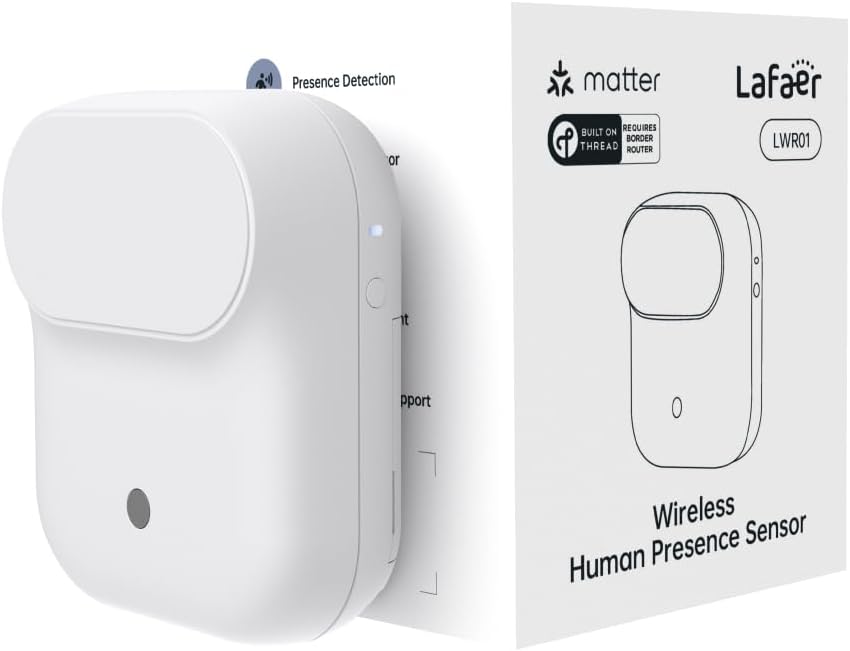
The LWR01 uses mmWave radar to detect subtle movements over long distances. It maintains high sensitivity for stillness detection up to 11 feet. This range is advantageous for large rooms or hallways. It also features an ambient light sensor for daylight detection.
We may earn a commission when you buy through this link, at no additional cost to you.
Its IPX3 rating protects against water splashes, making it suitable for bathrooms. It supports Matter over Thread for broad ecosystem compatibility. Battery life is over a year, but optional wired power is available for continuous high-performance use.
The device integrates well with Apple Home, Alexa, and Google Home. However, compatibility depends on specific hub models. Users must ensure their router supports Thread protocols for full functionality. This makes setup slightly more complex than standard Wi-Fi options.
This sensor is a strong contender for large-space coverage. Its light-aware automation saves energy effectively. The trade-off is ensuring correct hub selection upfront to avoid connectivity issues.
The extended detection range allows for placement in central locations. It covers large areas effectively without needing multiple units.
Ambient light detection prevents lights from turning on in bright conditions. This contributes to energy savings and efficient automation.
We may earn a commission when you buy through this link, at no additional cost to you.
The Aqara Motion Sensor P1 boasts an impressive five-year battery life. It utilizes Zigbee 3.0 for stable connectivity with compatible hubs. Detection is fast, with configurable timeouts to save energy or capture movement. It fits well into alert systems.
We may earn a commission when you buy through this link, at no additional cost to you.
Its dimensions are compact, and the viewing angle is adjustable. You can fine-tune sensitivity levels for specific environments. While it lacks light sensitivity in some ecosystems, it excels in basic motion detection. It integrates with HomeKit, Alexa, and Home Assistant.
Local smart scenes ensure automations work even if the internet is down. This provides reliability for essential tasks. The hub requirement is specific to Aqara devices, which is a consideration for mixed ecosystem users.
This sensor is ideal for long-term low-maintenance use. Its battery efficiency is a major highlight. It balances functionality with cost-effectiveness for standard motion needs.
With five years of life, replacements are rare. This is one of the longest battery lives available for Zigbee motion sensors.
Smart scenes run locally via the hub. This ensures quick response times and reliability without cloud dependency.
We may earn a commission when you buy through this link, at no additional cost to you.
The SwitchBot mmWave radar sensor combines multiple detection methods for accuracy. It uses AI self-learning to filter out interference from fans or AC units. This ensures lights stay on when needed and turn off when the room is empty.
We may earn a commission when you buy through this link, at no additional cost to you.
It supports dynamic detection and zone positioning for tailored automation. The magnetic base allows flexible placement on surfaces. Coverage extends up to 8 meters for moving humans and 5 meters for stationary ones.
The sensor works well with Apple Home and other major platforms via the Hub Mini. While the setup is detailed, the result is a highly adaptable device. Battery life is rated at two years for single charge usage.
This sensor is perfect for dynamic environments like offices or living rooms. The AI anti-interference feature reduces false triggers significantly. It offers great versatility for those willing to invest in a SwitchBot ecosystem.
AI filters out noise from environmental factors like fans. This ensures only human presence triggers actions.
The magnetic base enables quick adjustments. It simplifies installation on various surfaces without drilling.
We may earn a commission when you buy through this link, at no additional cost to you.
The SONOFF SNZB-03P offers a cost-effective entry into smart motion sensing. It supports Zigbee 3.0 for reliable local control. Detection speed is fast, turning lights on within five seconds of motion. Battery life is rated at three years for sustained usage.
We may earn a commission when you buy through this link, at no additional cost to you.
It integrates with various Zigbee hubs like the SONOFF iHost or NSPanel. This allows for home security applications such as triggering cameras or alarms. It functions well even if the network crashes, providing robust local automation.
The device is compact and includes batteries for immediate setup. While it lacks advanced radar features, it excels in basic presence detection. It is a solid choice for users prioritizing affordability and efficiency.
This sensor is ideal for budget-conscious buyers. It delivers reliable performance for essential tasks. The requirement for a specific hub is manageable for those willing to expand their Zigbee setup.
At an affordable price point, it provides essential smart functions. It is a great starting point for building a Zigbee ecosystem.
It supports alerts for unauthorized entry. This makes it useful for security monitoring without expensive equipment.
We may earn a commission when you buy through this link, at no additional cost to you.
Selecting the right motion sensor requires understanding key technical factors. This guide explores the most important considerations to help you match a device to your needs.
Modern sensors use PIR, radar, or a combination. Radar detects subtle movements, making it ideal for stationary presence. PIR is cost-effective but may miss small movements. For best accuracy, choose a hybrid model.
Prioritize sensors with mmWave radar if you need precise detection.
Connectivity options include Wi-Fi, Zigbee, and Thread. Wi-Fi is simple but consumes more power. Thread and Zigbee offer better battery life and mesh stability. Ensure your hub supports the chosen protocol.
Thread is recommended for future-proofing and reliability.
Sensors are either battery-powered or corded. Corded units offer consistent performance without maintenance. Battery models allow flexible placement. Consider battery life expectations and replacement frequency.
Choose battery-powered for hard-to-reach areas.
Ensure the sensor works with your existing smart home platform. Matter provides broad support across Apple, Google, and Amazon. Check specific hub requirements for local control.
Verify compatibility before purchase to avoid integration issues.
Coverage area matters for effective automation. Look for wide angles and long detection distances. Larger rooms require sensors with extended range capabilities.
Select models with adjustable sensitivity for customization.
Mounting options should suit your space. Magnetic or adhesive bases allow non-invasive setups. Ensure the device can be positioned to avoid obstructions.
Choose units with rotatable stands for easy alignment.
Advanced sensors support zoning and environmental triggers. These features allow nuanced automations like adjusting climate based on occupancy. Check app support for these features.
Look for sensors with app-based customization options.
Local processing ensures privacy by keeping data offline. Cloud-dependent devices may raise security concerns. Prioritize Matter devices for encrypted and local communication.
Choose models that support local control protocols.
Installation begins with pairing the sensor to your hub using the dedicated app. Follow the setup instructions to link it via Bluetooth or wireless network. Ensure the device is powered on and within range of your hub.
Position the sensor to cover the desired area without obstructions. Adjust angles and sensitivity settings for optimal performance. Avoid mounting it near heat sources or direct sunlight which may cause false triggers.
Regular maintenance includes checking battery levels and firmware updates. Clean the lens with a soft cloth to maintain accuracy. Re-pairing may be necessary if you change network configurations.
Matter sensors offer cross-platform compatibility, allowing seamless integration with different smart home ecosystems. They ensure better privacy and reliability through local communication without requiring specific hubs.
Yes, Matter sensors with Thread support can operate locally without internet access. Automations continue to work as long as the hub is powered and connected to the local network.
Many motion sensors can trigger alarms or security cameras when motion is detected. They are useful for alerting users about movement in specific zones or rooms.
Battery life varies by model but ranges from two to five years. Usage frequency and settings impact this duration. Some models allow wired power for continuous operation.
A Thread Border Router is required for Thread connectivity. Many modern routers or smart speakers function as bridges. Check if your existing devices support this protocol.
Pet-proof shields or adjustable sensitivity help avoid pet triggers. Some sensors offer AI to distinguish human presence from other movements.
With compatible bridges or hubs, Matter sensors can trigger non-Matter devices. Automations are configured through the hub software to ensure proper communication.
Motion detects movement, while presence detection identifies stillness. Presence sensors use radar to ensure lights stay on even when you are not moving.
Choosing the right sensor depends on your home's layout and existing ecosystem. The meross MS600 leads with advanced radar detection while the Aqara P300 offers comprehensive environmental monitoring. Each model brings unique strengths to smart home automation.
Prioritize connectivity and power needs based on installation constraints. Matter compatibility ensures flexibility as your smart home evolves. Consider battery life and hub requirements when making a decision.
Remember to check current availability and features before purchasing. Prices and models may vary over time. Investing in a high-quality sensor ensures reliable and efficient home automation.