
M350 AUPHY Mechanical Metronome
4.4Editor score
High-strength PC body material
Metal clockwork movement gears
Transparent dust cover design
This guide compares the top 10 mechanical metronomes for piano featuring durable builds, loud sounds, and precise beats for musicians of all skill levels.
Finding the right mechanical metronome for piano helps musicians master rhythm and tempo without relying on batteries. These classic devices offer reliable, loud sounds that cut through practice sessions effectively. They remain essential tools for students and professionals seeking consistent timing.
We evaluated ten top-rated models based on build quality, precision, ease of use, and design appeal. Each product offers unique features like wind-up mechanisms, adjustable beat patterns, and durable materials. Our analysis highlights the best options for various practice needs and budgets.
Every pick showcases key strengths such as accurate timing, long wind duration, and user-friendly controls. While prices may vary over time, these models represent excellent value for serious musicians. We encourage readers to verify current offers before making their final selection.
4.4Editor score

4.4Editor score

4.5Editor score
The following table provides a side-by-side comparison of all ten mechanical metronomes evaluated in this guide. Each entry lists key specifications to help you quickly identify the model that best fits your practice requirements.


The Ueteto Mechanical Metronome stands out for its reliable performance and clear audible clicks. With a 4.4 rating, it helps pianists develop rhythm and maintain tempo accurately during practice sessions.
We may earn a commission when you buy through this link, at no additional cost to you.
Its wind-up mechanism produces consistent beats without batteries, lasting up to eighteen minutes on a full wind. The tempo range of 40 to 208 bpm covers most musical needs, while the bell ring feature aids in tracking beats.
While the manual winding can be tedious for long sessions, the trade-off ensures no power interruptions. Some users report the weight shifting slightly on smooth surfaces, so placing it on a textured mat helps.
This metronome is ideal for students and professionals seeking a durable, classic tool. Its ease of use and loud sound make it a top recommendation for daily piano practice.
The mechanical movement ensures steady beats that help internalize rhythm without electronic interference.
Beginners can adjust the pendulum weight easily to set tempo, making learning straightforward and frustration-free.
We may earn a commission when you buy through this link, at no additional cost to you.
The M350 AUPHY Mechanical Metronome offers excellent value for its price. Rated 4.4, it features metal gears and a loud accent bell, ensuring accurate beats for piano and other instruments.
We may earn a commission when you buy through this link, at no additional cost to you.
Its PC body and transparent dust cover provide a sleek look while protecting the mechanism. The wind-up system runs for 10 to 40 minutes, depending on tempo, making it practical for extended practice.
Some users note the dust cover can scratch easily, but this does not affect performance. The limited color choices may not suit everyone, yet the functional design remains strong.
Budget-conscious learners will appreciate its reliability and loud sound. It is a solid choice for anyone needing a dependable mechanical metronome without overspending.
High-quality metal gears ensure longevity without the premium price tag found in other models.
Selectable accent bells on beats 2, 3, 4, and 6 help musicians master complex rhythms effectively.
We may earn a commission when you buy through this link, at no additional cost to you.
The Tempi Metronome combines style and function with its brown grain veneer finish. With a 4.5 rating, it offers a classic look that enhances home decor while providing precise timing for musicians.
We may earn a commission when you buy through this link, at no additional cost to you.
Its steel gears ensure durability, and the two-year warranty adds peace of mind. The included microfiber cloth helps maintain the finish, keeping the metronome looking new for years.
Though pricier, the aesthetic appeal and robust build justify the cost. The veneer can chip if mishandled, but careful use preserves its elegance during practice.
Ideal for pianists who value aesthetics alongside performance, this model is a premium choice. It delivers reliable rhythm and a touch of sophistication to any music room.
The classic wooden design fits seamlessly into living spaces, serving as both tool and decor.
Steel gears resist wear, ensuring accurate beats over years of daily practice sessions.
We may earn a commission when you buy through this link, at no additional cost to you.
This Wood Grain Mechanical Metronome is tailored for beginners needing simple, reliable tools. Rated 4.4, its all-metal movement ensures long-term use without errors, making it perfect for young learners.
We may earn a commission when you buy through this link, at no additional cost to you.
The stable performance and loud sound help establish rhythm quickly. Adjusting tempo is straightforward, and the wind-up mechanism avoids battery hassles during practice sessions.
Its weight provides stability but can be cumbersome to move. The wood grain look is nice but comes in limited colors, which may not match all setups.
Beginners and parents will find this model easy to use. It offers a robust introduction to mechanical metronomes, building confidence in timing and beat mastery.
Simple removal of stopper and easy adjustment make it accessible for children and new students.
The loud click helps internalize beats, improving overall musical awareness and timing.
We may earn a commission when you buy through this link, at no additional cost to you.
The Universal Mechanical Metronome prioritizes durability with its high-strength PC body and metal movement. Rated 4.2, it ensures accurate beats within one percent error, suitable for serious practice.
We may earn a commission when you buy through this link, at no additional cost to you.
Its walnut color adds elegance, and the rust-free metal movement guarantees longevity. The wind-up mechanism runs for 15 to 45 minutes, offering flexibility for different session lengths.
Some users find the winding key stiff initially, but it loosens with use. The average rating reflects mixed feedback, though the core functionality remains solid.
Musicians needing a rugged tool will appreciate its reliability. It balances aesthetics and performance, making it a practical choice for daily use across instruments.
The controlled error ensures beats stay consistent, aiding precise rhythm development.
Classic walnut finish enhances room decor while providing functional rhythm tracking.
We may earn a commission when you buy through this link, at no additional cost to you.
This Standard Mechanical Metronome offers versatility with multiple colors to suit personal style. With a 4.6 rating, it features high-hardness plastic and metal for stable, precise rhythm tracking.
We may earn a commission when you buy through this link, at no additional cost to you.
The heavy bell sound ensures beats are heard clearly during loud sessions. Its adjustable tempo and one-year warranty provide confidence for new users exploring mechanical metronomes.
Some note the casing feels light, but it remains stable on flat surfaces. The lack of advanced features keeps it simple, which benefits straightforward practice needs.
Color preferences and durability make this a strong contender. It is ideal for those seeking a reliable, customizable tool without complex controls or high costs.
Choose from various colors to match your personal setup and preferences.
Heavy bell sound ensures beats cut through noise for effective rhythm practice.
We may earn a commission when you buy through this link, at no additional cost to you.
The Ueteto Wood Grain Metronome combines classic aesthetics with reliable performance. Rated 4.3, its loud crisp tick ensures focus remains on notes rather than counting during practice.
We may earn a commission when you buy through this link, at no additional cost to you.
Wind-up power eliminates battery changes, running from 10 to 54 minutes depending on tempo. The wood grain finish enhances room decor, appealing to visual-oriented musicians.
At high tempos, runtime shortens, requiring more frequent winding. However, the clear scale and easy setup offset this inconvenience for most users.
Ideal for those valuing design and function, this model fits well in home studios. It offers a traditional experience with modern reliability for daily rhythm work.
Wood grain design blends with home decor, making it a stylish practice companion.
The loud tick allows musicians to concentrate on playing without extra effort.
We may earn a commission when you buy through this link, at no additional cost to you.
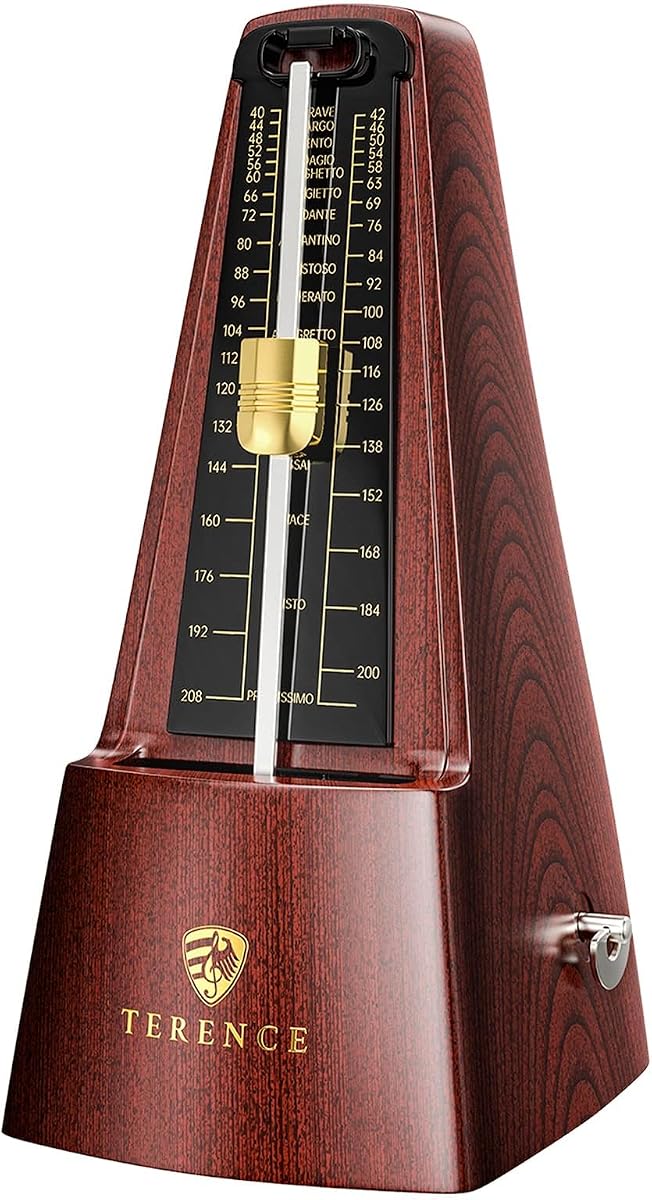
The TERENCE Mechanical Metronome features a transparent design that showcases its internal mechanism. Rated 4.0, it uses all-metal movement and copper pendulum for clear, loud beats.
We may earn a commission when you buy through this link, at no additional cost to you.
Its transparent body is visually striking, though ABS may yellow over time. The metal knob ensures comfortable adjustment, making it a good gift for teaching beginners.
Lower ratings reflect some durability concerns, but the metal components improve longevity. The design appeals to those wanting a modern look in a classic tool.
Instructors and students will appreciate the unique style and precision. It offers a fresh take on mechanical metronomes, blending visibility with reliable performance.
Transparent design allows users to see the mechanism, engaging visual learners.
Metal knob provides comfortable wear resistance for frequent tempo changes.
We may earn a commission when you buy through this link, at no additional cost to you.
The Wittner 836 Taktell Metronome is a compact classic designed for portability. With a 4.6 rating, its plastic casing and silent operation suit environments needing minimal disturbance.
We may earn a commission when you buy through this link, at no additional cost to you.
Lacking a bell, it focuses solely on click beats, reducing distraction. Its black finish and piccolo size make it easy to carry for lessons or gigs.
The absence of a bell may limit some users, but it aids focus. The lightweight build is convenient though slightly less durable than metal options.
Traveling musicians and quiet practice settings benefit from this model. It offers simplicity and reliability, ideal for those prioritizing portability over extra features.
Silent click mechanism avoids noise pollution, perfect for shared spaces.
Compact size ensures it fits easily in cases for on-the-go practice.
We may earn a commission when you buy through this link, at no additional cost to you.
This loud Sound Mechanical Metronome is designed for affordability and clear beats. With a 3.8 rating, it offers precise calibration and engraved markings for easy reading during practice.
We may earn a commission when you buy through this link, at no additional cost to you.
Its loud sound ensures audibility in various environments, while the user-friendly design suits beginners. Engraved markings contribute to durability, maintaining readability over time.
Lower quality materials may limit longevity, and wind duration is shorter. However, the low price makes it an accessible entry point for learners.
For budget-conscious users needing loud beats, this model works well. It delivers essential rhythm tracking without premium costs, making it a viable option for casual practice.
Affordable price allows easy access to rhythm tools without financial barriers.
Loud sound ensures beats are heard clearly even in noisy settings.
We may earn a commission when you buy through this link, at no additional cost to you.
Choosing the right mechanical metronome involves considering build quality, sound clarity, and design preferences to suit your practice needs.
Look for metronomes with metal movements and sturdy casings to ensure long-term accuracy. Models with steel gears or high-hardness plastic resist wear and maintain consistent beats over years.
Prioritize products with durable materials to avoid frequent replacements.
A loud, clear click is essential for cutting through practice sessions. Some models include accent bells to help track beat patterns more effectively.
Ensure the sound level matches your environment to avoid distraction or under-audibility.
Most mechanical metronomes offer 40 to 208 bpm, covering standard musical needs. Accuracy within one percent is typical and ensures reliable timing.
Verify the tempo range fits your skill level and the complexity of pieces you play.
Simple operations like easy weight sliding and clear markings help beginners adjust quickly. Wind-up mechanisms should be intuitive without requiring excessive force.
Choose models with user-friendly designs to reduce setup time during practice.
Mechanical metronomes come in wood grain, plastic, or transparent finishes to match home decor. Consider whether you want a classic look or a modern transparent design.
Select a style that complements your practice space while meeting functional needs.
All mechanical models run on wind-up power, eliminating battery changes. This ensures uninterrupted practice sessions regardless of location.
Prioritize wind-up designs for eco-friendly, hassle-free rhythm tracking.
Some brands offer warranties like one or two years to protect your investment. Good customer support can resolve issues quickly if the metronome malfunctions.
Check warranty terms before purchasing to ensure peace of mind.
Compact models like the Wittner are easier to carry for lessons or travel. Lightweight materials help without sacrificing stability on flat surfaces.
Choose size and weight based on how often you move your metronome.
To start, remove the bottom brake and ensure the metronome sits horizontally. Pull the pendulum weight to select your desired tempo, then wind the key gently clockwise until resistance is felt.
Flick the pendulum to one side and release to activate the beats. Adjust the weight up or down to change speed, using the visible scale for precise settings.
Keep the device clean with a soft cloth to prevent dust buildup. Store it in a dry place away from extreme temperatures to protect the internal mechanism and finish.
No, mechanical metronomes run on wind-up power, so they do not need batteries. This ensures uninterrupted use and avoids the cost of replacing power sources during practice.
A full wind typically lasts 10 to 40 minutes depending on the selected tempo. Lower tempos allow longer runtimes while higher speeds consume energy faster.
Yes, most mechanical metronomes are designed with simple controls for beginners. Clear markings and straightforward adjustments make them accessible for children and new learners.
Most mechanical metronomes offer a tempo range of 40 to 208 beats per minute. This covers most musical needs from slow practice to fast performance pieces.
Use a soft, dry cloth to wipe down the exterior and clear dust from the pendulum. Avoid liquid cleaners to protect the internal mechanism and finish.
Bell sounds help track beat patterns by accenting specific beats like 2, 3, 4, or 6. They are useful for complex rhythms but can be turned off if preferred.
Yes, mechanical metronomes work for all instruments like violin, guitar, and drums. Their universal tempo range and loud sound suit any musical practice.
Check that it sits flat on a stable surface and that the pendulum weight is secure. If issues persist, contact customer support for guidance or potential replacement.
Our top picks highlight the Ueteto for precision, the M350 for budget value, and the Tempi for premium aesthetics. Each offers unique strengths to suit different practice needs.
Prioritize build quality and sound clarity when selecting a metronome. A durable, loud model ensures reliable timing and long-term satisfaction.
Remember to check current prices and availability before purchasing. These models remain excellent choices for musicians seeking classic rhythm tools.