
HiLetgo 5pcs DHT11
4.5Editor score
Single wire digital output
Wide voltage range 3.3 to 5V
Affordable bulk pack option
This guide compares the top Arduino temperature sensor options including DHT11, DS18B20, and SHT31 to help you find the right module for your project needs.
Finding the right Arduino temperature sensor is essential for any electronics project involving environmental monitoring or climate control. Whether you are building a smart home device or a simple weather station, choosing the correct module ensures accurate data collection and reliable performance over time.
We evaluated ten highly rated sensors based on accuracy, ease of use, connectivity options, and durability. Our comparison covers digital and analog options, waterproof probes for industrial use, and high precision modules suitable for scientific applications requiring detailed environmental tracking capabilities.
Each pick highlights key specifications and real world performance traits to help you make an informed decision for your specific build. Please note that prices and availability change frequently so always verify current listings before purchasing components for your next Arduino development project.
4.5Editor score

4.7Editor score

4.9Editor score
The following table provides a side by side comparison of all ten selected temperature sensors for Arduino projects. Each entry includes key specifications such as measurement range, communication protocol, and special features to help you quickly identify the best fit for your needs.


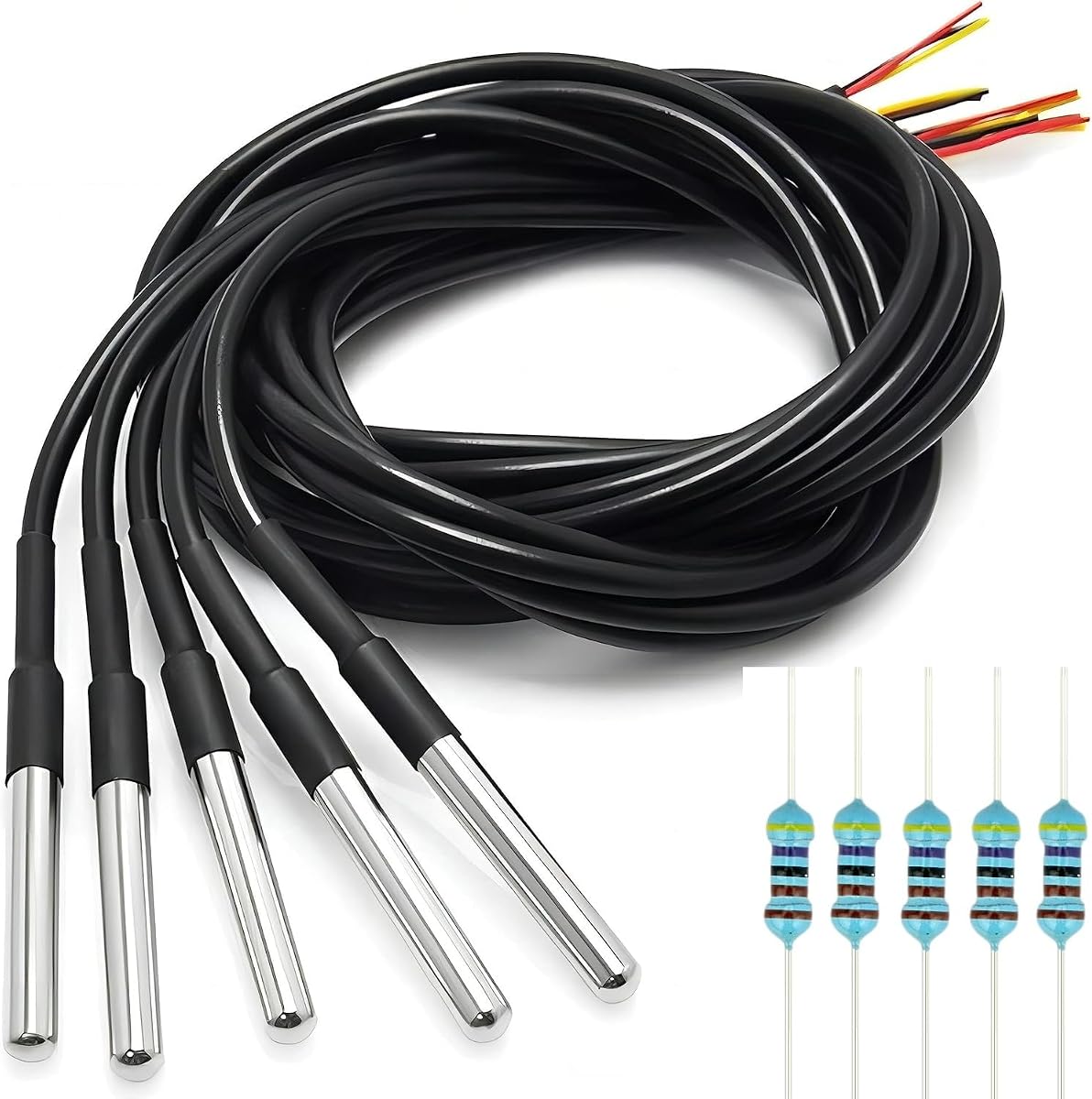


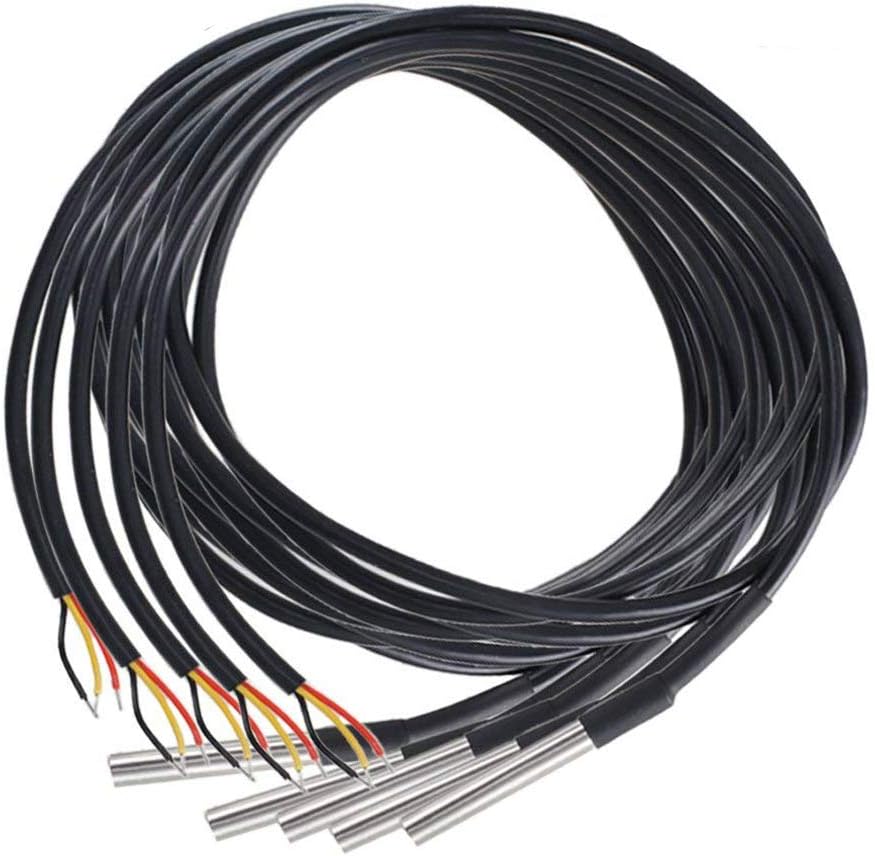
The HiLetgo 5pcs DHT11 module offers an excellent entry point for makers needing basic temperature and humidity monitoring. With a rating of 4.5 stars this pack provides five ready to use sensors that simplify bulk purchases for classrooms or multi node setups.
We may earn a commission when you buy through this link, at no additional cost to you.
Its single wire digital output reduces wiring complexity significantly while the onboard bypass capacitor ensures stable readings. The sensor works across a broad voltage range from 3.3V to 5V making it compatible with most Arduino boards and microcontrollers without additional regulators.
While the temperature range tops out at 50C it remains suitable for indoor environmental monitoring. The humidity accuracy is decent for general use though precision tasks may require higher end options like the SHT series for tighter tolerances.
This choice is ideal for students hobbyists or anyone building weather stations on a budget. The included cables save time on prototyping and the interchangeable nature of the modules means you can easily swap units if needed.
The single bus digital signal means you only need one data pin plus power and ground which keeps breadboard layouts clean and organized for beginners.
Manufacturers state long term stability within 1 percent humidity ensuring consistent performance over months of continuous operation in standard indoor environments.
We may earn a commission when you buy through this link, at no additional cost to you.
The AHT30 module delivers high precision digital temperature and humidity data through a standard I2C interface. Its perfect 5.0 rating reflects consistent performance and ease of integration into Arduino projects requiring accurate environmental monitoring.
We may earn a commission when you buy through this link, at no additional cost to you.
With a supply voltage range from 2.0V to 5.5V this sensor adapts easily to various power sources. The ability to support simultaneous online access to multiple I2C devices makes it scalable for complex multi sensor setups on a single bus.
Resolution capabilities of 0.01C and 0.024 percent RH provide detailed insights for climate control applications. The 4P test line connection simplifies physical setup ensuring users can connect and start reading data quickly without soldering.
Ideal for advanced projects or smart home systems this sensor balances cost and performance effectively. Its stable transmission speed ensures real time updates which are critical for feedback loops in automated temperature regulation systems.
Achieving resolution down to 0.01 degrees Celsius allows for precise tracking of subtle temperature shifts in sensitive environments like greenhouses or server rooms.
The I2C master output allows connecting multiple sensors to the same bus enabling comprehensive spatial temperature mapping without using excessive GPIO pins.
We may earn a commission when you buy through this link, at no additional cost to you.
The Teyleten Robot SHT31-D module stands out for its exceptional accuracy and wide operating range. With a rating of 4.7 stars it is a top contender for professional grade projects requiring reliable data collection in varying environmental conditions.
We may earn a commission when you buy through this link, at no additional cost to you.
Its temperature measurement accuracy of +/- 0.3C and humidity accuracy of +/- 2 percent RH make it suitable for scientific or industrial applications. The I2C interface simplifies wiring while the wide voltage range ensures compatibility with diverse power systems.
Operating between -40C and 125C this sensor handles extreme conditions better than many competitors. The inclusion of three units in the pack provides great value for building distributed sensor networks across multiple rooms or locations.
This choice is best for users needing high precision without resorting to complex calibration. The robust design and proven performance metrics justify the investment for projects where data integrity is paramount.
With a tolerance of just 0.3 degrees the SHT31 ensures that critical climate controls remain accurate even during rapid environmental changes or prolonged usage cycles.
Supporting 2.4V to 5.5V DC means the module works seamlessly with both 3.3V and 5V Arduino boards without risking damage from overvoltage or undervoltage issues.
We may earn a commission when you buy through this link, at no additional cost to you.
The Gikfun DS18B20 pack offers three waterproof temperature probes ideal for monitoring tanks or outdoor environments. Rated 4.4 stars these sensors deliver accurate readings even when fully submerged in water or exposed to moisture.
We may earn a commission when you buy through this link, at no additional cost to you.
Each set includes an adapter module with a pull-up resistor allowing direct connection to most microcontrollers. The 1 meter cable provides flexibility in placement ensuring you can monitor areas far from the main control unit.
The measuring range spans from -55C to 125C covering nearly all industrial and hobby needs. While the one wire protocol is slower than I2C it simplifies wiring significantly by reducing pin usage on your Arduino board.
Best for fish tanks greenhouses or industrial machinery this sensor ensures reliability in harsh conditions. The included adapter boards save time and effort during prototyping making it a convenient choice for quick deployments.
The stainless steel probe casing resists corrosion and water damage allowing continuous submersion in liquids without degrading sensor accuracy or functionality over time.
Built-in pull-up resistor simplifies wiring since you can connect directly to GPIO pins without needing external components for stable digital signal transmission.
We may earn a commission when you buy through this link, at no additional cost to you.
The WWZMDiB pack provides five high accuracy DS18B20 waterproof probes designed for large scale monitoring projects. With a rating of 4.4 stars these sensors are compatible with Arduino Raspberry Pi and ESP32 platforms for broad integration options.
We may earn a commission when you buy through this link, at no additional cost to you.
Their waterproof design allows underwater use without damage from moisture making them suitable for ponds or industrial cooling systems. The wide temperature range from -55C to 125C ensures performance in extreme climates or controlled environments.
Each probe comes with a 4.7K resistor to stabilize the 1-Wire bus signals effectively. This inclusion eliminates the need to purchase resistors separately streamlining your project setup and reducing overall parts procurement time.
Ideal for distributed sensor networks this bulk option saves money compared to buying singles. The combination of accuracy and durability makes it a solid choice for anyone needing multiple reliable temperature points.
Purchasing five units together lowers the per unit cost significantly making it easier to build extensive temperature monitoring arrays without breaking your project budget.
Designed specifically for wet environments these probes withstand continuous moisture exposure ensuring your data remains accurate even when placed inside tanks or outdoor enclosures.
We may earn a commission when you buy through this link, at no additional cost to you.
This 2pcs DHT11 module offers a straightforward solution for temperature and humidity sensing. Rated 4.3 stars it provides reliable digital signal output making it a favorite among beginners starting with environmental monitoring projects on Arduino boards.
We may earn a commission when you buy through this link, at no additional cost to you.
The dedicated digital module ensures high reliability and excellent long term stability. Its single-wire wiring scheme simplifies integration into existing circuits while reducing the number of required connections on your microcontroller board.
Humidity range spans from 20 to 95 percent with acceptable accuracy for general applications. The temperature range covers standard indoor conditions so it works well for home automation without needing specialized cooling or heating systems.
Perfect for classroom demos or basic climate control the module comes with wires to save setup time. Its affordability and simplicity make it a safe choice for prototyping where precision is secondary to functionality.
The digital output avoids analog noise issues and simplifies code by providing directly processed data values that are ready to use without conversion routines.
Packaging includes jumper wires which allows immediate connection to breadboards and reduces the time needed before testing your sensor readings.
We may earn a commission when you buy through this link, at no additional cost to you.
The DROK 2 Pack delivers a premium experience with its corrosion resistant stainless steel probes and complete accessory kit. Rated 4.9 stars it excels in durability and ease of use for demanding applications requiring continuous submersion or harsh conditions.
We may earn a commission when you buy through this link, at no additional cost to you.
Accuracy of ±0.5°C across -55°C to 125°C ensures reliable data for critical systems. The clearly separated color coded wires and integrated pull-up resistor on the adapter board simplify wiring and reduce the chance of connection errors.
Included jumper wires and resistors mean everything needed for operation is in one box. This completeness saves time sourcing parts and ensures consistency across multiple projects or installations in different locations.
Best for professional or industrial setups this kit provides robust hardware backed by strong community feedback. Its design focuses on user convenience and long term reliability which justifies the investment for serious users.
Including adapter boards jumper wires and resistors ensures you can start prototyping immediately without needing to visit a store for extra components.
The precision accuracy specification ensures your measurements are trustworthy enough for scientific logging or automated climate control systems in sensitive environments.
We may earn a commission when you buy through this link, at no additional cost to you.
This 5-piece set from Gikfun offers substantial value with one meter cables for each probe. Rated 4.5 stars these waterproof digital probes are ideal for monitoring environments where distance from the controller is a factor.
We may earn a commission when you buy through this link, at no additional cost to you.
The unique single bus interface allows daisy chaining multiple sensors on a single data line simplifying complex wiring layouts. The 100 cm cable length provides flexibility to place sensors in tight or distant locations easily.
Temperature range spans -55 to 125 degrees Celsius supporting diverse applications from freezing cold to high heat zones. Waterproof design ensures the probes can withstand wet conditions without compromising data integrity over time.
Best for large projects like greenhouses or industrial systems this pack balances flexibility with affordability. While you may need to source a resistor separately the overall convenience of the long cables makes it a top choice for distributed monitoring.
The one meter length allows placing probes far from your controller which is useful when measuring temperature in remote areas of a large enclosure or tank.
Unique single bus wiring reduces pin usage on your Arduino board allowing you to monitor many locations using minimal microcontroller resources.
We may earn a commission when you buy through this link, at no additional cost to you.
The HiLetgo DHT22 replaces older DHT11 with improved accuracy and wider ranges. Rated 4.4 stars it offers higher sensitivity and a wider humidity range making it suitable for projects demanding more precise climate data than basic modules.
We may earn a commission when you buy through this link, at no additional cost to you.
Its temperature accuracy of +/- 0.5 degrees Celsius is significantly better than the standard DHT11. The bidirectional serial data output ensures clear communication and reduces errors during data transmission between the sensor and microcontroller.
Humidity range spans from 0 to 100 percent RH providing full coverage for any indoor or outdoor monitoring needs. Fixing screw holes simplify physical mounting ensuring your sensor stays secure in enclosures during long term operations.
Best for home automation or weather stations this module balances cost and precision well. Its compatibility with standard libraries means you can swap DHT11 for DHT22 with minimal code changes while gaining better performance.
Achieving half degree accuracy allows for finer control in climate systems where small temperature changes matter for product quality or environmental comfort.
Covering 0 to 100 percent RH ensures you can monitor extremely dry or humid environments without exceeding the sensor's detection capabilities or causing errors.
We may earn a commission when you buy through this link, at no additional cost to you.
This five pack from HiLetgo provides durable stainless steel probes for tough environments. Rated 4.5 stars it offers a cost effective way to deploy multiple waterproof temperature sensors across different locations in your project setup.
We may earn a commission when you buy through this link, at no additional cost to you.
The stainless steel package protects the sensor from physical damage and corrosion. It operates on 3.0V to 5.5V making it compatible with common Arduino power rails without requiring external voltage regulation circuitry.
Temperature range of -55C to 125C ensures robust performance in nearly any thermal scenario. Waterproof rating allows direct submersion in liquids which is vital for pool monitoring or industrial cooling system tracking.
Ideal for bulk installations where durability is paramount this set delivers value and reliability. While you will need to source resistors separately the solid build quality and proven track record make it a trustworthy option for critical applications.
The stainless steel casing ensures physical durability against impact or corrosion which is essential for industrial or outdoor deployments where plastic might degrade.
Operating across 3.0 to 5.5 volts ensures the sensor works reliably whether you power it from a 3.3V logic level or 5V standard board supply.
We may earn a commission when you buy through this link, at no additional cost to you.
Selecting the right temperature sensor involves balancing accuracy range connectivity and cost to match your project requirements.
The measurement range defines the limits of temperatures your sensor can detect while accuracy determines how close the reading is to the actual value. Industrial applications often require wider ranges and tighter tolerances compared to basic home automation.
Always check the datasheet for minimum and maximum operating temperatures and ensure the accuracy matches your project needs.
Sensors communicate using protocols like single wire I2C or UART. I2C allows multiple devices on one bus while single wire is simpler but slower. Choose based on your Arduino board's pin availability and required data speed.
Match the sensor protocol to your microcontroller capabilities to ensure stable data transmission without errors.
If your sensor will be exposed to moisture or harsh conditions choose a waterproof model with stainless steel casing. This durability prevents water damage and ensures consistent performance in outdoor or industrial settings.
Opt for waterproof models if you plan to use the sensor in liquids or exposed environments.
Different sensors require different voltage levels ranging from 3.3V to 5.5V. Ensure your Arduino board can supply the required voltage and current without overloading its regulator or external power sources.
Verify voltage specs to avoid damaging your sensor or causing unstable readings due to power drops.
The physical size and mounting options affect how easily you can integrate the sensor into your project. Some modules come with adapter boards while others are bare components requiring soldering.
Choose modules with adapter boards for quick prototyping without soldering.
Popular sensors like DHT and DS18B20 have robust community libraries that simplify coding. Verify that library support exists for your specific sensor to save time during development and troubleshooting.
Check for available libraries in the Arduino IDE to streamline your coding process.
Buying in bulk often reduces the cost per unit significantly. If you need multiple sensors for a network consider packs of five or ten to save money compared to purchasing singles.
Bulk packs offer better value for large scale deployments.
Long cables allow placing sensors away from the controller but may introduce signal degradation. Ensure the cable length is sufficient for your physical layout and the protocol supports long wires.
Verify cable length to ensure it reaches your target area without extra adapters.
Begin by connecting the sensor power and ground pins to your Arduino board. If using a digital sensor attach the data pin to a digital GPIO pin and install any required pull-up resistors on the data line.
Install the specific library for your sensor model in the Arduino IDE to simplify data reading. Use example code to verify the connection and calibrate the sensor to ensure readings match known values.
Protect the sensor from physical damage and extreme conditions by housing it in a protective enclosure if not waterproof. Regularly check connections and cleaning the probe surface to maintain accurate readings over time.
The SHT31 and AHT30 sensors offer superior accuracy with tolerances around 0.3 degrees Celsius. They are ideal for projects where precise climate data is critical. The DS18B20 provides good accuracy for waterproof applications.
Yes using protocols like I2C or 1-Wire allows daisy chaining multiple sensors. You will need to assign unique addresses or manage the bus correctly. This setup is perfect for monitoring different zones in a single system.
Yes waterproof sensors with stainless steel casings are designed for submersion. They are tested to withstand water pressure and corrosion. Always check the IP rating to ensure suitability for deep water applications.
Incorrect readings often result from power issues or wiring errors. Verify your connections and pull-up resistors are installed correctly. Also ensure you are using the latest library to avoid compatibility issues with your board.
For single-wire sensors like the DS18B20 a 4.7K pull-up resistor is typically required. Some modules come with this resistor built-in. Check your specific module to avoid needing external components for stable signals.
Yes these sensors are compatible with ESP32 and ESP8266 boards. They share the same logic voltage levels and libraries. Ensure your board provides the required voltage and current for stable operation.
We reviewed ten reliable options ranging from budget DHT modules to premium waterproof probes. The DHT11 offers great value for beginners while the SHT31 delivers high precision for complex projects.
Prioritize waterproof models for industrial use and digital interfaces for ease of wiring. Match your choice to the specific environmental challenges your project will face to ensure longevity.
Always verify current prices and availability as these factors can change quickly. Select the sensor that balances your budget with the accuracy and durability your specific application demands.