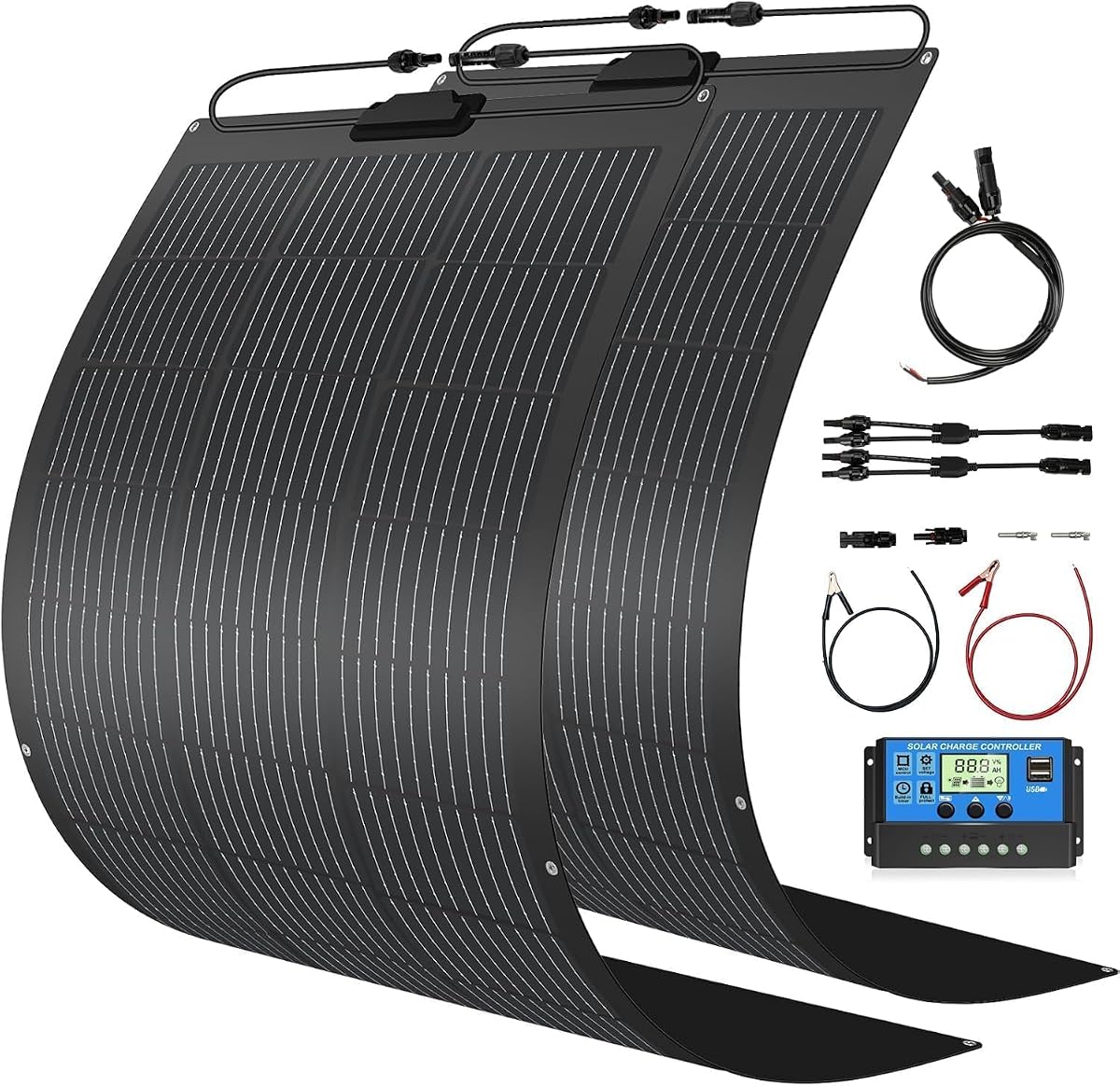
Flexible Monocrystalline Kit
5.0Editor score
Lightweight flexible design
IP68 waterproof rating
25 year output warranty
This guide compares the top 800W solar panel kits for off-grid power, reviewing efficiency, durability, and value for RVs boats and homes.
Finding the right solar solution means matching your energy needs with reliable hardware that performs year round. An 800W solar panel setup delivers enough power to run essential appliances and charge batteries quickly even in moderate sunlight conditions.
We evaluated ten leading kits based on cell technology, build quality, and real-world compatibility with charge controllers and inverters. Our analysis focuses on bifacial gains, flexibility options, and weather resistance to help you choose the best fit for your installation.
Each pick shows key specs like efficiency ratings and mounting features so you can compare at a glance. Prices change often and availability varies by region, so check the latest details before placing your order to ensure you get the right deal.
5.0Editor score

4.3Editor score

4.5Editor score
The table below lists all ten kits with their core specs so you can quickly compare efficiency, build type, and warranty coverage before making your final selection.
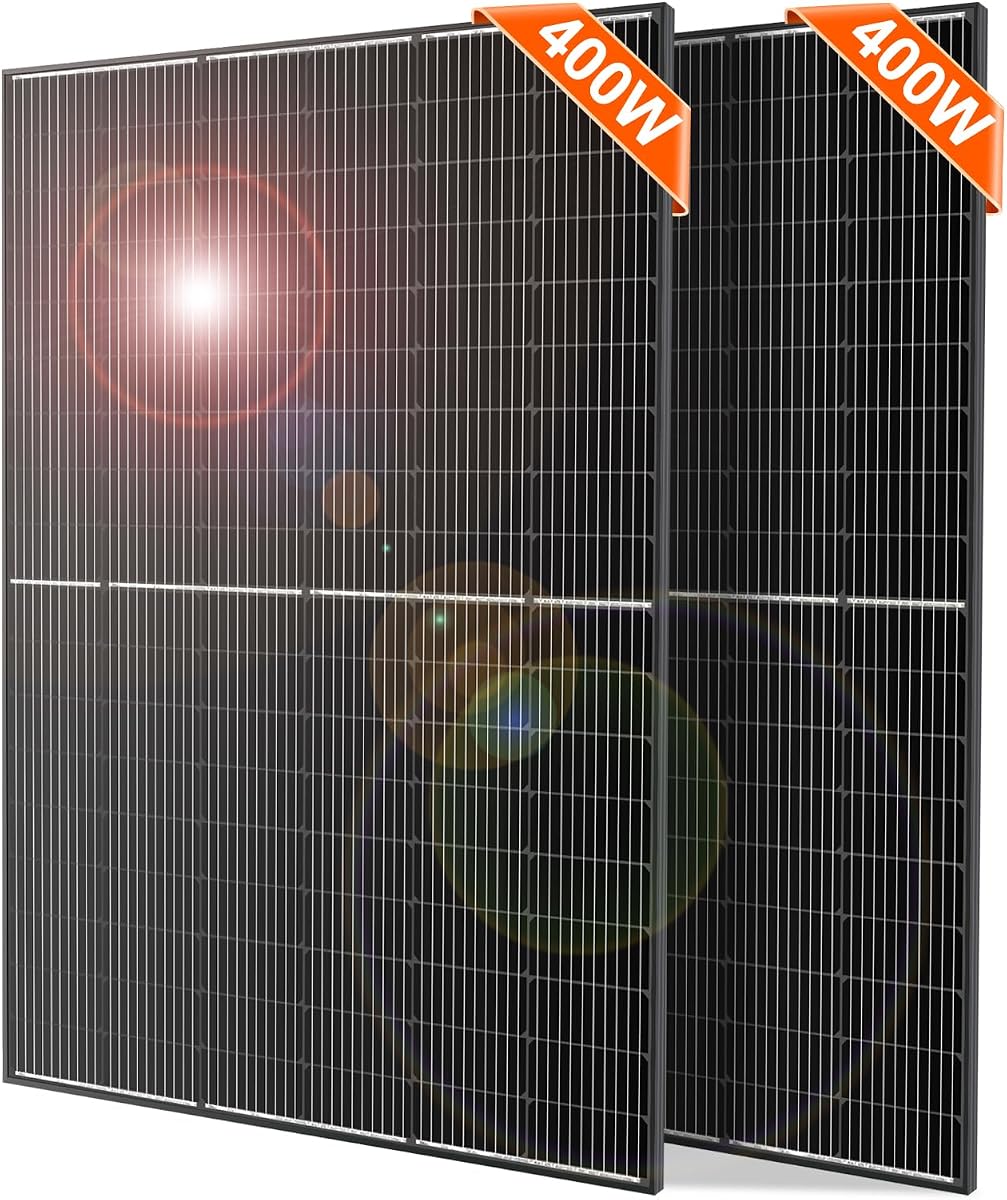


Renogy leads this list with a high-efficiency bifacial kit that captures extra energy from reflected light. Rated 4.3 stars it uses next-gen N-Type cells to deliver 25% efficiency and up to 30% more power in reflective settings.
We may earn a commission when you buy through this link, at no additional cost to you.
The dual-module design keeps output steady even if one section is shaded by leaves or vents. You need fewer panels branch connectors and wire runs compared to lower-wattage kits saving time on installation and reducing potential failure points.
The main trade-off is the higher price and the need for a reflective environment to maximize bifacial gains. In standard setups without snow or light roofs the backside boost may be smaller but the N-Type cells still outperform older PERC panels.
Choose this if you want top-tier efficiency and consistent power for homes RVs or off-grid cabins. Its premium build and shade handling make it the smart pick for anyone prioritizing long-term energy yield.
Bifacial cells add up to 30% more power on snow sand or light roofs.
Dual power zones keep output steady when one panel section is shaded.
We may earn a commission when you buy through this link, at no additional cost to you.
EPOCH offers a Class A bifacial module rated 4.5 stars that balances high efficiency with robust weather ratings. Each 430W panel uses 16BB half-cut cells to reach 25% efficiency and capture sunlight from both sides.
We may earn a commission when you buy through this link, at no additional cost to you.
Its rugged design handles snow loads up to 5400 Pa and wind loads to 2400 Pa making it ideal for coastal or snowy sites. The IP68 junction box and IP67 MC4 connectors keep moisture and debris out for long-term reliability.
The premium price reflects the higher wattage and stronger warranty but the 25-year output promise ensures stable returns over time. You may need extra mounting space for optimal bifacial gain especially on dark roofs.
Go with EPOCH if you want top durability and maximum output for boats yachts or off-grid systems. Its Class A cells and strong warranty make it the best premium choice for demanding environments.
Withstand heavy snow and wind loads without performance loss.
91.5% transparency boosts energy conversion in low light.
We may earn a commission when you buy through this link, at no additional cost to you.
This flexible kit earns a 5.0 rating for its lightweight build and easy install. It uses ETFE-coated monocrystalline cells to reach 24%+ efficiency and can bend up to 30 degrees to fit curved RV or boat roofs.
We may earn a commission when you buy through this link, at no additional cost to you.
Weighing only 4.4 lbs per panel it is 70% lighter than rigid glass modules reducing roof stress. The IP68 rating and salt-spray proofing handle storms and marine conditions without needing mounting frames or drilling.
Though less rigid it still offers a 25-year output warranty and 2-year craft coverage. The adhesive or silicone install is fast but requires clean surfaces and careful alignment for best results.
Buy this if you need a budget-friendly solution for RVs vans or boats with limited load capacity. Its ease of use and light weight make it the best budget pick for mobile off-grid power.
Bendable design conforms to RV or boat roofs without drilling.
70% lighter than rigid panels for easier transport and install.
We may earn a commission when you buy through this link, at no additional cost to you.
DOKIO delivers a reliable 800W kit with 31V panels and long MC4 leads for simplified wiring. It uses tempered glass and aluminum frames for year-round use and includes adapters for portable power stations.
We may earn a commission when you buy through this link, at no additional cost to you.
Fewer splitters than eight 100W panels mean fewer failure points. The 9.8-foot leads reach further without extensions reducing added joints and keeping the array cleaner for roof or ground installs.
The trade-off is standard weight and rigidity compared to flexible options. You must check controller compatibility for series wiring if voltage exceeds input limits.
Choose DOKIO for steady charging in backyard or RV setups. Its simple wiring and durable frame make it a solid mid-range pick for home off-grid use.
Two 400W panels mean fewer splitters and failure points.
9.8ft MC4 leads reduce need for extensions on long runs.
We may earn a commission when you buy through this link, at no additional cost to you.
This DOKIO kit also provides 800W via two 400W panels optimized for 24V off-grid systems. It emphasizes parallel wiring on 12V for safer voltage and includes sealed junction boxes for outdoor durability.
We may earn a commission when you buy through this link, at no additional cost to you.
With 3m leads per panel and fewer branch connectors than eight 100W modules you save time on the roof and reduce failure points. The tempered glass and aluminum frame handle weather year-round.
MPPT controllers are strongly recommended to maximize output. If you need series wiring ensure your controller supports the higher input voltage.
Pick this for stable 24V setups where simpler wiring matters. Its balanced design offers good value for off-grid installations needing reliable charge input.
Fewer joints than eight 100W panels reduce failure points.
Parallel on 12V keeps voltage safe and charging steady.
We may earn a commission when you buy through this link, at no additional cost to you.
This portable kit features Sunpower cells and 23% efficiency in a foldable design that weighs just 20 pounds. Adjustable kickstands let you set four angles for optimal capture while camping or traveling.
We may earn a commission when you buy through this link, at no additional cost to you.
The ETFE coat enhances durability and impact resistance for outdoor use. It packs small and sets up quickly without tools making it ideal for mobile adventures needing flexible power.
Its lighter build means less output per square foot than rigid panels and it requires manual positioning daily. That trade-off is acceptable for those prioritizing mobility over fixed arrays.
Choose this for camping RV trips or emergency backup where portability rules. Its ease of setup and compact storage make it the top pick for mobile off-grid power.
20 lbs foldable design for easy transport on adventures.
Four kickstand options let you capture peak sunlight.
We may earn a commission when you buy through this link, at no additional cost to you.
This kit includes a 30a MPPT controller alongside two 400W panels using n-type technology for up to 25% efficiency. Pre-drilled holes and MC4 connectors make installation straightforward for RVs or homes.
We may earn a commission when you buy through this link, at no additional cost to you.
However the product carries a low customer rating suggesting quality control or controller issues may arise. Verify the warranty and support response before purchase if you rely on this for critical power needs.
The included controller reduces separate parts and simplifies setup. If the controller works well you gain a complete off-grid solution for less cost.
Buy with caution and check recent feedback. It could work for budget-conscious installs if the controller proves reliable.
Includes 30a MPPT controller for a full setup.
N-type cells reach up to 25% efficiency.
We may earn a commission when you buy through this link, at no additional cost to you.
This 400W N-Type panel uses 16BB half-cell tech to improve low-light performance and reduce losses. It features IP68 connectors and a corrosion-resistant frame for long-term outdoor use with high snow and wind ratings.
We may earn a commission when you buy through this link, at no additional cost to you.
Pre-drilled holes and MC4 connectors simplify mounting to brackets and rails. The optimized cell design keeps stable output in cloudy or morning conditions compared to older panels.
The trade-off is standard weight and size. You must mount rigid panels securely and may need tilt brackets to adjust for angle.
Choose this for reliable home or cabin power in varied weather. Its low-light gains and solid build make it a strong pick for steady generation.
N-Type cells maintain stable power on cloudy days.
5400 Pa snow load resists heavy winter weather.
We may earn a commission when you buy through this link, at no additional cost to you.
This kit offers two 400W flexible panels with a 40A controller for higher current capacity. The water-resistant junction box and grommet holes support adhesive mounting on curved surfaces.
We may earn a commission when you buy through this link, at no additional cost to you.
Flexible panels suit irregular RV or boat roofs without drilling. The 40A controller handles larger arrays well if you plan to expand later.
Without user ratings expect to test controller quality before relying on critical loads. Ensure adhesive is applied on clean dry surfaces for best hold.
Consider this if you need flexible mounting and a larger controller. It balances versatility and current capacity for marine or mobile use.
40A controller handles larger charging loads.
Flexible panels conform to irregular boat or RV roofs.
We may earn a commission when you buy through this link, at no additional cost to you.
Like the similar kit above this model offers two 400W flexible panels with a 40A controller for versatile off-grid setups. The monocrystalline cells perform well in low light and the sealed junction keeps out moisture.
We may earn a commission when you buy through this link, at no additional cost to you.
It supports adhesive or grommet mounting on curved surfaces and handles marine conditions with a water-resistant build. The 40A controller offers headroom for expansion if you add more panels.
Without user feedback verify controller reliability and adhesive suitability. Ensure surfaces are clean dry for strong bonding on roofs or decks.
Choose this if you need flexible mounting and higher current capacity. It suits boats RVs or cabins with irregular roof shapes.
Silicone or adhesive tape enables drill-free installs.
40A controller allows room for future expansion.
We may earn a commission when you buy through this link, at no additional cost to you.
Choosing an 800W solar panel kit means matching cell type, durability, and wiring to your system needs. This guide breaks down key factors to ensure long-term performance.
N-Type cells offer lower recombination losses and better temperature performance than older PERC types. They maintain higher efficiency in heat and cloudy conditions. Monocrystalline panels still dominate but watch for 16BB half-cut or bifacial upgrades for extra output.
Prioritize N-Type or bifacial designs when you need better low-light yield and longevity.
Flexible ETFE panels save weight and fit curved roofs without drilling. They are ideal for RVs boats and vehicles where load limits matter. Rigid glass panels are sturdier and cheaper but add weight and may need frames.
Choose flexible for mobile setups and rigid for fixed roof or ground mounts.
MPPT controllers extract more power than PWM especially on higher-voltage arrays. A 30A or 40A controller suits most 800W kits depending on battery type and voltage. Ensure the controller supports your battery chemistry and max input voltage.
Always pair your panels with an MPPT controller sized for your array current.
Pre-drilled holes and MC4 connectors simplify installs but check bracket compatibility. Flexible kits may use adhesive or grommets while rigid ones often need Z-brackets or rails. Verify wind and snow ratings match your local weather.
Match the mounting system to your surface type and local climate conditions.
Bifacial panels capture reflected light from the back adding up to 30% extra energy on reflective surfaces like snow or white gravel. You need space and light color beneath to realize the full boost. Standard single-sided panels lack this gain.
Select bifacial if you can mount over reflective surfaces for higher output.
Look for IP68 junction boxes and MC4 connectors to resist rain dust and low-pressure jets. Marine kits add salt-spray proofing. Higher ratings protect wiring and electronics for longer life in wet or coastal environments.
Ensure IP68 or better for reliable outdoor and marine use year-round.
Most kits offer 25-year linear power output and 10 to 12-year quality warranties. Check what's covered and the claim process. Stronger warranties signal better quality control and long-term support for your investment.
Prefer kits with 25-year output and clear quality terms before buying.
Longer MC4 leads reduce the need for extensions and extra connectors that add failure points. Some kits include 3m or 9.8ft leads while others are shorter. Measure your run to the charge controller before ordering.
Choose kits with leads that reach your controller to minimize extra joints.
Install the panels facing true south in the northern hemisphere with a tilt angle matching your latitude for best annual output. Ensure they are secure against wind and snow loads with proper brackets or adhesive.
Clean the glass or ETFE surface with water and a soft cloth every few months to remove dust and bird droppings. Avoid harsh chemicals or pressure washers that could damage the coating or junction box seals.
Monitor your system with a charge controller that shows real-time power and battery levels. Check connections periodically for corrosion or loose cables and re-seal any exposed areas if you live in humid or coastal regions.
Yes an 800W panel pair can charge a 12V system using MPPT control. Parallel wiring on 12V keeps voltage safe and steady. Ensure your controller supports the current drawn and battery chemistry to avoid overcharging or underutilizing power.
Yes a charge controller is essential to regulate voltage and current to your batteries. Without it you risk overcharging or damage. MPPT controllers maximize power especially at higher panel voltages while PWM works for simple low-cost setups.
Most 800W kits include two 400W panels but some use four 200W panels. The two-panel design reduces connectors and saves space. Check the kit details to confirm wattage per panel and total STC output.
Yes flexible kits are ideal for boats since they handle curved surfaces and reduce load. Choose marine-grade panels with salt-spray proofing and IP68 connectors. Secure them firmly to withstand waves and wind without drilling if possible.
Most panels last 25 to 30 years with about 80% output by year 25. ETFE flexible ones may have slightly lower lifespans but still reach 20+ years. Check warranty terms for output guarantees and quality support.
Daily output depends on sunlight hours and shading. In 5 peak sun hours you can expect around 4 kWh per day. Cloudy days reduce this to 1 to 2 kWh. Use an MPPT controller to capture available power efficiently.
Our top picks include Renogy and EPOCH for efficiency durability and the flexible DOKIO and ETFE kits for budget mobile installs. Each brings unique strengths for roofs, boats or portable setups.
Prioritize cell type and controller match to maximize output over time. Stronger warranties and IP ratings also ensure long-term reliability in your local climate.
Check current prices and availability before ordering as deals shift often. Verify compatibility with your battery system and mounting needs to avoid extra costs later.