
Lenovo ThinkPad P16s Gen 4
4.0Editor score
Intel Ultra 7 255H
32GB DDR5 RAM
1TB PCIe SSD Storage
Choosing the right laptop for electrical engineering requires balancing powerful processing with reliable portability. You need a machine that handles CAD, simulation, and coding without lagging during long study sessions or fieldwork.
We evaluated ten top models based on processor speed, graphics capability, display quality, and build durability. Our analysis focuses on real-world performance for engineering workflows like MATLAB, SPICE, and AutoCAD.
Each pick highlights key strengths and trade-offs to help you find the best fit for your budget and workflow. Please note that prices and availability change frequently, so verify details before purchasing.
4.0Editor score

4.4Editor score

5.0Editor score
As an Amazon Associate we earn from qualifying purchases.
Compare the top ten laptops side by side to find the perfect match for your engineering tasks. This table highlights key specifications and unique features for quick decision-making.




The Dell Precision 7680 stands out as a top choice for electrical engineering tasks due to its robust workstation design. With a 4.4 rating, it delivers reliable performance for complex simulations and CAD projects.
We may earn a commission when you buy through this link, at no additional cost to you.
Its Intel Core i9-13950HX processor ensures smooth multitasking across demanding applications like MATLAB and SPICE. The 32GB DDR5 CAMM RAM provides high-speed data access for large datasets and multiple virtual machines.
While it comes at a premium price, the investment pays off in longevity and reliability. The ISV certifications guarantee compatibility with professional engineering tools, reducing downtime during critical projects.
This laptop is ideal for students and professionals who need a stationary yet powerful workstation. If you prioritize performance over portability, the Precision 7680 is the definitive recommendation for your workflow.
The i9-13950HX handles complex simulations and CAD rendering with ease, ensuring your workflows remain uninterrupted.
ISV certifications confirm that critical engineering tools run smoothly without compatibility issues or crashes.
We may earn a commission when you buy through this link, at no additional cost to you.
This configuration of the Dell Precision 7680 offers a balance of GPU power and system reliability. With a 4.3 rating, it suits engineers who need dedicated graphics for visualization tasks.
We may earn a commission when you buy through this link, at no additional cost to you.
The NVIDIA RTX 1000 Ada 6GB GPU accelerates rendering and simulation workloads. Paired with 32GB DDR5 RAM, it handles multiple engineering applications efficiently without system lag.
However, the Intel Core i5-13600HX may struggle with CPU-intensive compilation tasks compared to higher-tier processors. It is best suited for visual workflows rather than heavy computational loads.
Choose this model if you need GPU acceleration for design but prefer a lower entry cost. It maintains the robust build quality and ISV certifications essential for professional engineering environments.
The NVIDIA RTX 1000 Ada enables faster rendering for circuit design and mechanical visualization tasks.
ISV certifications ensure that critical engineering software runs stably during long sessions.
We may earn a commission when you buy through this link, at no additional cost to you.
The Lenovo ThinkPad P16s Gen 4 brings workstation capabilities to a more portable form factor. With a 4.0 rating, it appeals to students and engineers who prioritize mobility.
We may earn a commission when you buy through this link, at no additional cost to you.
Powered by the Intel Core Ultra 7 255H processor, it handles daily engineering tasks efficiently. The 32GB DDR5 RAM ensures smooth multitasking across multiple applications and browsers.
While integrated graphics may limit performance on heavy 3D rendering, it remains capable for most circuit design and analysis work. The MIL-STD-810H testing guarantees durability during travel.
This laptop is perfect for those who need a balanced machine for both fieldwork and office use. If you value portability without sacrificing core engineering performance, this is a strong contender.
The lighter chassis allows for easy transport while maintaining professional-grade processing power.
Wi-Fi 7 support ensures fast, reliable internet connections in classrooms and remote sites.
We may earn a commission when you buy through this link, at no additional cost to you.
This premium Dell Precision 7680 configuration represents the pinnacle of workstation performance. With a perfect 5.0 rating, it meets every expectation for high-demand engineering workflows.
We may earn a commission when you buy through this link, at no additional cost to you.
The 64GB DDR5 RAM allows for massive virtual machines and complex simulations to run simultaneously. Combined with 2TB of storage, you have ample space for large project files and software suites.
The NVIDIA RTX 2000 Ada 8GB GPU provides the power needed for advanced visualization and computational fluid dynamics. While expensive, the performance justifies the cost for professional engineers.
Buy this if budget is secondary to peak performance and future-proofing. It is ideal for professionals handling the most demanding simulation and design tasks daily.
64GB RAM ensures no bottlenecks when running heavy engineering software simultaneously.
2TB SSD provides room for all software libraries and project archives without external drives.
We may earn a commission when you buy through this link, at no additional cost to you.
This Dell Precision 7680 variant balances GPU power with ample storage for professional use. With a 3.9 rating, it serves engineers needing reliable performance for graphics-heavy workflows.
We may earn a commission when you buy through this link, at no additional cost to you.
The NVIDIA RTX 2000 Ada 8GB GPU accelerates design and simulation tasks effectively. Paired with a 2TB SSD, it offers quick access to large datasets and software libraries.
The 32GB RAM may be limiting for extremely complex virtual environments compared to the 64GB model. However, it remains sufficient for most standard engineering design and analysis tasks.
Choose this model for a professional workstation that offers good graphics performance without the highest memory tier. It maintains the robust build quality expected of the Precision line.
The NVIDIA RTX 2000 Ada delivers strong rendering speeds for complex engineering visuals.
2TB SSD ensures fast loading of large project files and system applications.
We may earn a commission when you buy through this link, at no additional cost to you.
The HP ZBook Firefly 14 G11 offers exceptional portability without sacrificing workstation capabilities. With a perfect 5.0 rating, it is ideal for engineers who travel frequently.
We may earn a commission when you buy through this link, at no additional cost to you.
Powered by the Intel Core Ultra 7 165U, it provides efficient performance for coding and analysis tasks. The 32GB DDR5 RAM ensures smooth operation even with multiple engineering applications open.
Integrated graphics limit its suitability for heavy 3D rendering but are sufficient for standard engineering workflows. The ISV certifications guarantee compatibility with critical software like AutoCAD and MATLAB.
Buy this if you prioritize mobility and battery life over raw power. It is the perfect choice for site visits, presentations, and collaborative work on the go.
Weighing only 3.13 lbs, it is easy to carry for all-day use during fieldwork.
ISV certifications ensure reliability for major engineering applications you depend on.
We may earn a commission when you buy through this link, at no additional cost to you.
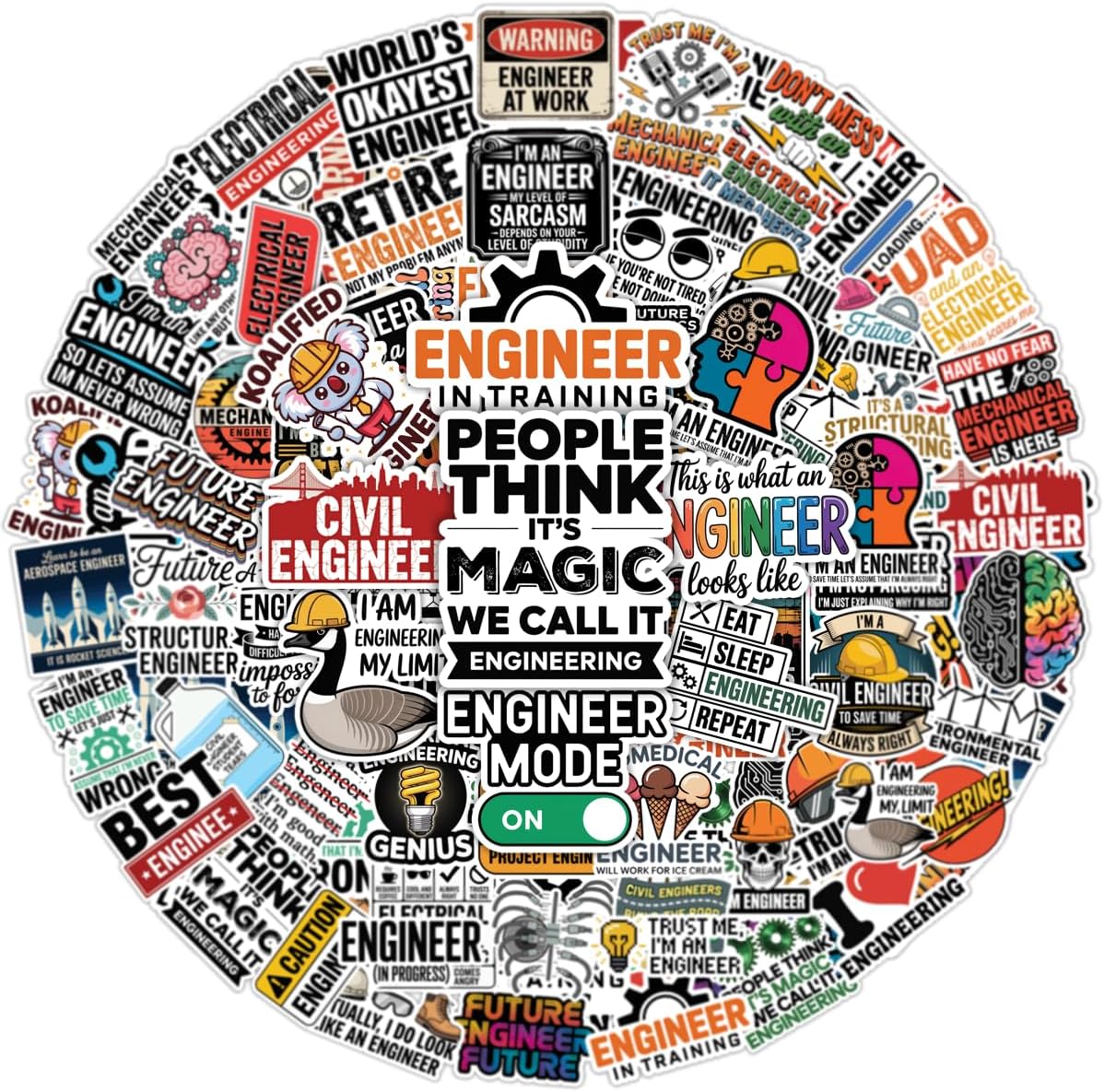
These engineer stickers add personality to your gear with high-quality waterproof vinyl. While not a laptop, they complement your setup by decorating devices and tools with STEM themes.
We may earn a commission when you buy through this link, at no additional cost to you.
The 64-piece set features mechanical, electrical, and industrial designs suitable for professionals and students. The durable PVC material ensures they stay vibrant even with outdoor use on equipment.
Easy peeling and residue-free removal make them practical for personalizing laptops and notebooks. This is a fun way to express your engineering identity without impacting system performance.
Buy these if you want to customize your workspace with creative and durable accents. They are perfect for adding a touch of personality to your professional toolkit.
UV-resistant and scratch-proof materials ensure long-lasting color and adhesion.
Works on laptops, water bottles, helmets, and other surfaces for personal expression.
We may earn a commission when you buy through this link, at no additional cost to you.
The Dell Precision 7780 combines a large display with powerful workstation specs for engineering tasks. While unrated, it offers top-tier performance for desktop replacement scenarios.
We may earn a commission when you buy through this link, at no additional cost to you.
Featuring an Intel Core i9-13950HX processor, it delivers exceptional speed for simulations and rendering. The 32GB DDR5 RAM handles multitasking efficiently during complex projects.
The 17.3-inch display provides ample screen real estate for CAD and multi-window workflows. However, the larger size makes it less ideal for daily commuting or fieldwork.
Choose this if you prioritize screen size and processing power over portability. It is perfect for a dedicated desk setup in labs or home offices.
The 17.3-inch screen offers ample space for detailed engineering designs and code.
The i9 processor ensures rapid processing for the most demanding computational tasks.
We may earn a commission when you buy through this link, at no additional cost to you.
These humorous electrical stickers are perfect for personalizing gear with technical jokes. Rated 5.0, they offer waterproof vinyl that withstands tough work environments effectively.
We may earn a commission when you buy through this link, at no additional cost to you.
Featuring funny quotes about volts and amps, they make great gifts for students and professionals. The durable material ensures they remain intact even in harsh conditions on toolboxes.
Easy to apply and remove without residue, they are safe for use on laptops and helmets. This adds a fun element to your professional gear without impacting functionality.
Buy these if you need a lighthearted gift for a friend or colleague in engineering. They are perfect for adding humor to your technical toolkit.
Quotes about volts and amps bring a smile to colleagues and students alike.
Weatherproof and scratch-resistant vinyl ensures long-lasting quality on all surfaces.
We may earn a commission when you buy through this link, at no additional cost to you.
The HP OmniBook 3 offers a large display and entry-level specs suitable for light engineering tasks. With a 4.5 rating, it provides basic functionality for students on a tight budget.
We may earn a commission when you buy through this link, at no additional cost to you.
Powered by an AMD Ryzen 3 processor with 8GB RAM, it handles web-based coursework and basic coding well. The 512GB SSD ensures decent storage for files and software.
However, the limited RAM and integrated graphics will struggle with heavy simulations or CAD rendering. It is best suited for basic coursework rather than professional design work.
Choose this if you need an affordable laptop for introductory courses. If you plan to use advanced engineering software, consider a higher-spec option.
This model provides an affordable entry point for students with basic computing needs.
Up to 14 hours of battery life allows for all-day use without charging.
We may earn a commission when you buy through this link, at no additional cost to you.
Selecting the right laptop for electrical engineering requires balancing specific hardware needs with portability and budget. This guide outlines the key factors to consider for your workflow.
Electrical engineering software like MATLAB and SPICE relies heavily on CPU speed and core count. Look for processors with high clock speeds and multiple cores to handle simulations efficiently.
Prioritize processors with at least 8 cores for multitasking and rendering complex circuit designs smoothly.
RAM determines how many applications you can run simultaneously without lag. Engineering tasks often require substantial memory for virtual machines and large datasets.
Aim for at least 32GB of DDR5 RAM to ensure smooth performance during intensive workflows.
While not always essential, dedicated GPUs accelerate rendering for PCB design and simulation visualization. Integrated graphics may suffice for basic coursework but struggle with advanced tasks.
Select a dedicated NVIDIA RTX GPU if you need acceleration for 3D modeling or complex visualization.
Fast SSD storage is critical for loading large engineering software libraries quickly. Mechanical hard drives are significantly slower and should be avoided for primary storage.
Choose a laptop with at least 1TB of NVMe SSD storage to accommodate software suites and project files.
A larger screen with high resolution reduces eye strain during long coding or design sessions. Color accuracy is less critical than clarity for technical diagrams and schematics.
Look for at least a 16-inch display with Full HD+ resolution for comfortable multi-window work.
If you attend classes or work on-site, weight and battery life become critical. Heavy workstations offer power but limit mobility, while ultrabooks may lack performance.
Select a durable model with MIL-STD certification to withstand daily travel and professional environments.
ISV certifications ensure that specific engineering tools run reliably without compatibility issues. Not all laptops are optimized for specialized engineering software suites.
Check for ISV certifications if you rely on specific programs like SolidWorks or AutoCAD.
Multiple ports allow direct connection to tools like oscilloscopes or microcontrollers without dongles. Thunderbolt and USB-C support are essential for high-speed data transfer.
Prioritize laptops with multiple USB ports and Thunderbolt support for flexible hardware connectivity.
Keep your software updated to maintain compatibility with the latest engineering tools and security patches. Regular updates ensure your system remains stable during critical project work.
Avoid exposing your laptop to extreme temperatures or humidity, which can damage internal components. Use a protective sleeve during transport to prevent physical damage from drops.
Manage your system resources by closing unused applications during intensive simulations. This prevents overheating and ensures maximum performance when you need it most.
Not always. While dedicated graphics accelerate 3D rendering and heavy visualization tasks, many core engineering software packages rely more on CPU and RAM. Integrated graphics may suffice for basic coursework, but dedicated GPUs are recommended for professionals or advanced simulation work.
Most engineering applications recommend at least 16GB of RAM for smooth operation. However, for heavy multitasking, virtual machines, or large data simulations, 32GB provides a significant performance boost and future-proofs your setup.
Workstations offer ISV certifications and durable builds ideal for professional environments. While powerful gaming laptops can handle similar performance, workstations provide better reliability and support for critical engineering software.
Tablets are generally not sufficient as primary devices for complex software like CAD or MATLAB. They may serve as secondary devices for note-taking but lack the processing power and keyboard support needed for coding.
Windows is the most widely supported platform for engineering tools like AutoCAD and SolidWorks. macOS can run some software via virtualization or cloud solutions but lacks native support for many professional engineering applications.
Refurbished workstations can offer great value if they meet current performance standards. Ensure they come with a warranty and check for hardware compatibility with your required engineering software before purchasing.
The Dell Precision 7680 models lead our list with robust performance and ISV certifications suitable for demanding workflows. They strike an excellent balance between power and reliability for both students and professionals.
Prioritize processing power and RAM capacity when selecting your machine to ensure it handles simulations without slowdowns. Portability and battery life should be secondary concerns unless you travel frequently.
Prices and availability fluctuate, so check current listings before making your final decision. Investing in a capable laptop now will save time and frustration throughout your engineering journey.